
Your flight just got cancelled. Now what?
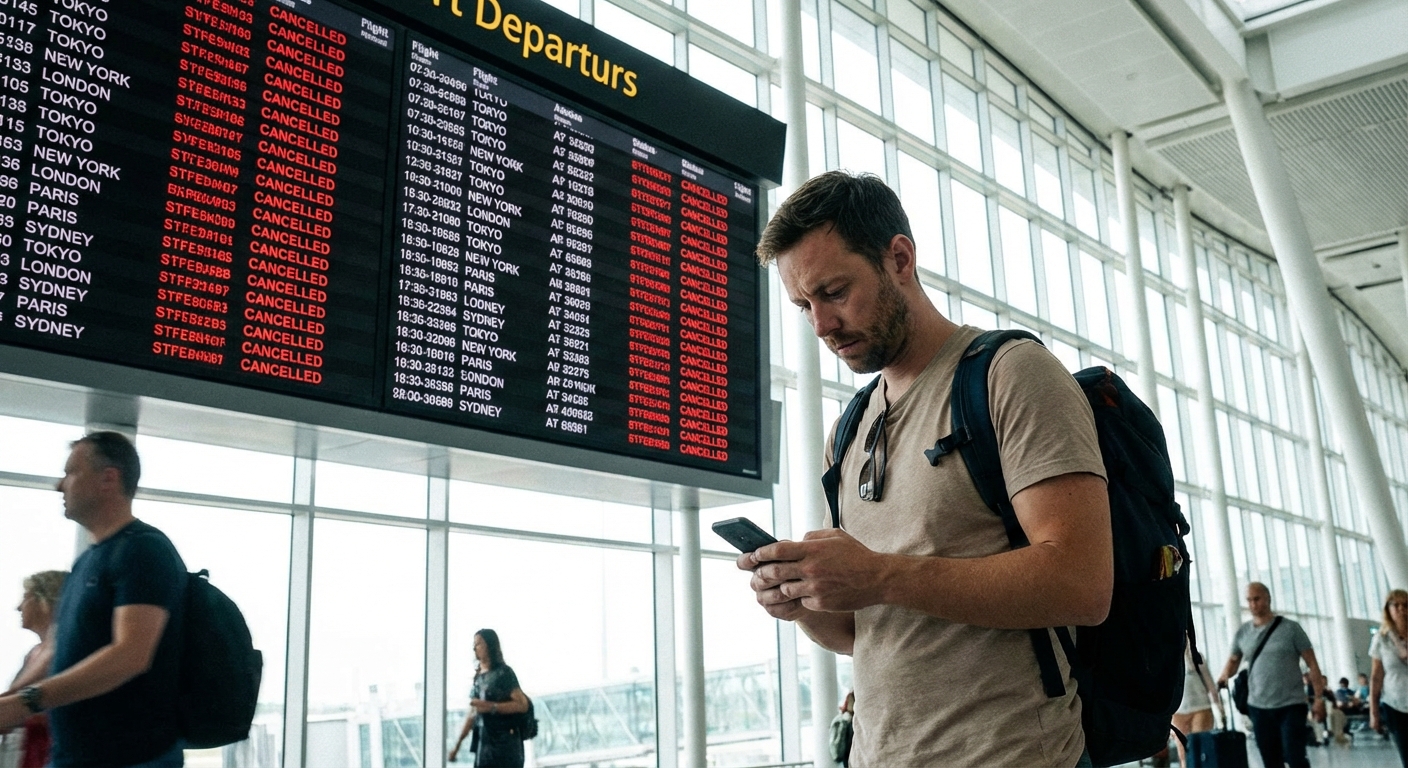
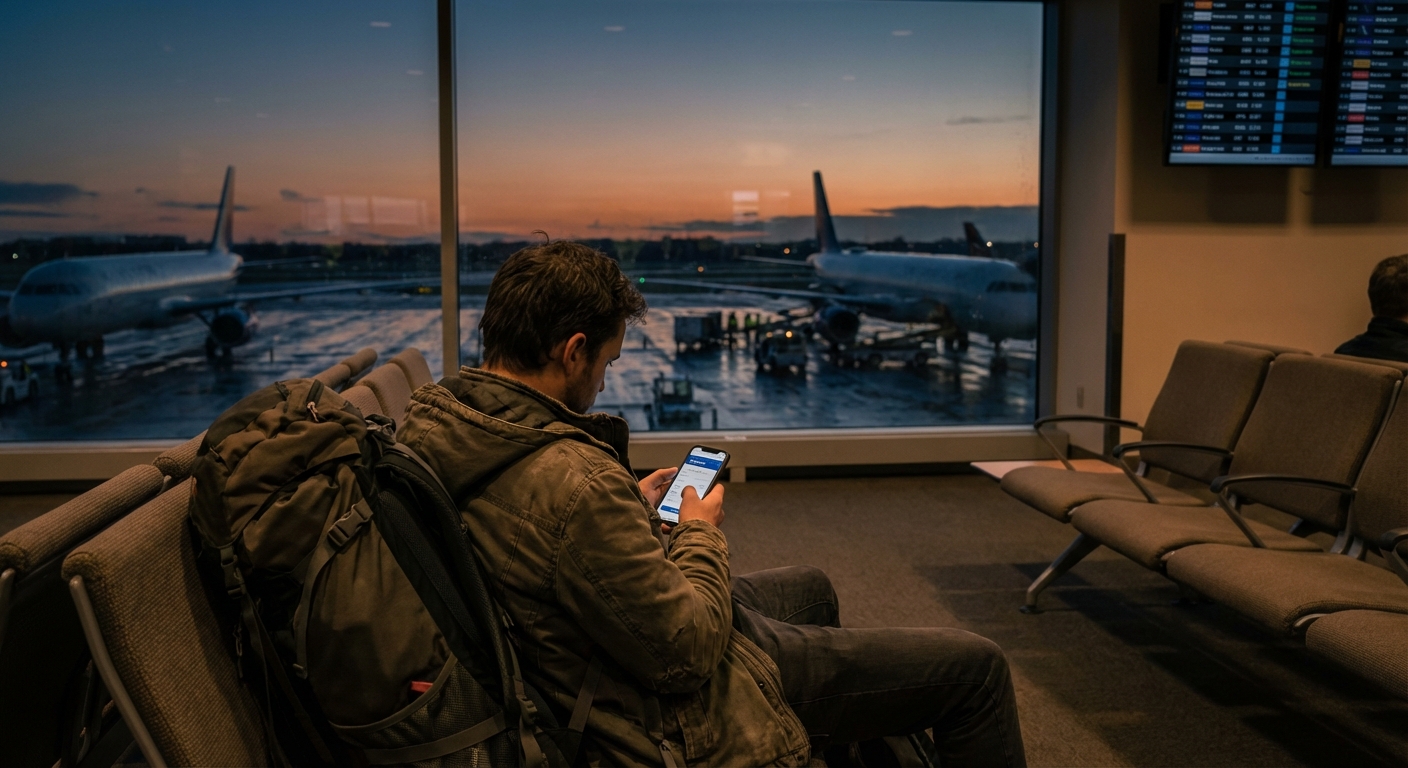
You’re standing in an airport terminal, staring at a departure board full of red. CANCELLED. CANCELLED. CANCELLED.
Your Qatar Airways flight to Bangkok isn’t happening. Neither is the one to Singapore, or the connecting flight through Doha that was supposed to get you to Bali by Tuesday.
Welcome to air travel during the 2026 Middle East crisis.
Since US-Israel strikes on Iran began in late February 2026, Gulf airspace has been in chaos. Doha’s airspace closed entirely. Dubai is running at roughly 60% capacity with rolling disruptions.
Qatar Airways suspended most operations. Emirates scaled back. Etihad rerouted. Millions of passengers found themselves stranded, rebooked onto phantom flights, or offered refunds they didn’t want.
If you haven’t read our breakdown of the Qatar Airways situation, start there. It covers what happened, your refund rights, and how to deal with QA directly. This article picks up where that one leaves off: which airlines are actually flying, which routes work, and how to get yourself from Point A to Point B when the middle of the map is on fire.
The airlines that are actually flying
Not all carriers are equally affected. Airlines that route through Gulf hubs (Doha, Dubai, Abu Dhabi) are in trouble. Airlines that don’t are having the busiest quarter of their existence. Here’s who’s who.
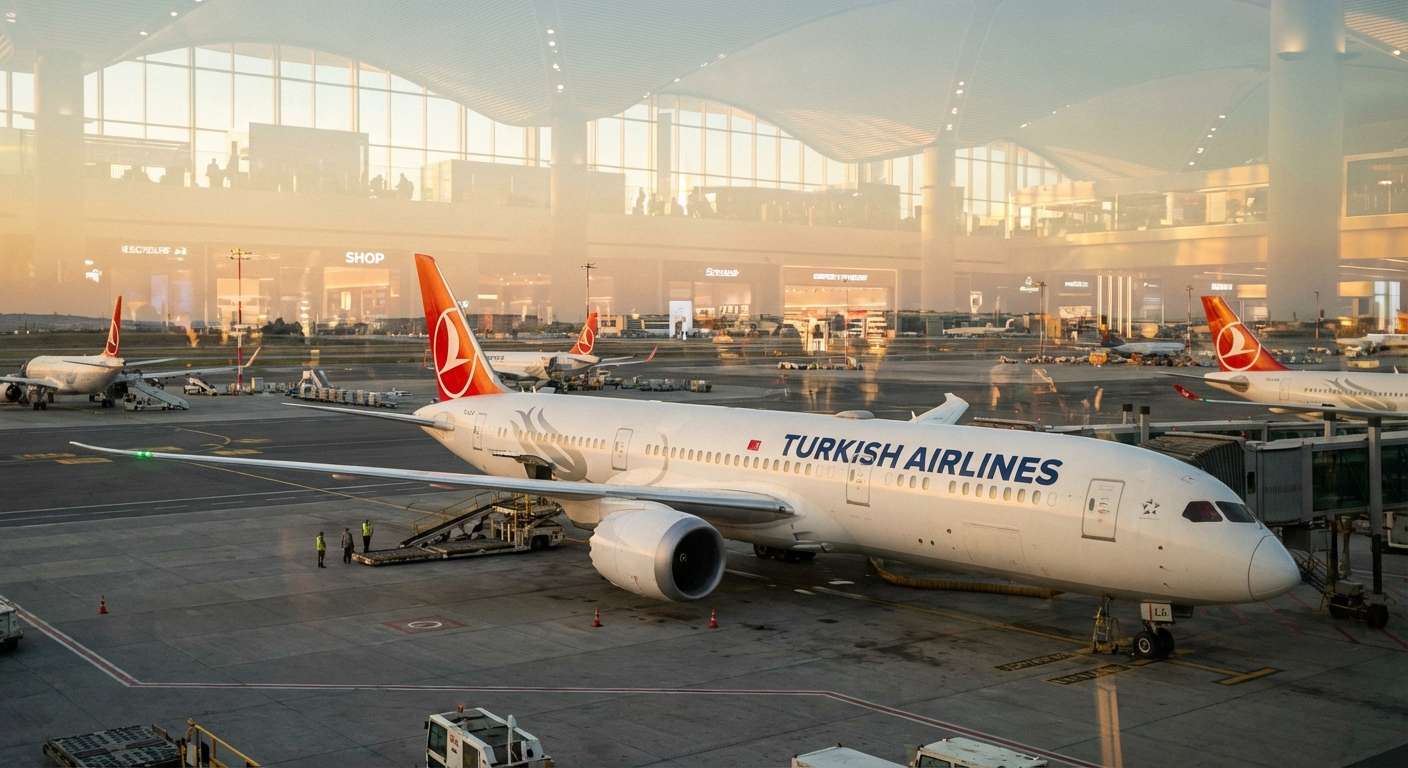
Turkish Airlines: the clear winner
Turkish Airlines has emerged as the single most reliable alternative for Europe-to-Asia travel during this crisis. Their hub at Istanbul Airport sits north of the conflict zone, and they’ve been routing flights through the Caucasus corridor — over Armenia, Georgia, and Azerbaijan — to bypass Iranian airspace entirely.
The trade-off: flights to Asia now take one to three hours longer than usual because of the detour through what travelers have started calling the “Baku Bottleneck.” Airspace over the Caucasus is narrow, and every airline avoiding Iran is funneling through the same corridor. But the flights are operating. Consistently.
Istanbul itself has handled the surge well. The airport was built for exactly this kind of capacity, and Turkish Airlines has added extra frequencies on popular routes to absorb passengers fleeing cancelled Gulf carrier bookings. If you need to get from Europe to Southeast Asia, India, or East Africa, Turkish is the first airline to check.
Singapore Airlines: the safe pick for Asia-Pacific
Singapore Airlines flies completely outside the conflict zone. Their routing from Europe goes through Singapore’s Changi Airport, which sits about as far from the Middle East as you can get while still being a global hub.
The catch is availability. Everyone figured this out at the same time, so Singapore Airlines flights from London, Frankfurt, and Paris are booking up weeks in advance. Prices have jumped accordingly. But if you can snag a seat, you’re on one of the world’s best airlines with zero conflict exposure.
A strategy that’s been circulating on Reddit: book a fully refundable Singapore Airlines ticket as insurance alongside your existing booking. If your original flight operates, cancel the SQ ticket for a full refund. If it doesn’t, you have a backup that actually works.
Finnair: the northern route
Finnair’s hub in Helsinki is the northernmost major European airport, which makes it geographically ideal for avoiding the Middle East entirely. Their Asia routes fly over Scandinavia and Central Asia — nowhere near Iran, Iraq, or the Arabian Peninsula.
Helsinki to Tokyo, Bangkok, and Singapore are all operating normally. The airline is smaller than Turkish or Singapore Airlines, so capacity is limited. But if you can route through Helsinki, you’ll avoid the Baku Bottleneck congestion that’s adding delays to Turkish Airlines flights.
Cathay Pacific: the Hong Kong option
Cathay Pacific through Hong Kong is another zero-conflict-exposure routing. Strong connections throughout Southeast Asia, Australia, and the Pacific. Booking demand has surged, but capacity is solid.
Air India: the surprise contender
Multiple travelers on Reddit have called Air India “surprisingly the safest bet right now.” India doesn’t rely on Gulf transit corridors, and Air India has added dozens of extra flights to Europe specifically to capture overflow demand.
The caveat everyone mentions: check your aircraft type. Air India’s newer A350s and recently leased Boeing 777s have modern cabins and reliable service. Their older legacy 777s are a different experience. If you’re booking Air India, filter for the A350 if you can.
The second tier
Several other airlines are worth checking depending on your route:
Japan Airlines and ANA operate trans-Pacific routes between the US and Asia that avoid the conflict zone entirely. If you’re coming from North America, routing through Tokyo adds a stop but keeps you safe.
Korean Air through Seoul and EVA Air through Taipei are both operating normally with no Middle East exposure.
British Airways through London works for Oneworld alliance passengers. BA uses northern European routing for its Asia flights.
Lufthansa, Air France, and KLM all fly Europe-to-Asia via northern routes through Central Asia. They’ve been slower to add capacity than Turkish Airlines, but they’re operating.
Ethiopian Airlines is an underrated option. They route through Addis Ababa, completely outside the conflict zone, with solid connections to Asia.
Routes that work right now
Europe to Southeast Asia
This is the corridor most affected by the crisis, since the standard routing goes directly through Gulf airspace. Here’s what works:
Helsinki to Bangkok via Finnair. Northern route, no Middle East exposure at all. Flight time is roughly 10 hours direct. Finnair runs this route daily.
Istanbul to Bangkok, Singapore, Kuala Lumpur, or Jakarta via Turkish Airlines. Caucasus corridor routing adds about two hours versus the old Gulf route. Multiple daily frequencies.
London to Singapore or Bangkok via Singapore Airlines, Cathay Pacific (with Hong Kong stop), or British Airways. Longer than the old Doha/Dubai connections but fully operational.
Frankfurt, Paris, or Amsterdam to Asia via their respective flag carriers. All using northern or Central Asian routing.
Europe to Australia
The kangaroo route through the Gulf is essentially dead for now. Alternatives:
Singapore is the main transit point. Singapore Airlines, Qantas, and several others connect through Changi to Australian cities.
Hong Kong via Cathay Pacific connects well to Sydney, Melbourne, and Perth.
Qantas has started operating its Perth-London route with a fuel stop in Singapore to avoid the conflict zone entirely.
The wildest routing gaining traction: Europe to the US to Australia via United Airlines. Trans-Pacific, then across the Pacific again. It’s absurdly long — 30+ hours of flight time.
But some travelers report it’s the only option with availability. People are calling it the “Southern Cross revival,” a routing that hasn’t been popular since the mid-20th century.
US to India and South Asia
From the US, you have two main alternatives. Route through Europe (Lufthansa via Frankfurt, Air France via Paris, BA via London) and connect east from there. Or go trans-Pacific through Tokyo, Seoul, or Hong Kong. The Pacific routing avoids the conflict zone completely and can be faster than the European option depending on your departure city.
Reaching Southeast Asia’s digital nomad hubs
Many of the affected travelers are digital nomads heading to popular remote work destinations in Southeast Asia. If you’re trying to reach Thailand, our guides to Chiang Mai as a digital nomad base and Da Nang for remote workers cover everything from coworking spaces to cost of living once you arrive. The challenge right now is just getting there.
For Thailand specifically, Finnair’s Helsinki-Bangkok route and Turkish Airlines’ Istanbul-Bangkok route are the two most reliable options from Europe. Both are running daily. From the US, Japan Airlines through Tokyo to Bangkok is the cleanest routing.
If you’re headed to the Philippines, Cathay Pacific through Hong Kong or EVA Air through Taipei are your best bets. For Vietnam, Turkish Airlines flies Istanbul to Hanoi and Ho Chi Minh City.
If you’re a backpacker with flexibility on timing, consider whether you can adjust your itinerary. Checking our Southeast Asia backpacking guide and the route planning guide might help you find a destination that’s easier to reach right now, then work your way overland to your original target. Southeast Asia’s overland connections between countries are excellent and cheap.
The hub comparison: where to connect
Choosing your transit hub matters more than usual right now. Some hubs are handling the surge. Others are drowning.
Istanbul: the best option for most travelers
Istanbul Airport is fully operational, safe, and handling the massive traffic overflow from Gulf hubs better than expected. Turkish Airlines has the network, the capacity, and the routing to be the default replacement for Qatar Airways and Emirates connections. The Baku Bottleneck adds delays on Asia routes, but flights are departing and arriving.
Singapore: reliable but expensive
Changi Airport has zero conflict exposure and world-class transit facilities. The problem is that everyone knows this, so fares through Singapore have spiked. If you can afford it, it’s the smoothest experience.
Helsinki: quiet and efficient
Helsinki-Vantaa is a smaller hub, but that’s actually an advantage right now. Less congestion, faster connections, and Finnair’s routing is the farthest from the conflict zone of any major carrier. Best for Europe-to-Japan, Europe-to-Thailand, and Europe-to-Southeast-Asia connections.
Delhi: adding capacity fast
Air India has been aggressive about adding European routes. Delhi doesn’t rely on Gulf corridors at all. Product quality is inconsistent, but operationally, Air India is among the most stable options during this crisis.
Dubai: proceed with caution
Dubai International is operating at roughly 60% capacity. Emirates has resumed partial operations and is offering generous rebooking windows.
But the airport has experienced brief operational halts from drone threats and missile interceptions. Hotels around the airport are fully booked. Terminal congestion is severe.
If you’re already rebooked through Dubai, pack essentials in your carry-on and monitor the situation hourly. If you’re making a new booking, there are better options.
Doha: avoid entirely
Qatar Airways is hub-locked. Unlike Emirates, which can route around Dubai to some extent, QA cannot reroute around its own hub. Hamad International sits next to Al Udeid Air Base — the largest US military installation in the region — making Doha airspace particularly sensitive. Don’t book anything through Doha right now.
How to actually get rebooked (not just refunded)
Airlines will steer you toward a refund because rebooking you onto a competitor’s flight costs them money. A refund sounds fair until you realize last-minute fares on alternative airlines are running $3,000+ for routes that normally cost $600. Here’s how to push for a rebooking instead.
Wait for the official cancellation
Qatar Airways won’t rebook you until your flight shows “CANCELLED” in their system. This often happens 48 to 72 hours before departure. Don’t accept “delayed” or “schedule change” status — those don’t trigger the same rebooking obligations.
Call immediately when it flips to cancelled
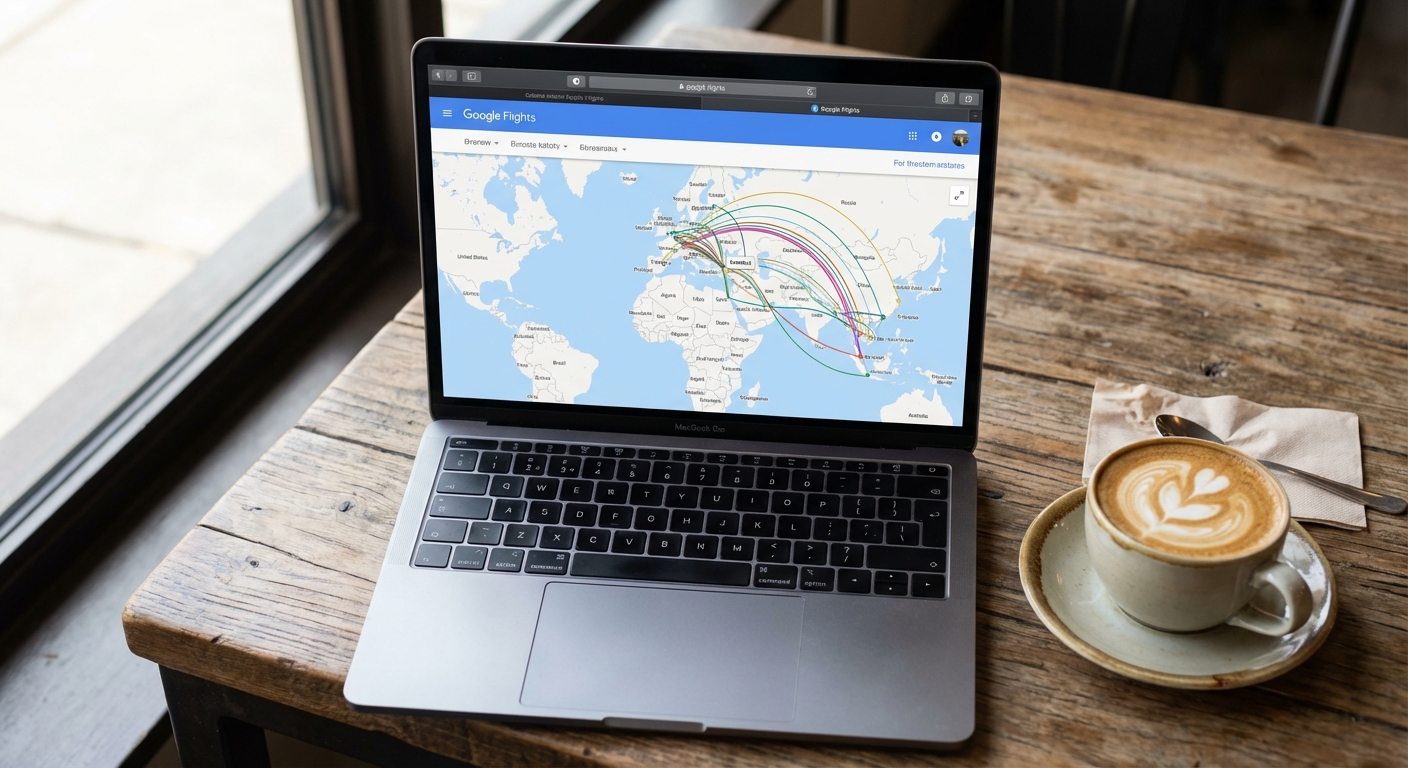
Hold times are running over an hour, but partner airline seats disappear fast. While you’re on hold, search Google Flights yourself. Find specific flights on partner airlines that still have availability.
Write down the flight numbers. When you reach an agent, feed them the exact flights you want. Agents call this “spoon-feeding” and it dramatically speeds up the process.
Use non-local phone numbers
European phone lines for Qatar Airways and Emirates are jammed. Use Skype to call the US number (+1-855) or the Australian number. Different call centers, shorter queues, same system access.
Know your legal rights
If your cancelled flight was departing from an EU airport, cite EC Regulation 261/2004, Article 8. Under this regulation, the airline must reroute you at their expense — even on a competitor airline. This is your strongest card. The airline is legally required to get you to your destination, not just hand you a refund.
One thing EC261 won’t get you during this crisis: the standard €600 cash compensation for cancellation. The conflict is classified as “extraordinary circumstances,” which exempts airlines from that specific payment. But the duty of care (hotel, meals, transport while you wait) is still legally required. And crucially, the rerouting obligation still applies.
Don’t cancel your ticket yourself
This is the single most common mistake travelers are making. If you cancel your own booking, you lose your right to airline-funded rebooking. You’ll get a refund (sometimes just a voucher) and then you’re on your own paying inflated walk-up fares.
Wait for the airline to cancel. The power dynamic shifts entirely in your favor once they do.
Try social media
Some travelers report faster resolution through Twitter/X direct messages than through phone queues. Airlines have social media teams with system access who can initiate rebookings. Worth trying while you’re on hold.
Smart booking strategies for the crisis
Book single-ticket itineraries
If you booked your whole trip on one ticket (or on codeshare/interline bookings under one PNR), the airline is responsible for getting you to your final destination. If you booked separate tickets for each leg, you have zero protection. Each airline only cares about its own segment. Separate tickets have burned a lot of travelers during this crisis.
The refundable backup ticket trick
Book a fully refundable ticket on Singapore Airlines or Cathay Pacific as insurance. If your original flight operates, cancel the backup for a full refund. If it doesn’t, you have a confirmed seat on a reliable airline. This costs you nothing if things go well and saves you thousands if they don’t.
Track your bags obsessively
Interline baggage systems are under enormous stress from manual rebookings. Put AirTags (or any Bluetooth tracker) in every checked bag. Better yet, travel carry-on only if you can. Multiple travelers report bags going missing for days during interline transfers at overwhelmed hubs.
If you do check bags, make sure the agent prints baggage tags showing your final destination with the correct partner airline flight number on the physical tag. Don’t trust the system — verify it yourself at the counter.
Install a global eSIM before you travel
When you’re stranded at an unfamiliar airport trying to rebook on your phone, the last thing you want is no data connection. Services like Airalo or Holafly sell global eSIMs that work in most countries.
Install one before you leave home. It costs $10-15 for a few gigabytes and could be the difference between rebooking instantly on your phone versus queuing for three hours at a counter.
Monitor flight status independently
Don’t rely solely on airline apps for status updates. FlightAware and Flightradar24 often show cancellations and diversions before airlines send push notifications. Set alerts for your flight number and for the route in general.
What NOT to do
These mistakes are costing people time, money, and sanity:
Don’t book through Dubai without a confirmed ticket. Unconfirmed passengers are being turned away at the airport doors. DXB is overwhelmed.
Don’t accept another Qatar Airways flight if Doha airspace is still closed. It will likely cancel again. Push for a different airline entirely.
Don’t process your outbound refund online first. This makes it harder for an agent to manually link and refund your return ticket. Handle everything through one phone call.
Don’t rely on travel insurance for war-related disruptions. Most policies explicitly exclude acts of war. “Do Not Travel” advisories may void your standard claims. Some premium policies have conflict coverage — check your specific policy wording.
Don’t show up at Dubai airport without a confirmed booking. Stories are circulating of travelers flying to Dubai hoping to rebook in person. The airport is already over capacity. You’ll spend money on a flight to Dubai and then wait for hours or days with no guarantee.
Don’t book through online travel agents (Expedia, Booking.com) if you can avoid it during a crisis. If things go wrong, you have to contact the OTA to rebook — you can’t go directly to the airline. This adds another layer of hold times and miscommunication.
Credit card travel protections worth knowing about
If you booked with a premium credit card, you may have protections you don’t know about. Chase Sapphire Reserve, Amex Platinum, and similar cards often include trip cancellation insurance that covers non-refundable expenses when flights are cancelled for covered reasons.
The tricky part: “acts of war” exclusions exist on many cards, similar to standalone travel insurance. But some premium cards have broader coverage than basic travel insurance policies. Read your card’s certificate of insurance — the actual document, not the marketing summary — before assuming you’re covered or not covered.
Chase Travel and Amex concierge services can also connect you to airline agents faster than calling directly. Several travelers on Reddit reported getting through to rebooking agents in under 20 minutes via their credit card concierge while the direct airline line had 90-minute hold times.
If you booked through a credit card portal (Chase Travel, Amex Travel), you may need to rebook through that portal rather than directly with the airline. This adds complexity, but the concierge service can handle the legwork.
Frequent flyer points and miles during the crisis
If you booked with points or miles, the rebooking process is different and generally more rigid. Airlines are extremely reluctant to buy revenue tickets on non-partner airlines using your points booking as justification. In most cases, they’ll offer to refund your points rather than rebook you on a competitor.
If you’re an Oneworld elite (Emerald, Sapphire) booked on Qatar Airways, you have a better shot at getting rebooked onto British Airways, Cathay Pacific, or other Oneworld partners. Your status gives you priority in the rebooking queue and access to options that economy passengers won’t see.
Star Alliance members can leverage Turkish Airlines and Singapore Airlines connections. SkyTeam is less useful during this specific crisis since none of the SkyTeam carriers are obvious alternatives (though Korean Air is an option for trans-Pacific routes).
The general advice from frequent flyer forums: take the points refund if offered, then book a new revenue ticket on a reliable alternative. Trying to force a points rebooking during a crisis wastes time you could spend securing a seat.
If you’re already stranded
If you’re reading this from an airport or hotel room, already stranded by a cancelled flight, here’s the immediate action plan.
First, screenshot everything. Your booking confirmation, the cancellation notice, any communication from the airline. EU261 claims require documentation, and airlines sometimes “lose” records of cancellations.
Second, call the airline while simultaneously searching Google Flights for alternatives. Have your passport, booking reference, and a pen ready. When you get through, you need to give the agent a specific flight you want — not “get me to Bangkok somehow.”
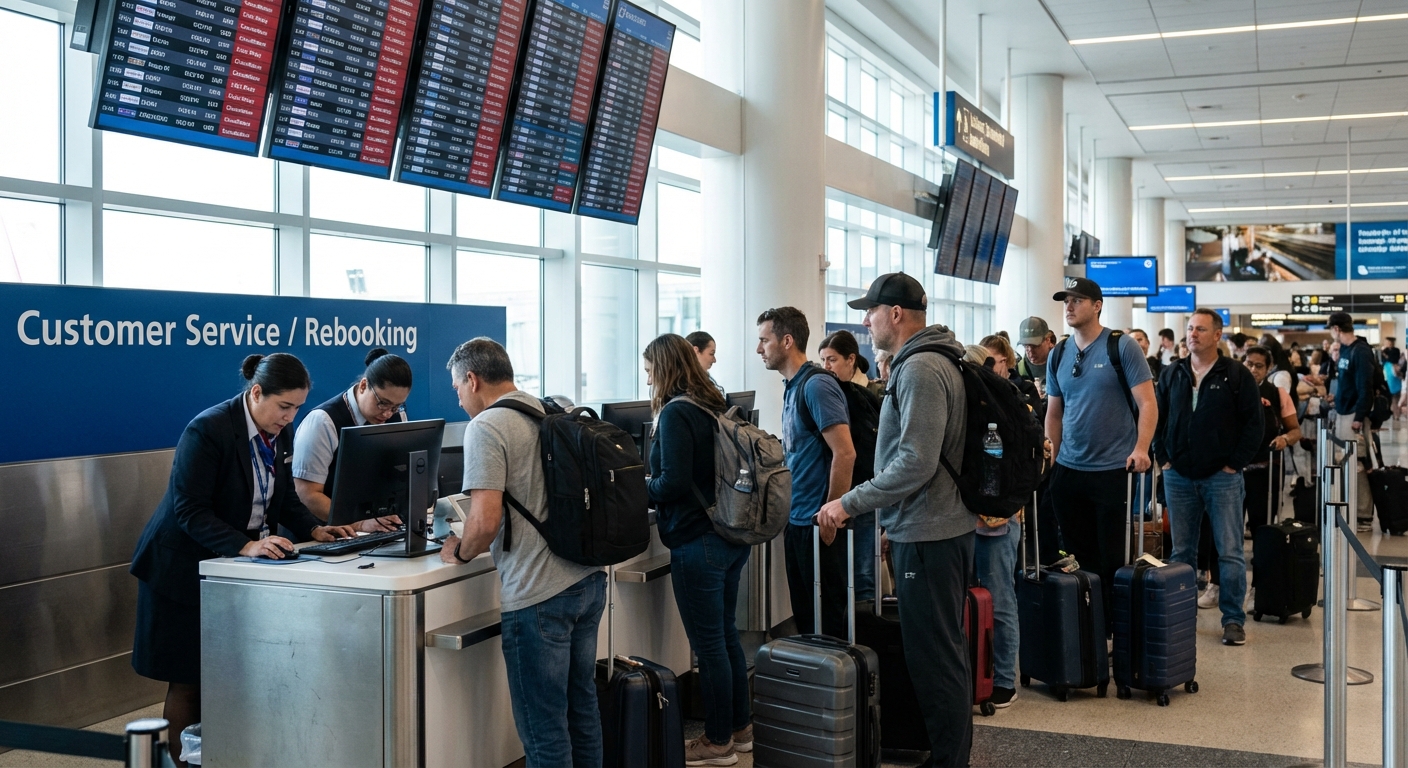
Third, if you’re at the airport, go to the airline’s service desk AND call at the same time. Whichever queue moves first, take that option. Some airports have set up dedicated desks for crisis rebookings.
Fourth, check your hotel situation. Under EU261 duty of care, the airline must provide hotel accommodation if you’re overnight-stranded due to their cancellation. Ask for this explicitly. They won’t volunteer it.
Fifth, document every expense. Meals, transport, hotel nights, phone calls. If the airline doesn’t cover duty of care immediately, you can claim it back later. Keep receipts for everything.
The routing corridors you should know about
Understanding how airlines are routing around the conflict helps you pick better flights and anticipate delays.
The Caucasus Corridor runs over Armenia, Georgia, and Azerbaijan. Turkish Airlines and most European carriers use this to bypass Iran. It works, but the airspace is narrow and getting crowded. This is the source of the “Baku Bottleneck” delays.
The Northern Route goes over Scandinavia and Central Asia. Finnair uses this exclusively. Some Lufthansa and Air France flights use variations of this routing. It’s the farthest from the conflict zone but adds flight time for destinations south of Central Asia.
The Egypt Corridor funnels flights through Egyptian airspace south of the conflict zone. Several African carriers and some European airlines use this for routes to East Africa and the Indian subcontinent.
The Trans-Pacific option routes Europe-bound travelers from Asia through the US. Absurdly long, but completely safe. United Airlines and several Asian carriers offer this routing.
Prices: what to expect
Last-minute one-way fares on Turkish Airlines and Singapore Airlines are running $3,000+ on popular routes. This is three to five times normal pricing.
Air India tends to be cheaper than the top-tier alternatives because of its reputation issues, despite being operationally solid. Worth checking if budget matters more than cabin quality.
Here’s the key insight that most travelers miss: if the airline rebooks you onto a partner flight, they handle the fare difference internally. You don’t pay the inflated walk-up fare.
This is why pushing for a rebooking (not a refund) is so important. The airline eats the cost difference. You pay nothing extra.
Finnair’s Helsinki routing tends to be priced at a premium even in normal times, and availability is tighter because the airline is smaller. Book early if this is your preferred route.
What’s the timeline for things to normalize?
Nobody knows. As of mid-March 2026, the conflict shows no signs of de-escalation. Iran’s new supreme leader has vowed to keep the Strait of Hormuz closed. The US and Israel are continuing operations.
Qatar Airways has announced a limited schedule of about 30 flights per day starting March 18 — roughly 5% of normal operations. Passenger sentiment is skeptical.
Airlines and travel experts are privately planning for disruptions lasting months, not weeks. If you have upcoming travel that was routing through the Gulf, rebook now rather than waiting and hoping. The longer you wait, the fewer alternative seats are available and the higher the prices climb.
For the most up-to-date information on what’s happening with Qatar Airways specifically — cancellation policies, refund processes, and flight status — see our detailed guide on Qatar Airways flight cancellations.
Quick reference: which airline for which route
| Route | Best alternative | Via |
|---|---|---|
| Europe → SE Asia | Turkish Airlines | Istanbul |
| Europe → Japan | Finnair | Helsinki |
| Europe → Australia | Singapore Airlines | Singapore |
| Europe → India | Air India | Delhi |
| US → SE Asia | JAL / ANA | Tokyo |
| US → India | Air India | Delhi |
| UK → Asia | Cathay Pacific | Hong Kong |
| Anywhere → Maldives | SriLankan Airlines | Colombo |
Digital nomads: special considerations
If you’re a remote worker heading to Southeast Asia on a flexible timeline, the crisis creates both problems and opportunities. Many digital nomads have adjusted their plans, and co-living spaces in places like Chiang Mai and Da Nang are seeing an influx of people who arrived via creative routing.
Consider breaking your journey. Fly to Istanbul on Turkish Airlines, spend a few days (or weeks) working from one of Istanbul’s many coworking spaces, then continue to your final destination when you find a good fare or connection.
Istanbul has fast internet, great food, and low-to-moderate costs for a European city. Several nomads in online communities have adopted this pattern, turning the forced layover into a productive stop.
Visa implications matter too. If your original routing included a specific entry date tied to a visa application (like Vietnam’s e-visa with a fixed entry date), a flight cancellation can invalidate that visa. Apply for a new e-visa with your updated travel dates as soon as you know your new flight. Vietnam’s e-visa processing is usually fast, but don’t leave it to the last minute.
For those weighing whether to just stay put until things calm down, our guide to the best cities for digital nomads covers options across multiple continents. Not all of them require routing through the Middle East.
The Middle East crisis has reshuffled global aviation routing, but there are real alternatives that work. Turkish Airlines through Istanbul is the most versatile option for most travelers. Singapore Airlines and Finnair offer conflict-free routing at a premium. Air India is the value pick.
Whatever you do, push for a rebooking over a refund, book single-ticket itineraries, and don’t wait for things to normalize — rebook now while seats are still available.
Leave a Reply