
Chengdu is the launchpad, not the destination
I came to Chengdu for the pandas and the hotpot. I stayed for the day trips. That’s the thing about Sichuan’s capital that most people don’t realize until they’re already there: the city itself is great, but what surrounds it is on another level entirely. A 71-meter Buddha carved into a cliff face. Sacred mountains with wild monkeys and Taoist temples. A 2,200-year-old irrigation system that still works. Turquoise lakes that look like someone cranked the saturation slider to maximum. If you’re spending a week or more in Chengdu, you’ll want to get out of the city for at least two or three of those days. Check out our backpacker’s guide to Chengdu for the city essentials, then use this guide to plan what happens outside the ring roads.
Leshan Giant Buddha
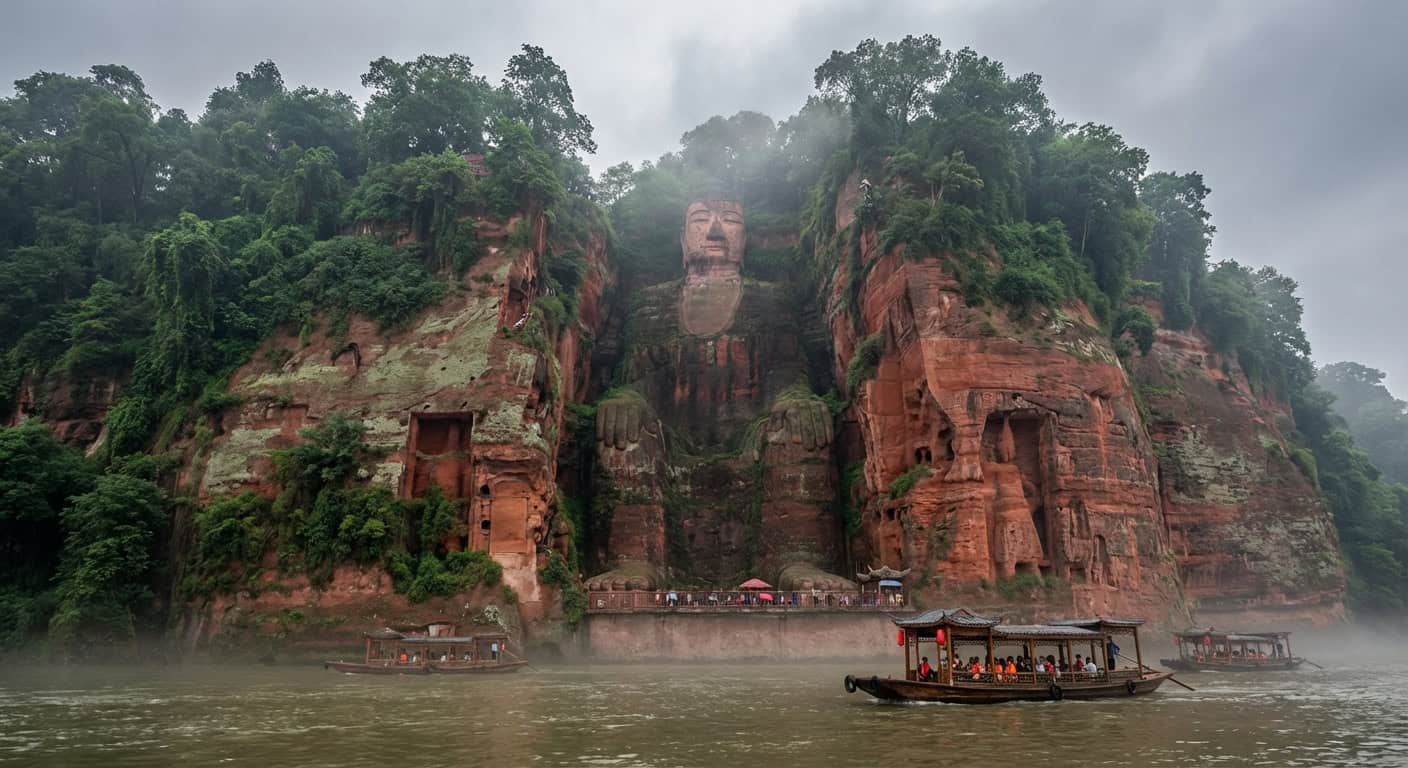
The Leshan Giant Buddha is the single most popular day trip from Chengdu, and for good reason. The statue is 71 meters tall, carved into the red sandstone cliffs where three rivers meet. It was built in the 8th century and is the largest stone Buddha in the world. Standing at the base, you’re level with its toenails. Each toe is taller than a person.
Getting there is straightforward. Take the high-speed train from Chengdu East (Chengdudong) to Leshan Station. The ride takes about one hour, and trains run frequently throughout the morning. Book your tickets in advance through Trip.com or the 12306 app because the early morning departures sell out. From Leshan Station, take a taxi or Didi to the scenic area (about 20 minutes, 20 to 30 RMB). There’s a Bus #3 and K1 that also run from the station, but a taxi saves you time and costs almost nothing. Ignore the private drivers at the station who claim the bus isn’t running.
Once you’re there, you have two choices: stairs or boat. The staircase route (the Nine Bends Plank Road) takes you down the cliff face right next to the Buddha. You walk along its ear, past its shoulder, and down to its feet. The experience is intense and up-close, but the queue to get on the stairs can stretch to one to three hours on weekends. On a weekday morning, you might wait 30 minutes. If you go this route, arrive at the park gates by 7:30 or 8:00 AM when they open. The boat, on the other hand, takes you along the river and gives you the full frontal view of the entire statue. You can get the classic photo with the whole Buddha in frame, which you simply cannot get from the stairs. The ride takes about 20 minutes.
My advice: if you have time, do both. Walk the stairs first thing in the morning before the crowds pile up, then take the boat afterward for the panoramic shot. If you only have time for one, choose based on what matters more to you: up-close detail (stairs) or the complete picture (boat). The stair route is hard on the knees. They’re steep, narrow, and slippery when wet. Bring water and wear decent shoes.
A 9 AM train from Chengdu East gets you to Leshan by 10 AM. Spend four hours at the site, grab lunch nearby, and catch a 3 PM train back. That’s the standard day-trip formula, and it works.
Mount Emei
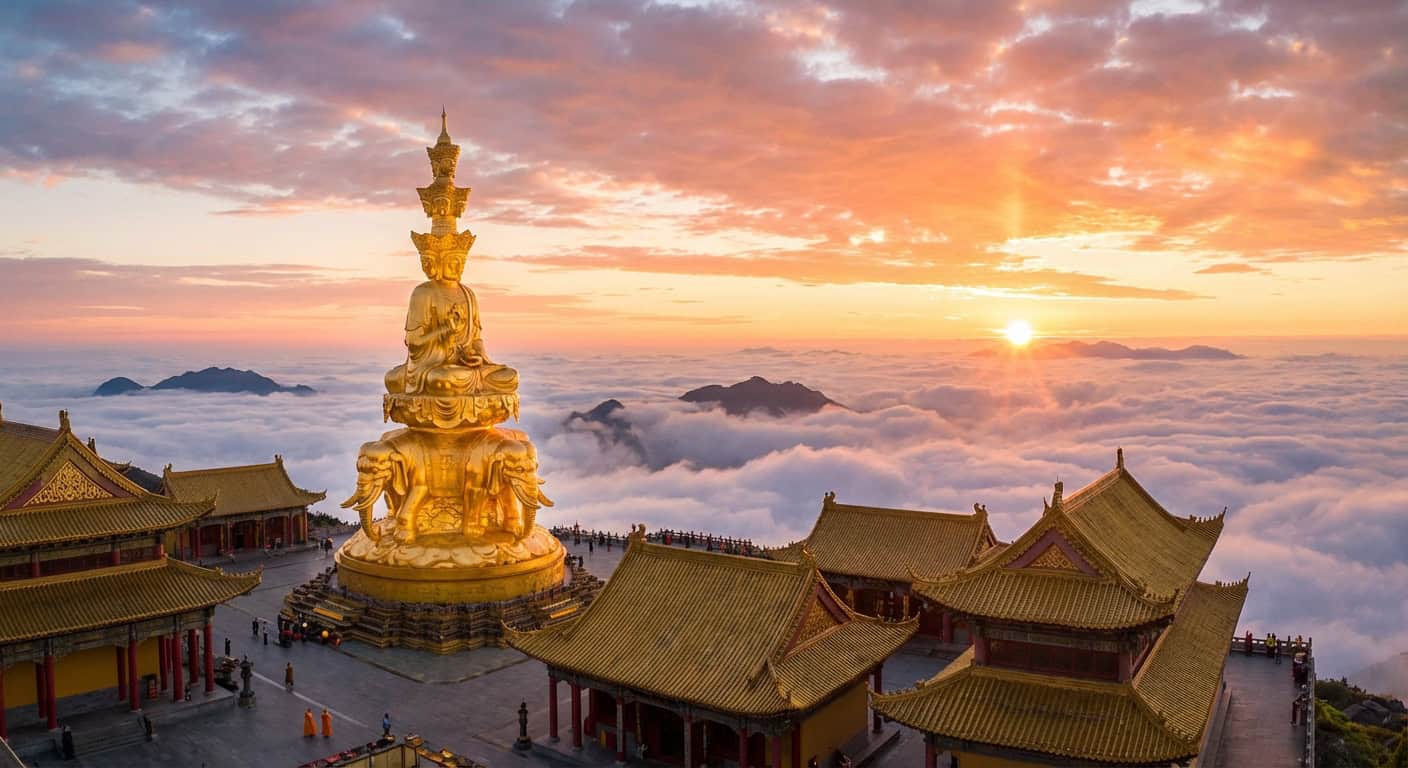
Mount Emei is one of the four sacred Buddhist mountains in China, and it is a proper mountain. The Golden Summit sits at 3,079 meters, and the full hiking trail from the base covers about 60 kilometers of stone stairs. You can do it in one day if you’re fit and strategic, or turn it into a two-day trip with an overnight stay on the mountain. Either way, it is one of the best adventure travel destinations you’ll find in western China.
For the one-day version, take the eco-bus from the visitor center at Baoguo (the base) to Leidongping. That bus ride is about two hours through winding mountain roads. From Leidongping, you have two options: hike about two hours to the cable car station at Jieyin Hall and ride the cable car to the Golden Summit, or hike the entire way up (add another hour or two). Take the first bus at 7:00 or 8:00 AM. You need to catch the last bus down (around 6:00 PM), so time management matters. The Golden Summit has a massive golden Buddhist statue, and on clear mornings the sea of clouds below is extraordinary.
For the two-day version, start hiking from Wannian Temple or the base and work your way up. The trail is almost entirely paved stone steps, so it’s not technical, but it is physically exhausting. The section known as the “99 Bends” near Elephant Bathing Pool is the most grueling stretch. You can sleep in a monastery along the trail for around 50 RMB per bed. Conditions are basic: damp bedding, communal squat toilets, maybe an electric blanket if you’re lucky. If you want to see the sunrise from the Golden Summit, you need to sleep at a hotel on the summit itself or at Leidongping and take the early cable car up. Sleeping at a mid-mountain monastery won’t get you there in time unless you hike in the dark.
The monkeys on Mount Emei deserve their own warning. The wild macaques in the Ecological Monkey Zone are aggressive. They snatch bags, unzip backpacks, and jump on people who are holding food. Do not show any food or plastic bags. Keep your hands empty. Buy a bamboo walking stick from a vendor at the base (about 5 RMB). You don’t hit the monkeys with it, but banging it on the ground scares them off. The stick doubles as a hiking pole, which you’ll want anyway because the descent is harder on the knees than the climb.
Teddy Bear Hostel at the base in Baoguo is the go-to hub for foreign hikers. They store luggage, give route advice, and generally help you sort out logistics. If you’re traveling with a big pack, leave it there and hike with a daypack.
Jiuzhaigou Valley
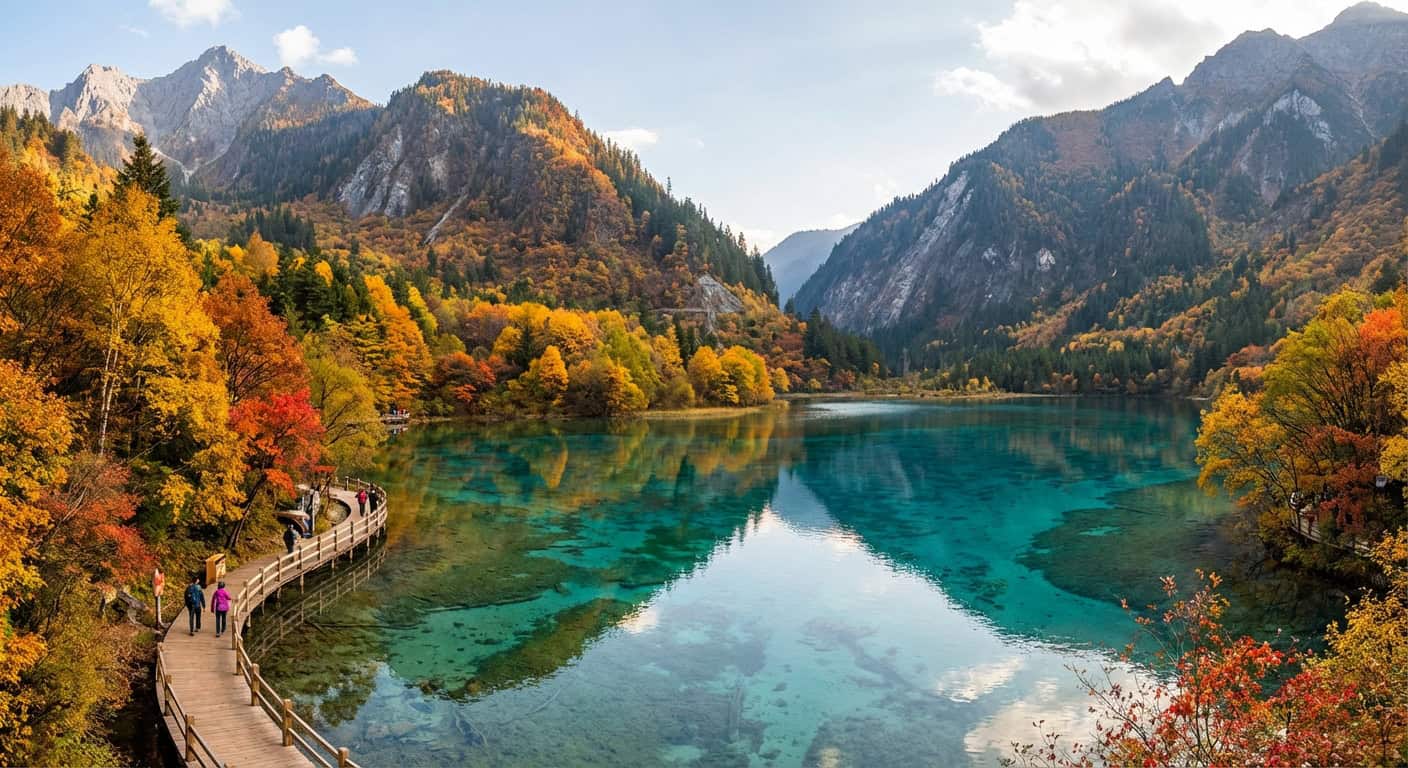
Jiuzhaigou is not a day trip. Let’s get that out of the way. It’s a multi-day commitment from Chengdu, and it requires more planning than anything else on this list. But people who have been there call it the most beautiful national park in Asia, and from the photos and trip reports I’ve seen, that claim holds up. The turquoise and emerald lakes, the waterfalls, the forests. It looks like someone invented a new color palette.
The logistics changed dramatically when the high-speed rail line opened in late 2023. The old way was an 8 to 10 hour bus ride through mountain roads. The new way: take the train from Chengdu East to Huanglongjiuzhai Station, which takes about 1.5 hours. The catch is that the station is still about 90 kilometers (roughly two hours by bus or taxi) from the park entrance. Shuttle buses and shared taxis run from the station. A Didi or shared taxi costs around 60 RMB per person for the transfer.
Book your train tickets exactly 14 days in advance through Trip.com or the official 12306 app. The morning trains (the 6:45 AM departure especially) sell out within minutes of going on sale. Trip.com has a reservation feature that tries to grab tickets the second they open, which is worth using.
The recommended itinerary is three days minimum. Day one: train to the station, transfer to Jiuzhaigou, check in near the park entrance in Zhangzha Town. Day two: full day exploring the park. Day three: bus back toward the train station with a stop at Huanglong on the way back, then an afternoon train to Chengdu. The park is Y-shaped with two main valleys. Most tour groups go up one side. Independent travelers recommend taking the internal bus to the top of one fork (Primeval Forest or Long Lake) and walking down the trails. The walking paths between bus stops are often empty even when the buses are packed. Get to the gate by 7:00 or 7:30 AM.
Visit Jiuzhaigou before Huanglong if you’re doing both. Huanglong sits at 3,500 meters and altitude sickness is a real concern if you go straight there from Chengdu. A day at Jiuzhaigou (2,000 to 3,000 meters) lets your body adjust. The best season is mid-October when the leaves change color, but that’s also peak crowds. Winter is quieter but cold. Bring your own food for the park. The options inside are limited to instant noodles and overpriced buffets. If you want a travel partner for this kind of longer trip, HitchHive is a good way to find hiking partners heading in the same direction.
Dujiangyan
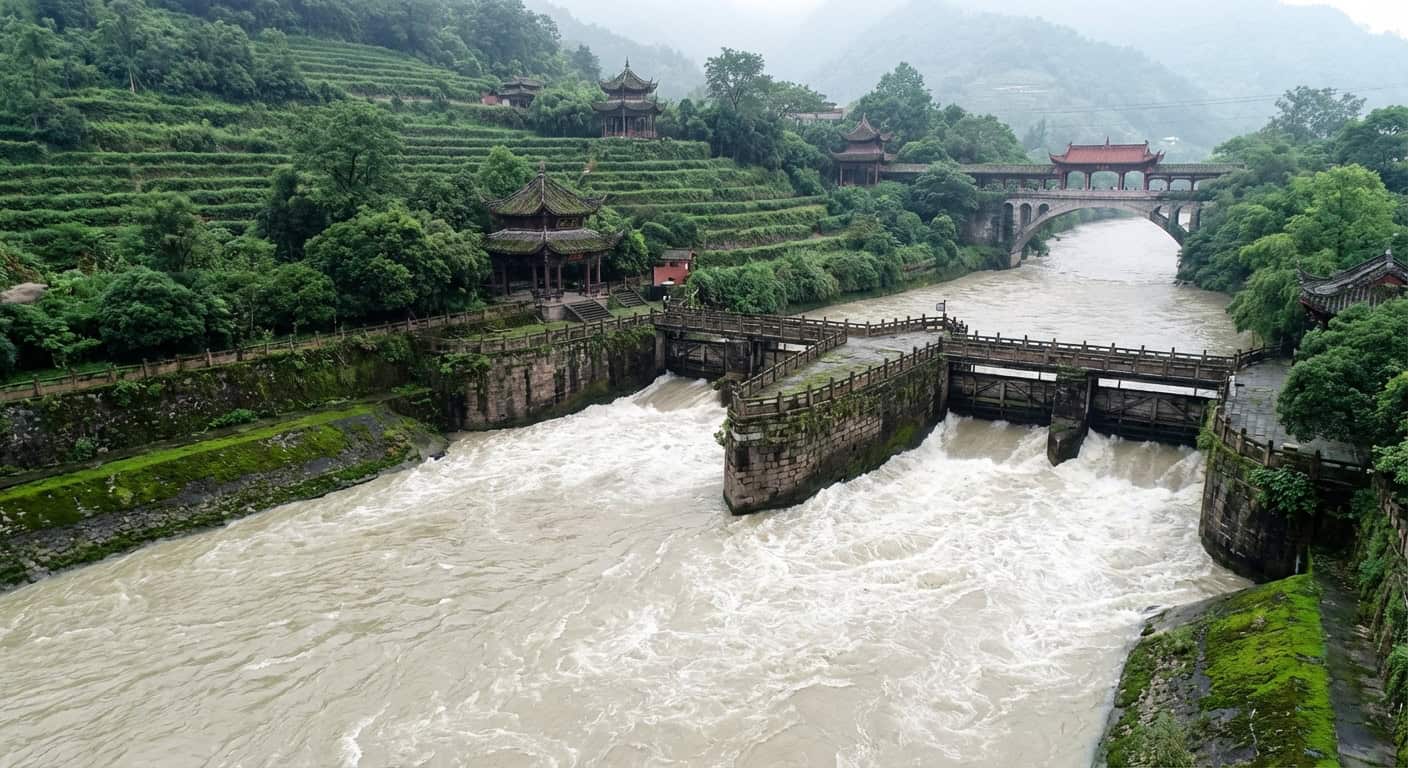
Dujiangyan is the easiest half-day trip from Chengdu and one of the most underrated. The Dujiangyan Irrigation System was built in 256 BC by Li Bing and his son, and it still functions today. No dams, no reservoirs. It uses the natural topography, a fish-mouth-shaped levee that splits the river into two channels, to control flooding and irrigate the Chengdu Plain. It’s the reason this region is called the “Land of Abundance.” Two thousand years of continuous operation.
Take the high-speed train from Chengdu to Lidui Park Station (closer to the site than the main Dujiangyan Station). The ride is about 30 minutes. From the station, it’s a short taxi ride to the scenic area entrance. The honest truth about this site: it’s intellectually fascinating but visually underwhelming if you don’t understand what you’re looking at. Multiple travelers on Reddit said the same thing. If you just walk around by yourself, you’ll see water and rocks and wonder what the fuss is about. Hire a guide, or at least read up on the engineering beforehand. Once you understand how the fish mouth levee works and how the system has operated continuously for over two millennia, the whole place clicks.
The other draw at Dujiangyan is the Panda Valley. It’s a separate facility from the main Chengdu Research Base and has far fewer crowds. You can see giant pandas and red pandas in a more relaxed, forested setting. The red panda section is a free-roaming area where the animals walk right past you on the paths. Multiple visitors said this was their favorite part of the Dujiangyan trip. You can combine the irrigation system and panda visit into a solid half-day or full-day trip.
If you stay into the evening, check out Nanqiao Bridge when it lights up after dark. The bridge illumination is a big draw and makes for a good ending to the day before your train back.
Qingcheng Mountain
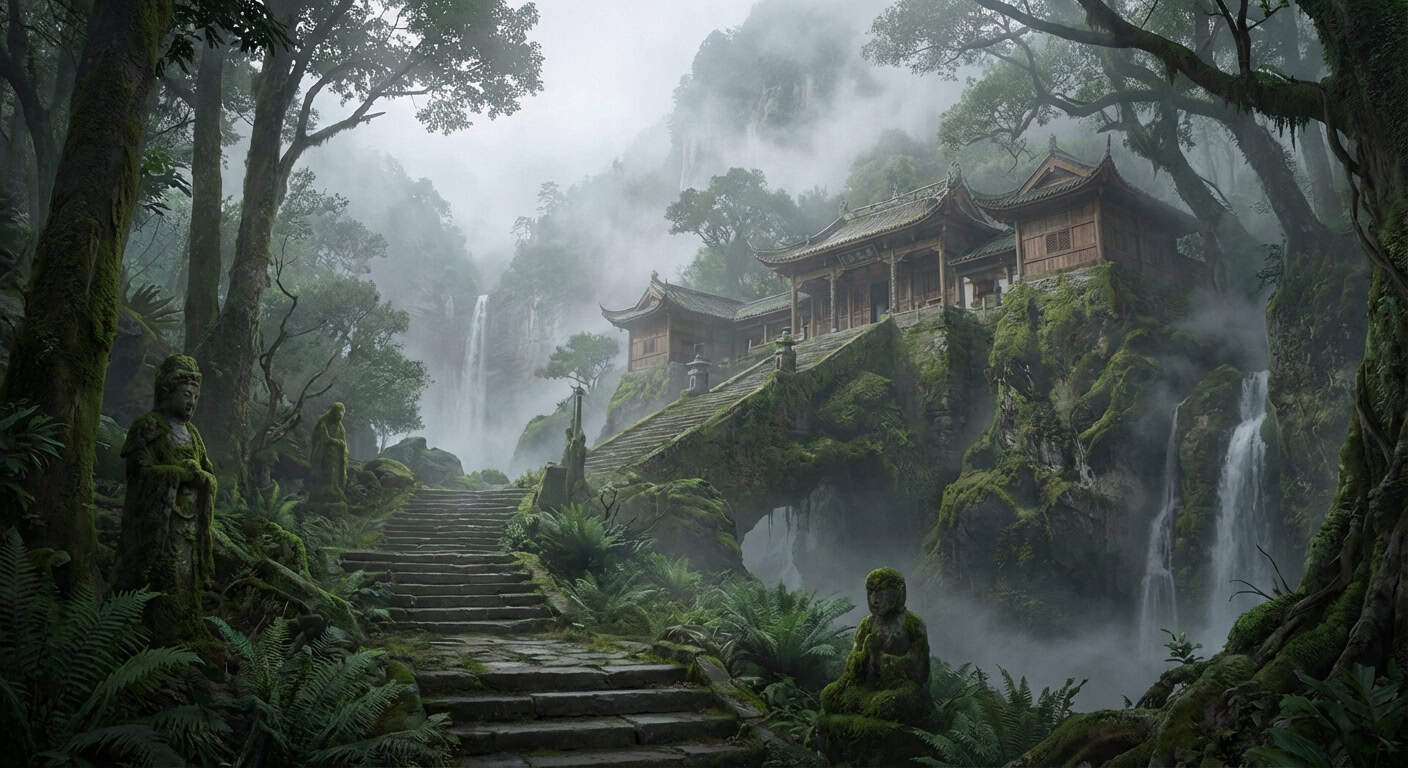
Qingcheng Mountain is considered the birthplace of Taoism and sits about 70 kilometers west of Chengdu, right next to Dujiangyan. You can easily combine the two into a single day trip. The mountain is divided into the Front Mountain and the Back Mountain, and they’re essentially two different experiences.
The Front Mountain is where the temples are. It’s the more popular, more developed, and more crowded of the two. The main draw is the Taoist temple complex, including the Shangqing Palace near the top. If you’re short on time, take the Buyun Cableway up and skip the lower slog. From the cable car station, the hike to the summit (Laojun Pavilion) takes about 45 minutes of steep stairs. The views from the Shangqing Palace area are good on their own if you don’t want to push for the very top. Most visitors spend three to four hours on the Front Mountain.
The Back Mountain is for hikers. It has waterfalls, streams, and almost no crowds. The trade-off is that it requires more time (a full day) and more physical effort. If you’ve been backpacking for a while and want something quieter and more natural, the Back Mountain is the better choice. Wear proper shoes. The paths are uneven and can be wet.
The recommended day-trip combo: start with Qingcheng Mountain in the morning to beat the heat and crowds, then head to the Dujiangyan Irrigation System in the afternoon. Both are on the same train line from Chengdu. Our adventure travel guide has more on planning active day trips like this.
Combining Leshan and Mount Emei
These two sites are close to each other and connected by high-speed rail. Leshan Station to Emeishan Station is a short train ride. A common plan is to visit the Leshan Giant Buddha on day one (morning train from Chengdu, afternoon at the Buddha), then take a late afternoon train to Emeishan and spend the night at the base. Day two is Mount Emei. This two-day combo is probably the best value use of time for any Sichuan itinerary.
Do not try to see the Golden Summit and the Leshan Giant Buddha in a single day. Reddit travelers are emphatic about this. You’ll rush both and enjoy neither. Give each site its own day and you’ll have a much better experience. Leshan Railway Station has luggage storage if you need to drop your bags between stops.
Getting around: trains, buses, and tours
High-speed rail is the backbone of Sichuan day trips. Chengdu East is the main hub. From there you can reach Leshan (1 hour), Emeishan (1.5 hours), Dujiangyan (30 minutes), and Huanglongjiuzhai (1.5 hours). All trains are clean, fast, and cheap. Book through Trip.com for the English interface, or the 12306 app if you can read Chinese. Tickets go on sale 14 days in advance, and popular routes sell out.
For local transport at each destination, Didi (the Chinese ride-hailing app) works well. It’s cheaper than negotiating with taxi drivers at train stations. Set up the app and link a payment method before you leave Chengdu.
Organized tours exist for every destination on this list, and they make sense in certain cases. For Jiuzhaigou, a tour handles the complex logistics and the last-mile transfer from the train station. For the Dujiangyan Irrigation System, a guided tour means you’ll actually understand what you’re looking at. For Leshan and Mount Emei, independent travel is easy and a tour doesn’t add much. Same for Qingcheng Mountain. The general rule: if the logistics are simple and the site speaks for itself, go independently. If you need context or the transport chain is complicated, consider a tour. And if you’re solo and want company for these adventures, that’s exactly what sharing the experience with other travelers is for.
Read our travel safety guide before heading into mountain areas. Weather changes fast in Sichuan, trails can be slippery, and mobile signal drops out on some of these routes. Our things to do in Chengdu guide covers what to do on your city days between trips. And for keeping your budget in check across all of this, the Chengdu budget travel guide breaks down costs for transport, entrance fees, and food. Make sure to try the local food at each stop too. Our Chengdu food guide covers what to eat before and after your day trips.
Continue your journey
Planning your Chengdu adventures? These guides will help:
- The Backpacker’s Guide to Chengdu — everything you need to know about navigating the city on a budget
- Chengdu Food Guide — where to eat Sichuan food like a local
- Things to Do in Chengdu — the best activities and experiences in the city
- Chengdu Budget Travel Guide — detailed cost breakdown for accommodation, food, transport, and activities
- How to Find Hiking Partners While Traveling — connect with other adventurers for Sichuan’s mountains and trails
Leave a Reply