
Why every digital nomad ends up in Medellin
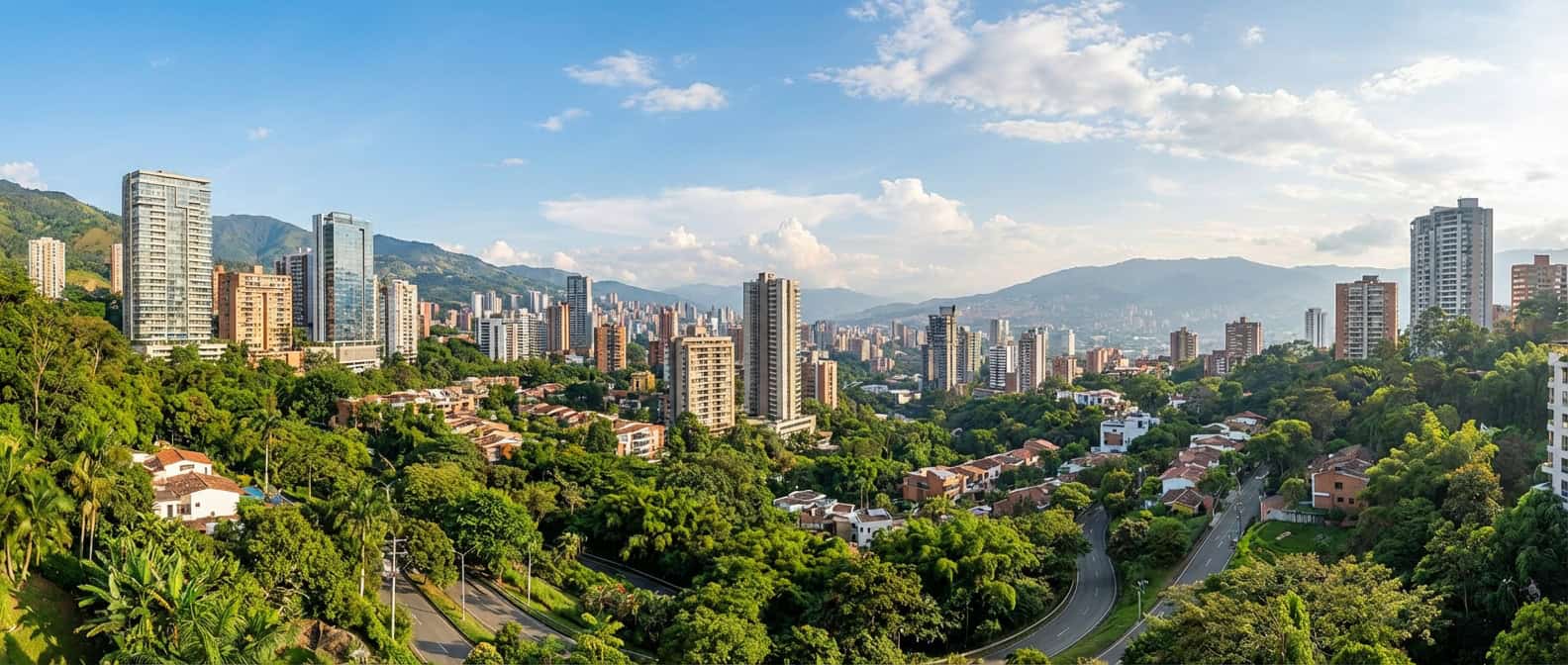
There is a reason that every “best cities for digital nomads” list puts Medellin near the top. I resisted the hype for months. Another overhyped destination full of Instagram influencers and crypto bros, I figured. Then I landed at Jose Maria Cordova airport, took the winding highway down into the valley, and watched the city lights spread out below me like a bowl of stars. Within a week I understood why people come here for two weeks and stay for two years.
Medellin is not perfect. It has real safety concerns, gringo pricing that keeps creeping up, and an expat bubble that can feel suffocating if you let it. But for the combination of weather, infrastructure, cost, and community, it is hard to beat. This is everything I wish someone had told me before I arrived, based on what actually matters for getting work done and building a life here. If you are planning your first trip to South America as a digital nomad, Medellin is the obvious starting point for good reason.
Visa situation: easier than you think
Colombia is one of the most accessible countries in South America for remote workers. Most nationalities get a 90-day tourist visa on arrival, no application needed. You can extend that for another 90 days at a Migracion Colombia office for around $50 USD, giving you a full 180 days in the country per calendar year.
The digital nomad visa
Colombia launched a dedicated Digital Nomad Visa (V category) that lets you stay for up to two years. The requirements are straightforward: proof of income at least 3x the Colombian monthly minimum wage (roughly $900-1,100 USD/month depending on exchange rates), health insurance covering your stay including repatriation, and a letter from your employer or proof of freelance income.
A few things the official websites do not tell you. Immigration has gotten stricter about where you apply from. You need to submit from a country where you have legal status, either your home country or Colombia while your tourist visa is still valid. Redditors who applied from a random third country where they were just passing through got rejected. Processing times are inconsistent, ranging from two weeks to two months, so apply with at least 30-45 days left on your tourist stamp.
The insurance requirement trips people up too. You need a certificate covering the full visa duration, which sounds impossible for annual policies. The workaround is requesting a “Certificate of Health Coverage” from your insurer stating the policy is active and renewable. SafetyWing and Genki are popular choices because they produce the exact documents Colombian immigration demands. For more on navigating South American visa logistics, check out our Buenos Aires guide for comparison.
The visa run alternative
Plenty of nomads skip the DN visa entirely and just do visa runs. Fly to Panama or Ecuador for a few days, come back, get another 90-day stamp. It works, but immigration officers are starting to flag people who do this repeatedly. The DN visa is worth the hassle if you plan to stay longer than six months.
Neighborhoods: where to actually live
This is where most guides get it wrong. They say “stay in El Poblado” and leave it at that. The neighborhood you choose fundamentally shapes your entire Medellin experience, so let me break down the real trade-offs.
El Poblado: the gringo bubble
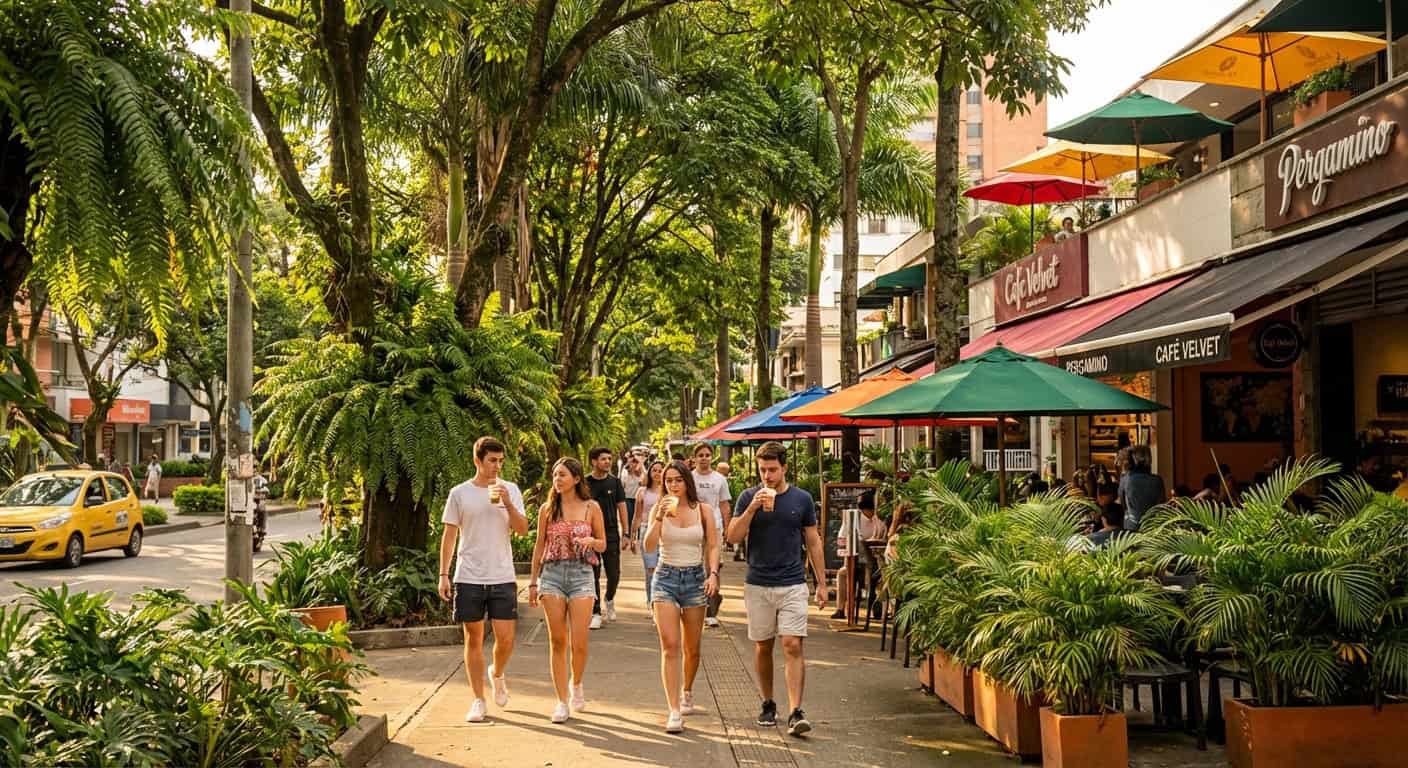
Poblado is the default. Every nomad starts here, and many never leave. The area around Parque Lleras has the highest concentration of restaurants, bars, coworking spaces, and English speakers in the city. You can live entirely in English here, which is both its greatest strength and weakness.
The honest truth: Poblado feels like “Little Miami.” It is comfortable, convenient, and completely detached from actual Colombian life. The hills are brutally steep, you will be sweating just walking to the grocery store. Nightclub noise around Parque Lleras thumps until 3 AM, so if you pick Poblado, make sure your apartment is up the hill away from the park. Rents have skyrocketed in recent years and now rival mid-tier US cities for furnished apartments in the $800-1,200 range.
Poblado makes sense for your first week or two while you get oriented. After that, I would strongly suggest exploring other neighborhoods.
Laureles: the sweet spot
If I could only recommend one neighborhood, it would be Laureles. It is flat, green, and walkable, which sounds minor until you have climbed Poblado’s hills in the afternoon heat. The area around La 70 has excellent nightlife without the tourist markup, and the cafe scene is arguably better for actual work than anything in Poblado.
Laureles attracts a more intentional crowd. The nomads here tend to be longer-term, more focused on actually building something rather than partying. You will need more Spanish here, which most people consider a feature, not a bug. Housing is generally lower-rise without the 24/7 security buildings common in Poblado, so look for apartments on the 3rd floor or higher and avoid ground-floor units.
Envigado: the budget pick
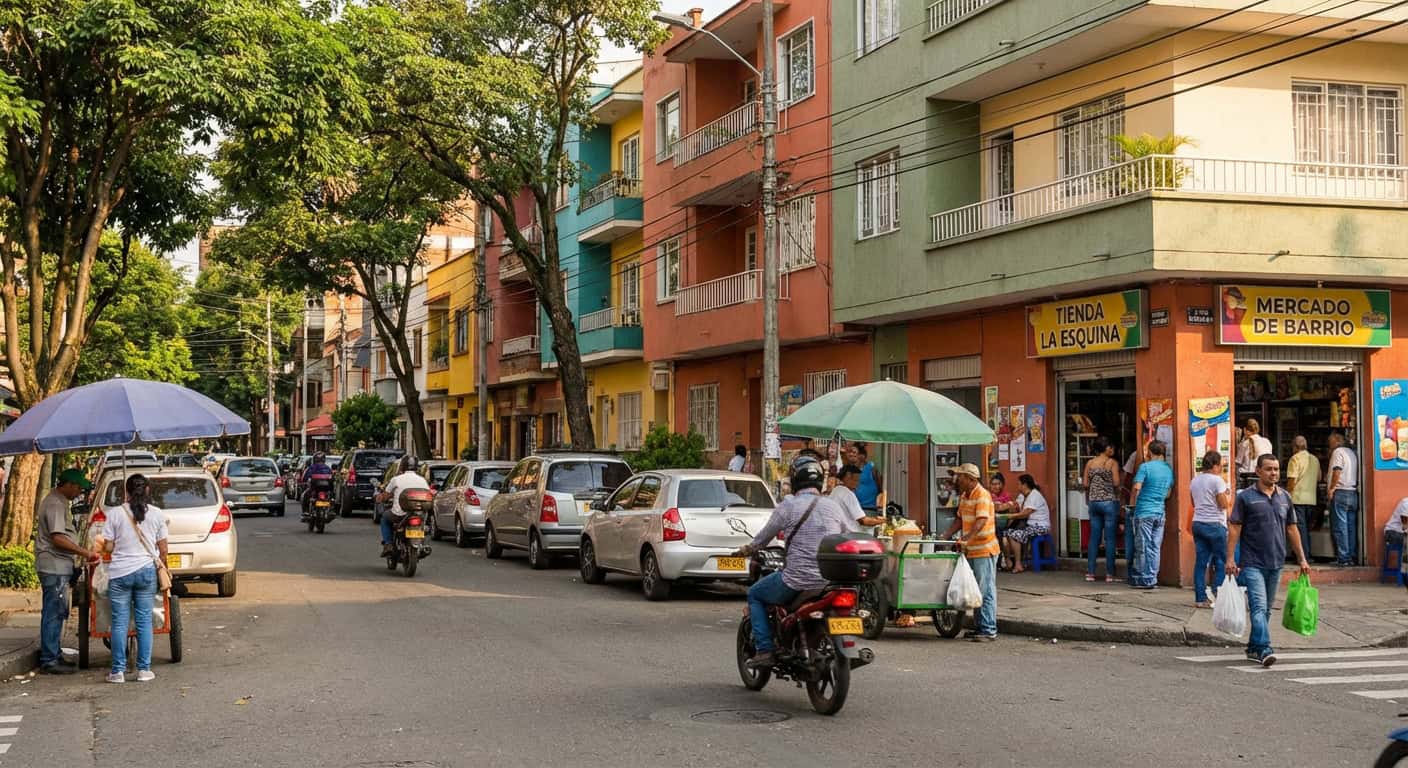
Technically a separate city but seamlessly connected by the Metro, Envigado is where long-term nomads and expats quietly settle. It feels safer than both Poblado and Laureles, with a family-oriented, residential atmosphere. You will need functional Spanish here because this is “real Colombia” with very few English speakers.
The food scene is excellent and affordable. Look for the Calle de la Buena Mesa, a gastronomic zone that rivals Poblado’s restaurants at half the price. On weekends, El Salado ecological park is right there for hiking. The main trade-off is a smaller social scene for nomads, though the Metro connection means Poblado is just a quick ride away.
Sabaneta
Even further south and even cheaper. Sabaneta is where you go when you are committed to Colombia for the long haul and want maximum value. The social trade-off is real though; you will need to be proactive about getting into the city for events and meetups.
Internet and connectivity
This is where Medellin does well. Fiber optic internet through Claro or Tigo is widely available in most modern apartments across Poblado, Laureles, and Envigado. Speeds of 100-300 Mbps are standard, and reliability is good enough for daily video calls.
The one caveat: heavy tropical storms can knock out internet temporarily. Medellin sits in a valley and gets intense afternoon rain, especially from April to November. It usually comes back within an hour, but if you have a critical client presentation, have a backup plan. A Claro or Tigo mobile SIM with a data plan gives you a reliable hotspot for around $15-20/month, and the city is dense with cafes and coworking spaces that have commercial-grade connections.
Pro tip from experienced nomads: before booking any Airbnb, ask the host for a speed test screenshot. “Fast WiFi” means different things to different people. You want to see actual numbers, and specifically check the upload speed, because many connections have decent download but throttled upload that will destroy your video call quality. For more on staying productive while traveling, solid internet is the foundation everything else is built on.
Workspaces: more options than you can use
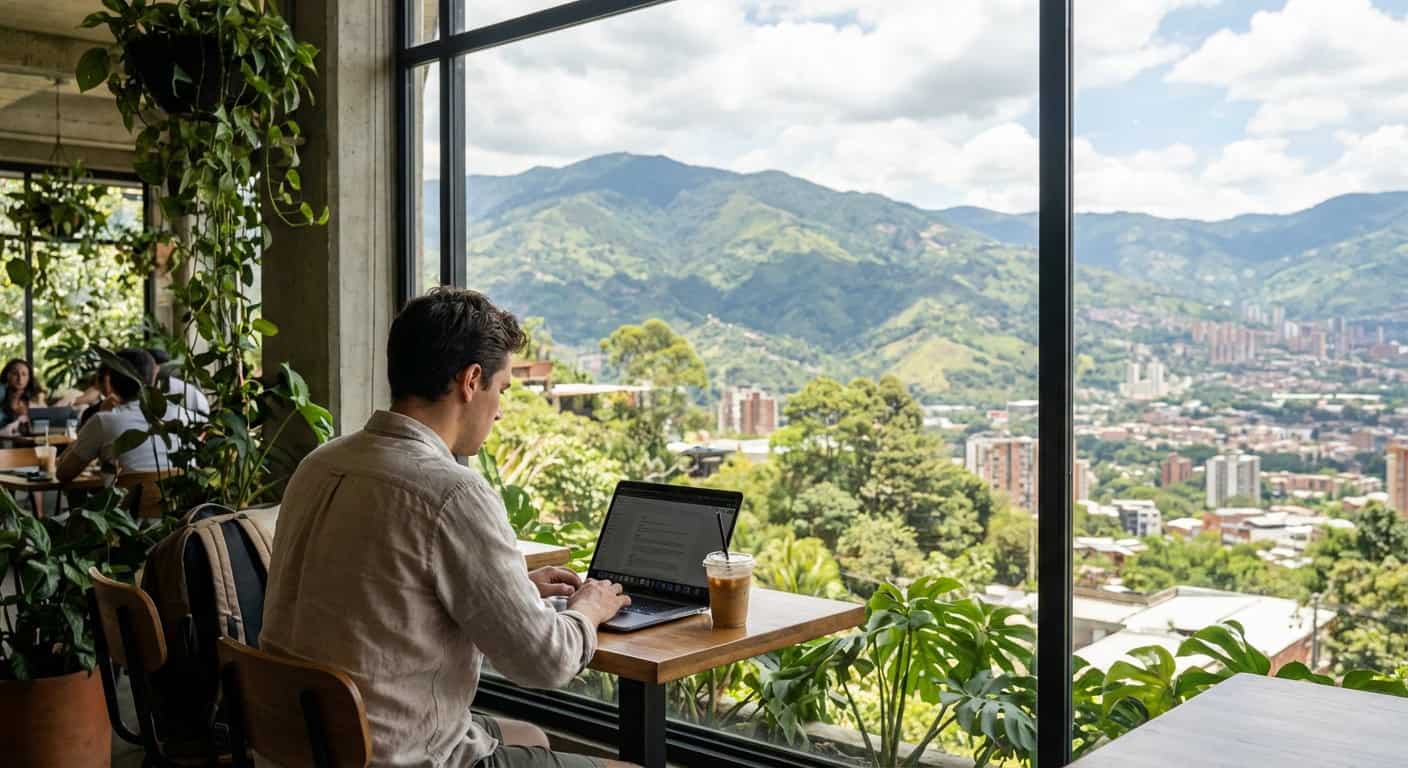
Medellin has one of the most developed coworking ecosystems in Latin America. The short version: Selina (now Socialtel) in Poblado for instant community, Semilla in Laureles for the best balance of work and social, Tinkko on Milla de Oro for serious corporate needs, and WeWork for guaranteed reliability without surprises.
I have written a complete guide to coworking spaces and cafes in Medellin with specific recommendations, pricing, and honest reviews. The cafe scene is equally strong, though with an important safety note: always sit inside, never on a street-facing patio with your laptop visible.
Healthcare and safety: the honest take
Let me address the elephant in the room. Medellin has real safety concerns, and anyone who tells you otherwise is not being straight with you. But the picture is also more nuanced than the fear-mongering suggests.
Safety reality
One Redditor put it perfectly: “There are two parallel lies people believe. The first is that everything is fine and you can take safety for granted. The second is that you are in constant danger of kidnapping. The reality is in the middle.” If you are not involved in drugs or sex tourism, your risk of violent crime drops significantly. Petty theft, however, is common.
The golden rule is “No Dar Papaya,” which translates to “don’t give papaya,” meaning don’t make yourself an easy target. Specifically: do not wear an Apple Watch or flashy jewelry on the street, do not use your phone while walking, do not sit on sidewalk patios with expensive electronics, and do not take yellow taxis at night. Use Uber, DiDi, or InDrive because the rides are tracked. For a deeper dive into travel safety principles that apply everywhere, that mindset will serve you well here.
Some nomads carry a “dummy wallet” with a small amount of cash and an expired card to hand over quickly if confronted. Others keep a cheap burner phone for street use and leave their main device at home. These sound extreme, but experienced residents consider them standard precautions, not paranoia.
The dating app situation deserves its own mention. The US Embassy has issued warnings about scopolamine drugging incidents linked to dating apps like Tinder and Bumble. The pattern is consistent: an unusually attractive match suggests meeting at your apartment immediately. The advice from long-term residents is blunt: if someone who looks like a model is super into you right away, be suspicious. Always meet in public places first, and if you bring someone to your building, make sure the doorman takes a photo of their ID.
Healthcare
On the flip side, healthcare in Medellin is excellent. Colombia has world-class medical facilities, and Medellin specifically is a medical tourism destination. Private hospitals like Clinica Las Americas and Hospital Pablo Tobon Uribe provide quality care at a fraction of US prices. A doctor visit might cost $20-40 USD, and even complex procedures are dramatically cheaper than in North America or Europe. If you are exploring the solo travel lifestyle, knowing that quality healthcare is accessible and affordable provides real peace of mind.
The weather advantage
Medellin is called the “City of Eternal Spring” and it lives up to the name. Sitting at 1,495 meters (4,905 feet) elevation in a valley, the temperature stays remarkably consistent year-round: warm days around 27-28C (80-82F) and cool nights around 17-18C (63-64F). You will never need heating or heavy air conditioning.
This matters more than you might think. After months in tropical heat in Southeast Asia or freezing European winters, having perfect weather every single day removes an entire category of daily friction. You never check the forecast. You never plan around weather. You just go outside and it is nice. The altitude also means fewer mosquitoes than low-lying tropical cities, though they are not entirely absent.
The rainy season (roughly April-May and September-November) brings daily afternoon downpours, but they are predictable. Work in the morning, expect rain around 2-4 PM, then clear skies for evening plans. It is manageable once you adjust your schedule.
Social scene and community
Medellin has arguably the strongest digital nomad community in South America. The infrastructure for meeting people is built-in, which matters enormously when you are building community on the road.
Facebook Groups are the primary organizing platform here, not Meetup.com like in many other cities. “Digital Nomads Medellin” is the main group, but there are dozens of niche communities for everything from hiking to crypto. The website mdecommunity.com maintains a directory of active WhatsApp groups that is useful for getting plugged in fast.
The weekly anchor event is Gringo Tuesdays at Vintrash in Poblado, a massive language exchange that doubles as a party. Even if you are not a party person, it is worth going once just to see the scale of the expat and nomad community. Language exchanges in general are the best way to meet both locals and other foreigners. They work better than any app or organized networking event because the interaction is natural.
Salsa classes are another reliable social connector. Dancefree in Poblado offers free and cheap group classes that naturally force interaction. Even if you have two left feet, nobody cares. The tech crowd has its own scene through developer meetups like MedellinJS, and Ruta N, the city’s innovation hub, hosts regular startup events. The shared experiences you build here often become the foundation for lasting friendships. For tips on finding travel buddies and building those connections, having a city with this much social infrastructure makes everything easier.
Getting around
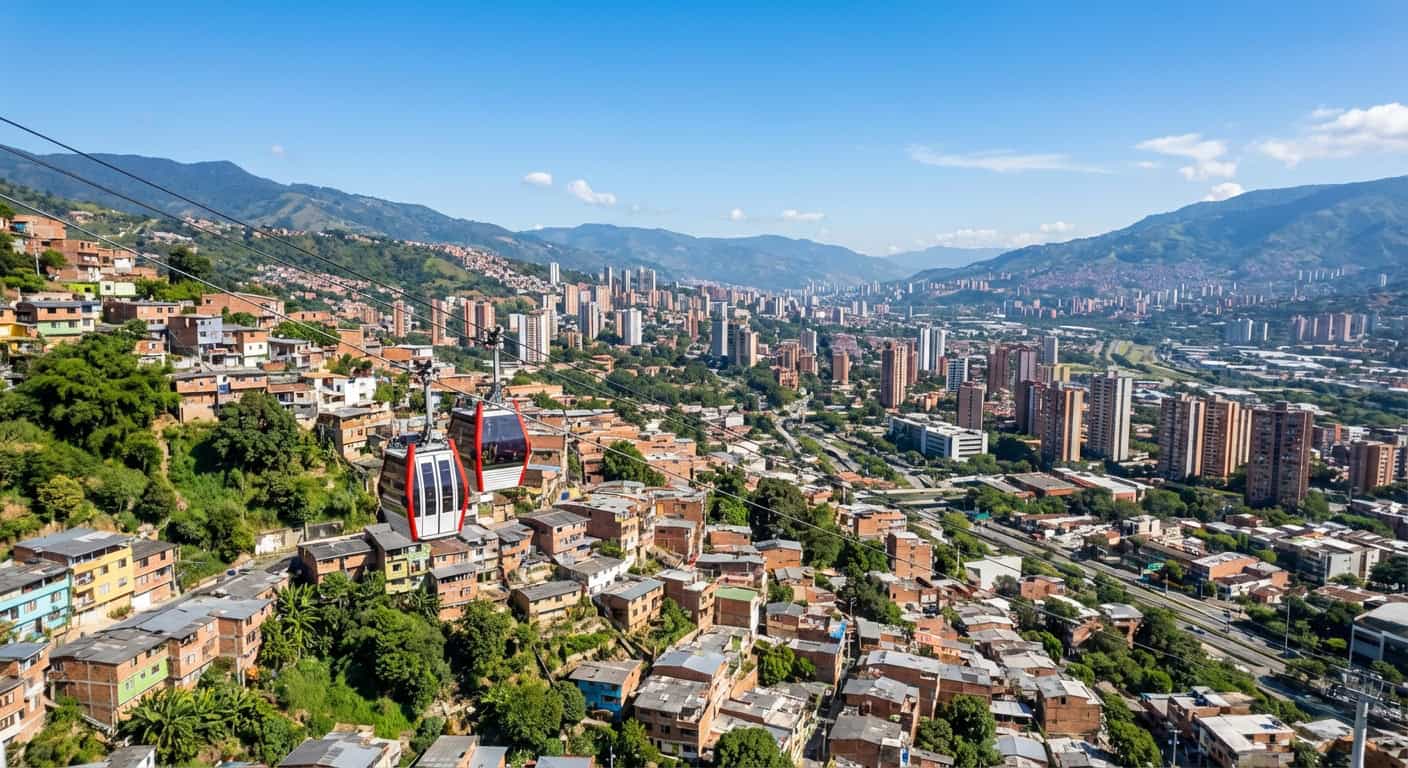
Medellin has the best public transport system in Colombia. The Metro is clean, efficient, cheap (around $0.70 per ride), and connects the major areas of the city. The integrated cable car system (Metrocable) is both a practical transit option and one of the most spectacular urban experiences you will have, gliding over hillside neighborhoods with panoramic valley views.
For daily life, Uber and InDrive are your best friends. Rides across the city rarely cost more than $3-5 USD. Locals will tell you never to hail a yellow taxi on the street, especially at night, because the rides are not tracked. The apps provide a record and accountability that street hails do not.
The topography matters for walkability. Laureles is flat and pleasant to walk around. Poblado is a different story, built on steep hills that turn a simple errand into a cardio workout. Factor this into your neighborhood choice if you plan to walk to cafes and coworking spaces daily.
Cost of living overview
Medellin is still affordable by Western standards, but the “super cheap” reputation is outdated, especially in Poblado. Expect to spend $1,200-2,000 USD/month for a comfortable nomad lifestyle including housing, food, coworking, and social activities. In Envigado or Sabaneta, you can push that closer to $1,000. In upscale Poblado, you might hit $2,500 easily.
I have put together a detailed cost of living breakdown for Medellin with specific numbers for housing, food, transport, and everything else. The short version: the value proposition is still strong, but “gringo pricing” in nomad hotspots is real and getting worse. The further you move from the tourist trail, the better your money stretches.
For the broader context of how Medellin compares to other top cities for digital nomads, the combination of quality of life and cost remains competitive, even as prices rise. And if you want to explore beyond work, check out our guide to things to do in Medellin for weekend adventures.
Continue your journey
Medellin is a city that rewards depth. The longer you stay, the more it reveals, and the more the initial tourist sheen gives way to something more real and more complex. It is not for everyone. The safety awareness required takes a mental toll, and if you cannot relax into it, that is a perfectly valid reason to look elsewhere. But for those who find their rhythm here, it becomes hard to leave.
Ready to go deeper? Here is where to start:
- Best Coworking Spaces and Cafes in Medellin — detailed reviews of every workspace worth your time
- Medellin Cost of Living for Digital Nomads — exact numbers so you can budget properly
- Things to Do in Medellin — weekend adventures and experiences beyond the laptop
- Digital Nomad Guide to Buenos Aires — the other South American heavyweight, and how it compares
- Complete South America Digital Nomad Guide — the big picture for planning your route
- Backpacking Guide — for those combining remote work with deeper travel
Find your people
The best part of Medellin is not the weather or the coffee or the cheap Ubers. It is the people you meet. The city attracts a specific kind of nomad: someone building something real, willing to learn Spanish, interested in Latin American culture beyond the surface. That concentration of intentional people is what keeps drawing others in.
At HitchHive, we believe the connections you make on the road are what transform travel from tourism into something meaningful. Medellin is one of the best places in the world to experience that.
Leave a Reply