
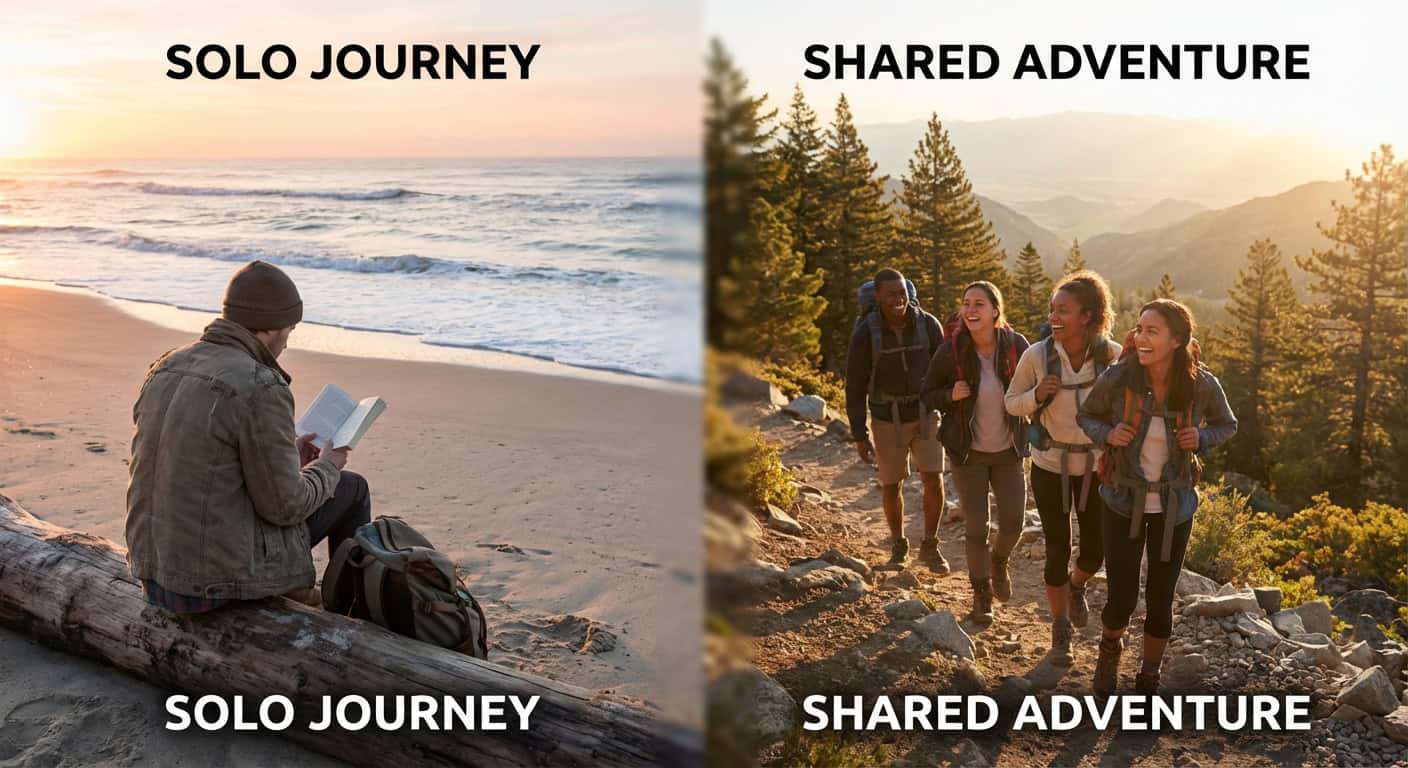
Should you travel alone or with others? Both have merits, and the best choice depends on your personality, goals, and the specific trip. Here is a comparison to help you decide.
The case for solo travel
Complete freedom
Solo travel means your trip, your rules:

- Wake when you want
- Visit what interests YOU
- Change plans instantly
- Eat where and when you choose
- Set your own pace
No negotiations, no compromises, no waiting for others. Your trip is entirely yours.
Personal growth
Traveling alone pushes you:
- You must solve problems yourself
- You become more resourceful
- You build confidence
- You learn what YOU actually want
- You discover capabilities you did not know you had
Many people describe solo travel as transformative specifically because of the challenges.
Easier to meet people
Counterintuitively, solo travelers often make more friends than groups. When you are alone:
- You are more approachable
- You are motivated to reach out
- Others invite you to join them
- You stay in social hostels and join activities
Group travelers often stay within their bubble. Solo travelers connect with the world.
Deeper experiences
Without companions to distract you:
- You observe more carefully
- You engage more with locals
- You have time for reflection
- You are more present
The introvert paradox
Surprisingly, many introverts find group tours more draining than solo travel. On a group tour, you are forced to socialize at breakfast, on the bus, and at dinner with no escape. Solo travel gives you an “escape hatch”: you can be social when you want (in a hostel common room) and retreat when you need to recharge. You control your social battery.
The challenges of solo travel
Loneliness
Even with new friends, solo travel has lonely moments:
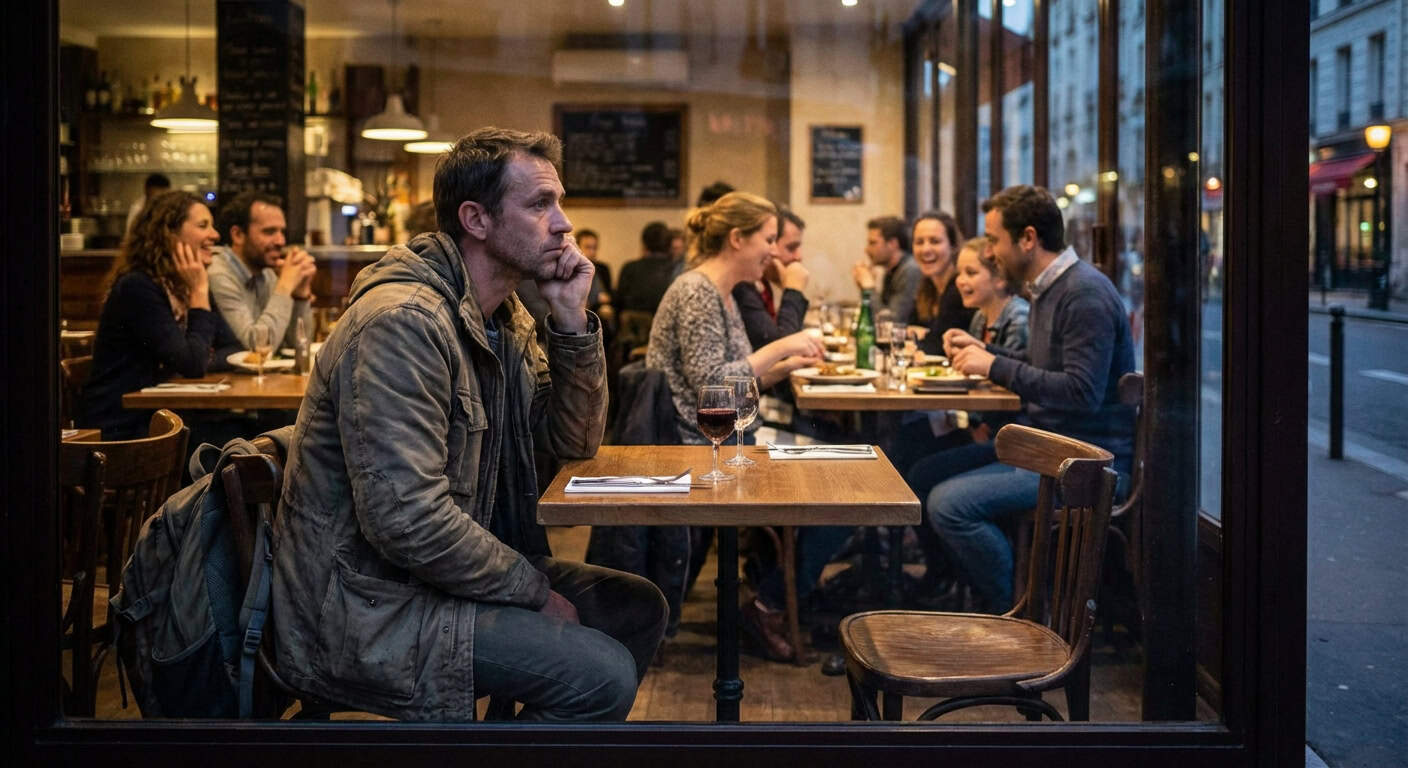
- No one to share that sunset with
- Dining alone gets old
- Decisions fall entirely on you
- Sick days are harder
Apps like HitchHive help by connecting you with nearby travelers, but loneliness remains the biggest challenge.
Safety concerns
Being alone requires more vigilance:
- No one watching your stuff
- No backup in dicey situations
- Extra caution needed at night
These concerns are manageable with proper precautions, but they exist.
Costs
Some things are cheaper shared:
- Private rooms split two ways
- Taxis and transport
- Tours with minimum numbers
The case for group travel
Shared experiences
Experiences are more memorable when shared. That amazing meal, that great view, that hilarious mishap become stories you tell together for years.

Safety in numbers
Groups offer safety:
- Watch each other belongings
- Navigate together
- Backup in emergencies
- More confident in unfamiliar areas
Logistical ease
Planning and decisions can be shared:
- Research divided up
- Costs split fairly
- Navigation shared
- Language barriers easier with more people
Built-in social
No effort required to have company:
- Always someone to eat with
- Conversation readily available
- Photos of you (not just selfies)
- Shared memories from day one
The challenges of group travel
Compromise required
Group travel means accommodating others:
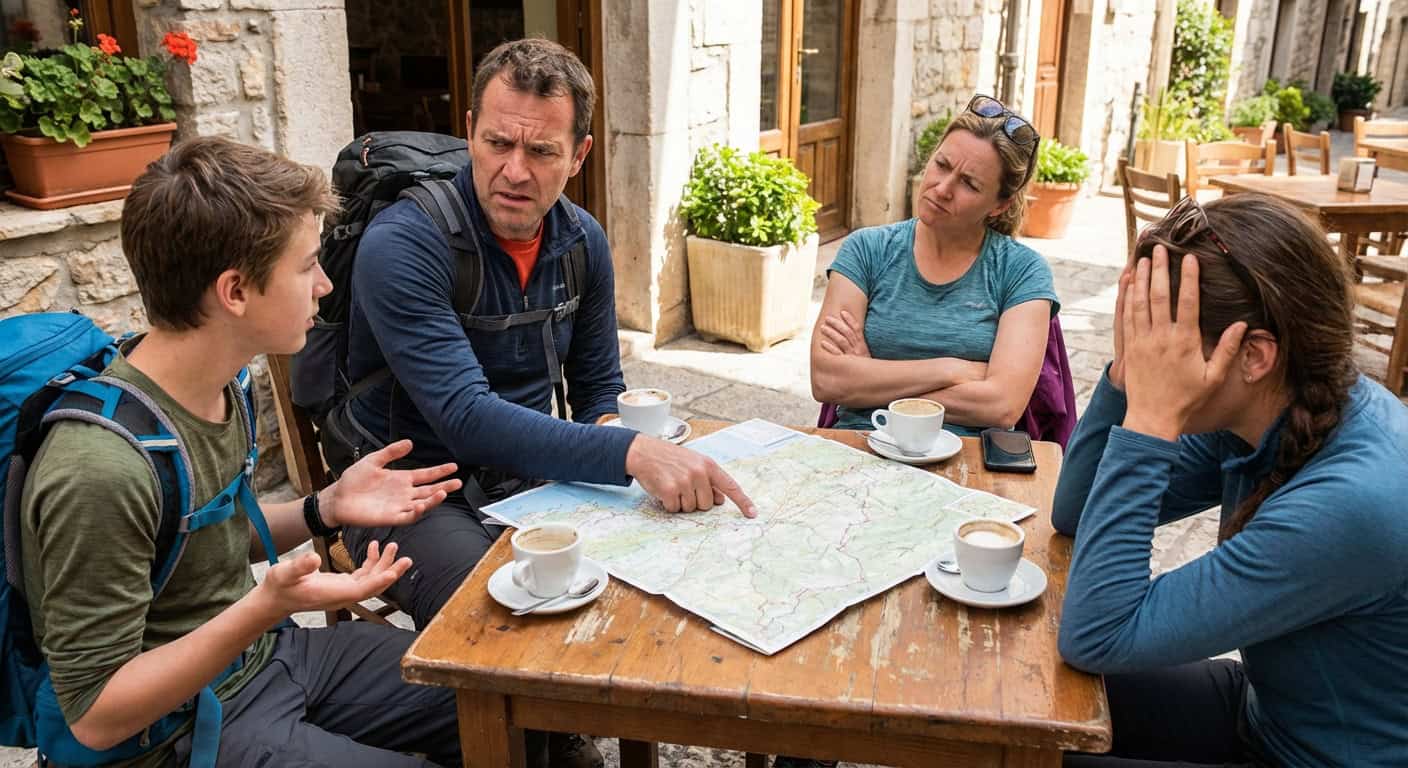
- Different pace preferences
- Budget disagreements
- Interest conflicts
- Schedule coordination
Relationship stress
Travel tests relationships. Being together 24/7 reveals incompatibilities:
- Minor annoyances amplify
- Arguments over small things
- Different energy levels
- Control dynamics emerge
Some friendships do not survive travel together. Others deepen.
The “herding” problem
On organized group tours especially, you are at the mercy of the slowest person in the group. Experienced group travelers warn that the lack of autonomy can be frustrating, particularly for independent-minded people.
Bubble effect
Groups often stay in their bubble:
- Less interaction with locals
- Less openness to new people
- Less immersion in culture
- More insular experience
Organized tours: the middle ground?
Group tours (G Adventures, Intrepid, Contiki) promise the best of both worlds but come with trade-offs:
Demographics matter
- Contiki: Party-focused, skews young (18-22), heavy drinking culture
- G Adventures/Intrepid: Broader age range (mid-20s to 30s), more culture-focused
The cost question
Tours charge a premium for convenience and an instant social circle. You are paying for time and mental energy, not just hotels and transport. Budget travelers often find solo travel 2-3x cheaper, especially when you factor in the “single supplement” for private rooms and hidden costs for group meals and activities.
Social burnout
Being stuck on a bus with the same 20 people for weeks can get exhausting, especially if you do not click with them.
The hybrid approach
You do not have to choose one or the other. Many travelers:
Start solo, join groups
Travel alone but join others for specific activities. Use HitchHive to find people for day trips, dinners, or adventures. You get solo freedom with group moments.
The “starter tour” strategy
Book a short 3-5 day tour at the start of your trip to get acclimated and combat initial loneliness, then continue solo with more confidence. This “ease-in” method works especially well for first-time travelers.
Travel together, time apart
Even with a travel partner, build in solo time. Spend mornings apart. Take different day trips. Have dinner together. This preserves independence while maintaining connection.
Planned segments
Meet friends for part of your trip. Travel solo for weeks, then have a friend join for a specific destination. Best of both worlds.
How to decide
Go solo if:
- You want maximum flexibility
- You are seeking personal growth
- You are good at meeting people
- You value alone time
- You have no compatible travel partners
- You are an introvert who needs an “escape hatch”
Go with others if:
- Safety is a major concern
- You dislike eating alone
- You have a compatible partner available
- The trip involves activities better shared
- You have limited time and want efficiency
Consider a tour if:
- You hate planning and logistics
- You want an instant social circle
- It is your first international trip and you want a safety net
- The destination is challenging to navigate independently
“Solo travel on easy mode” destinations
If fear is holding you back from solo travel, start somewhere easy. Experienced travelers recommend these destinations where infrastructure makes it nearly impossible to fail:
- London, Amsterdam (easy navigation, English widely spoken)
- Thailand (established backpacker infrastructure)
- Iceland (extremely safe, easy logistics)
Once you realize how manageable solo travel can be, the fear often disappears.
Finding travel companions
If you want company but lack obvious partners:
- Ask friends: Post your plans, sometimes someone is interested
- Use apps: HitchHive, Travello connect solo travelers
- Join tours: Group tours provide instant companions
- Start solo: Meet people on the road who become travel partners
- Social hostels: Even in a private room, hostel common areas solve the “eating alone” problem better than organized tours
There is no wrong choice
Both solo and group travel create great experiences. The best destinations work for either style. What matters is choosing what matches your current needs, personality, and trip goals.
And remember: you can always change. Start solo, find a partner, part ways, meet someone else. Travel is fluid. Your approach can be too.
Continue your journey
These guides cover related topics:
- Stay Productive While Traveling – Whether solo or in a group, maintain productivity on the road
- Building Community on the Road – Get the best of both worlds by building flexible travel communities
- Food Experiences to Meet Locals – Food adventures work equally well for solo travelers and groups
- The Banana Pancake Trail Guide – The classic backpacker route where you’ll meet fellow travelers at every stop
Leave a Reply