
What is the Banana Pancake Trail (and why every backpacker ends up on it)
If you ask a hundred backpackers in Southeast Asia what route they’re taking, eighty of them will describe roughly the same loop. Bangkok up to Chiang Mai, slow boat across the Mekong into Laos, down through Vietnam, over to Cambodia, and back to Bangkok. They might not know it has a name, but they’re all walking the Banana Pancake Trail — the most well-worn backpacking circuit in the world, named after the banana pancakes that every guesthouse from Thailand to Vietnam seems to have on the breakfast menu.
Some call it “the kindergarten of backpacking” — affectionately. The infrastructure is so good, the hostels so plentiful, and the other travelers so omnipresent that it’s almost impossible to get truly stuck. If you’re backpacking Southeast Asia for the first time, this is the route that teaches you how to travel. As one experienced traveler put it: “Touristy isn’t bad. The tourist infrastructure exists for a reason — it makes travel smooth, cheap, and accessible.” And the beautiful thing is that it’s incredibly easy to step just slightly off the trail whenever you want something quieter or more local. This guide walks through the entire mainland loop, stop by stop, with the transport, timing, and budget details you actually need.
The classic route at a glance
The standard loop runs clockwise through four countries: Bangkok to Chiang Mai to Pai to Luang Prabang (Laos, via the Mekong slow boat) to Hanoi (Vietnam) to the Ha Giang Loop to Hoi An to Ho Chi Minh City to Phnom Penh (Cambodia) to Siem Reap and back to Bangkok. Most people spend six to ten weeks doing the full loop, though some stretch it to four months with detours.
Going clockwise matters if you care about the social side — it’s the most popular direction, especially November through February. Follow the current and you’ll keep bumping into the same people at every stop, naturally building what backpackers call a “trail family.” For how this route fits into the broader picture, the complete routes overview covers everything from two-week sprints to three-month deep dives.
Stop 1: Bangkok (2-3 days)
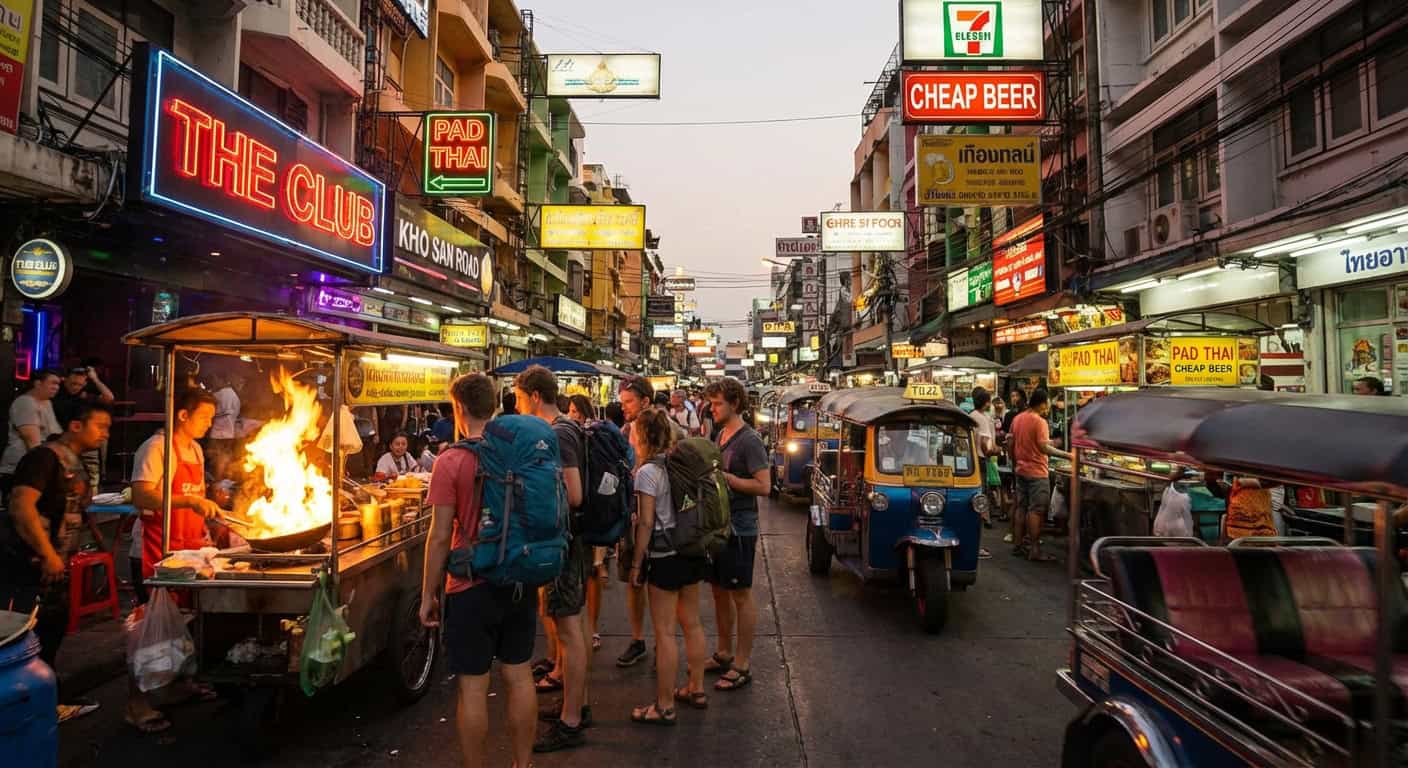
Everyone starts in Bangkok. Give yourself two to three full days to acclimatize, eat your weight in street food, and figure out how Grab (Southeast Asia’s Uber) works before moving north. The Grand Palace and Wat Pho are worth doing despite the crowds. Chatuchak Weekend Market is enormous and fun if you go early. But the real magic is the food — head to Chinatown (Yaowarat Road) after dark and eat at every stall with a line of Thai people in front of it. This is the kind of food experience that connects you with locals throughout the trail.
Khao San Road? Go once for the spectacle, have a Singha on the street, then find the actual neighborhoods where Bangkok’s personality lives. One night is enough.
Stop 2: Chiang Mai and Pai (5-7 days)
The overnight sleeper train from Bangkok to Chiang Mai is your first real “trail experience.” Book second-class sleeper — more social than first class, beds perfectly fine. Twelve to fourteen hours later, you wake up in Northern Thailand’s cultural capital and the pace shifts completely.
Chiang Mai is where backpackers accidentally stay longer than planned. The Old City is walkable, temples are everywhere without the crushing Bangkok crowds, and the food is extraordinary. Hit the Sunday Walking Street market, take a cooking class, and visit Doi Suthep temple for the view. The city also has a thriving digital nomad scene covered in the Chiang Mai digital nomad guide if you’re considering a longer stay.
From Chiang Mai, most backpackers take the three-to-four-hour minivan to Pai. The road has 762 curves and motion sickness is common — take a pill before boarding. Pai is a tiny mountain town with canyon viewpoints, hot springs, live music, and a vibe that makes people extend from two days to a week.
Stop 3: Luang Prabang, Laos (3-5 days)
The slow boat: a rite of passage
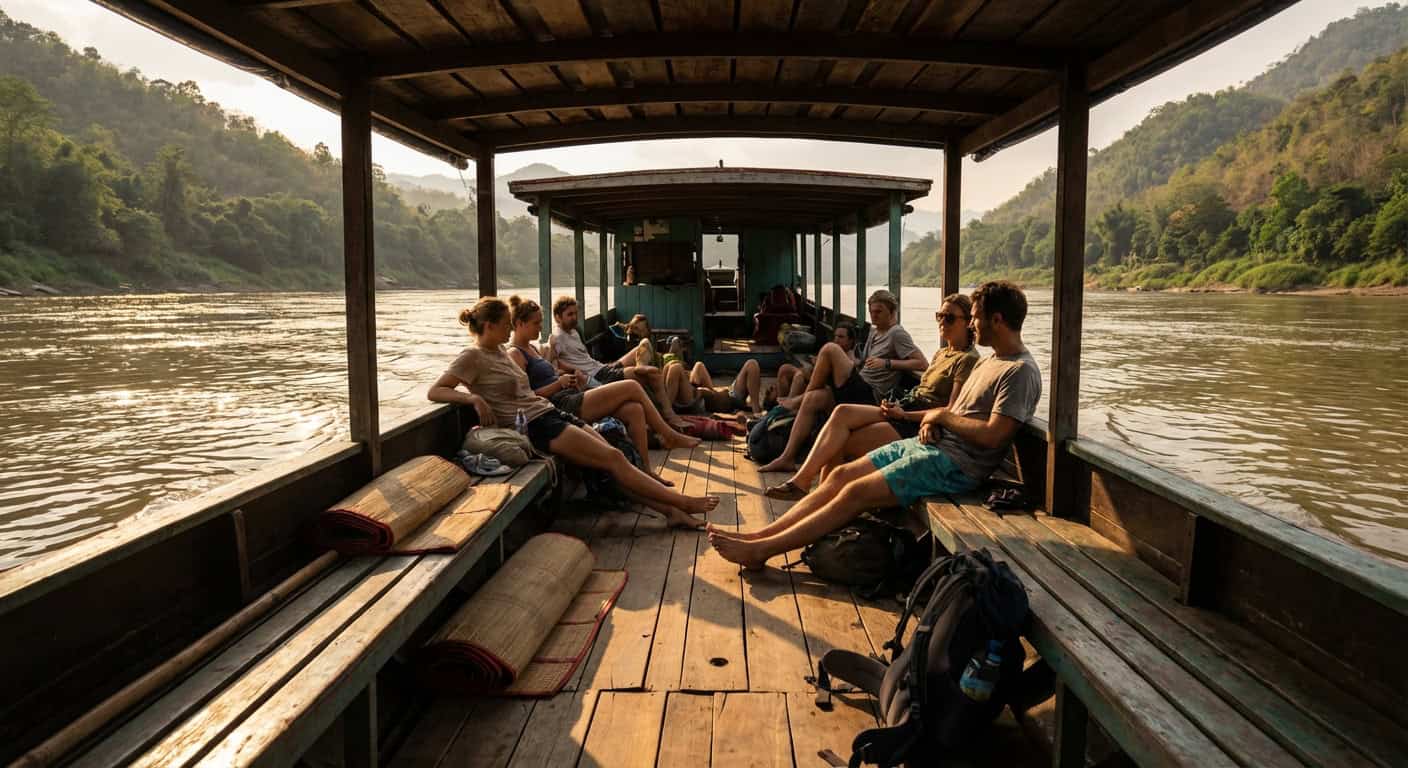
From Chiang Rai, you cross the Mekong into Laos at Huay Xai and board the slow boat to Luang Prabang — a two-day journey with an overnight in Pak Beng. For two days, you share snacks, swap stories, and watch jungle-covered banks drift by with the same group of travelers. “The slow boat is a quintessential backpacking rite of passage.” Arrive early to claim a seat away from the engine (it’s loud), bring snacks and a hoodie for cold mornings on the river, and avoid the “speed boats” at all costs — they’re dangerous and universally hated.
Luang Prabang itself
A UNESCO World Heritage town where the pace of life is beautifully slow. Watch the monks’ morning alms-giving ceremony from a respectful distance. Spend a day at Kuang Si Waterfalls with its turquoise limestone pools. Wander the night market. Give yourself at least three days, though five is better. For deeper Laos exploration, Nong Khiaw offers incredible hiking with a fraction of the crowds — see the off the beaten path guide for more ideas beyond the standard stops.
Stop 4: Hanoi and the Ha Giang Loop (5-7 days)
Getting to Vietnam (skip the hell bus)
The overland bus from Laos to Vietnam is a 24-to-27-hour nightmare universally called “the Hell Bus.” One traveler wrote: “That bus ride was the only time I genuinely feared for my life.” Fly this leg — $50 to $150, one hour. Just do it.
Hanoi
Hanoi’s Old Quarter is sensory overload in the best way. Motorbikes flow like water, tiny plastic stools line the sidewalks, and pho broth scents the air at all hours. Eat bun cha, drink egg coffee overlooking Hoan Kiem Lake, and give yourself three to four days to adjust to Vietnam’s faster, more intense pace.
The Ha Giang Loop
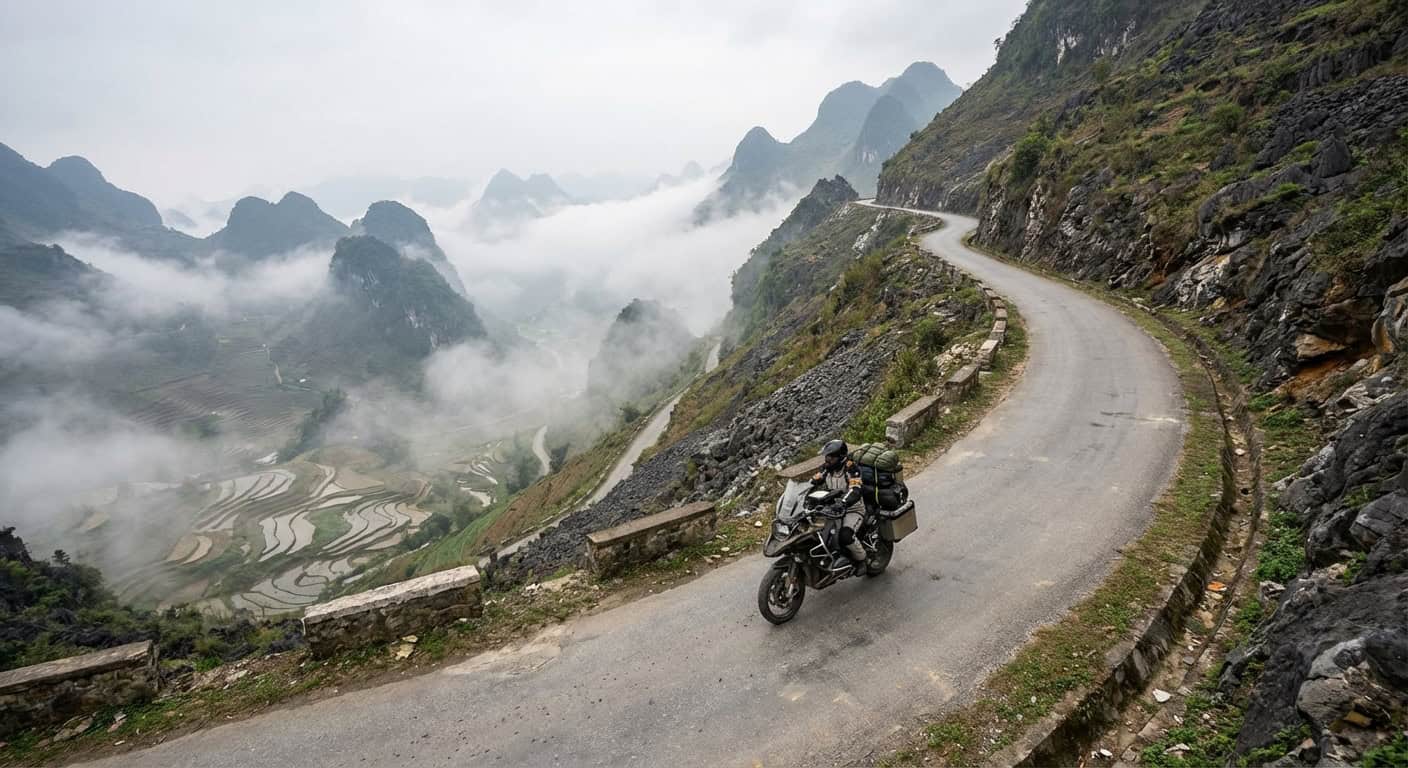
If one experience on this trail gets people genuinely emotional, it’s the Ha Giang Loop — a three-to-four-day motorcycle loop through Vietnam’s far north, along the Chinese border, past ethnic minority villages and rice terraces on impossibly steep mountainsides. Ma Pi Leng Pass is the signature view: a road carved into cliff face above the turquoise Nho Que River below.
“Likely the best singular travel experience I’ve ever had” shows up over and over in travel forums. Do the four-day loop, not three — the shorter version feels rushed. Unless you’re an experienced motorcyclist, hire an Easy Rider (local driver). Leave your big backpack at your hostel in Hanoi. The larger group tours create intense bonding over four days of shared adventure — if finding travel buddies is a goal, this leg practically guarantees it.
Stop 5: Hoi An and central Vietnam (3-4 days)
Take the overnight sleeper train south from Hanoi — book a soft berth in a four-person cabin and you’ll share it with strangers who often become friends by morning, saving a night of accommodation too.
Hoi An is the most photogenic town in Vietnam. The Old Town glows with silk lanterns reflected in the Thu Bon River. Beyond the atmosphere, the draw is tailoring — custom-made clothing at remarkable prices. Order on arrival for fitting time. Rent a bicycle, ride to An Bang Beach, take a cooking class, and eat cao lau, the dish unique to this town. If you have extra time, Ninh Binh (“Halong Bay on land”) between Hanoi and Hoi An is worth a two-day detour.
Stop 6: Ho Chi Minh City (2-3 days)
HCMC is Vietnam’s southern counterpart to Hanoi — bigger, more modern, even more chaotic. The War Remnants Museum is heavy but essential. The Cu Chi Tunnels day trip is unforgettable. The Mekong Delta offers floating markets and river life outside the city. Two to three days covers it well.
Budget-wise, HCMC is where travelers feel the pinch if they’ve been moving fast. Speed is the enemy of savings on this trail — each transit day costs bus fare plus the overhead of arriving somewhere new. For strategies on making your money stretch, the budget travel hacks guide has tactics that work especially well in this region.
Stop 7: Phnom Penh and Siem Reap, Cambodia (5-7 days)
From HCMC, take the Giant Ibis bus to Phnom Penh ($15-$20, 6-7 hours). This is the most recommended bus company on the trail — they handle border visa processing honestly, which matters because cheaper operators have a reputation for overcharging.
Phnom Penh is not fun in the way Bangkok or Chiang Mai are. It’s important. The Tuol Sleng Genocide Museum and the Killing Fields document the Khmer Rouge era and are among the most sobering experiences on this trip. Go with a guide or rent the audio tour. Two to three days is right.
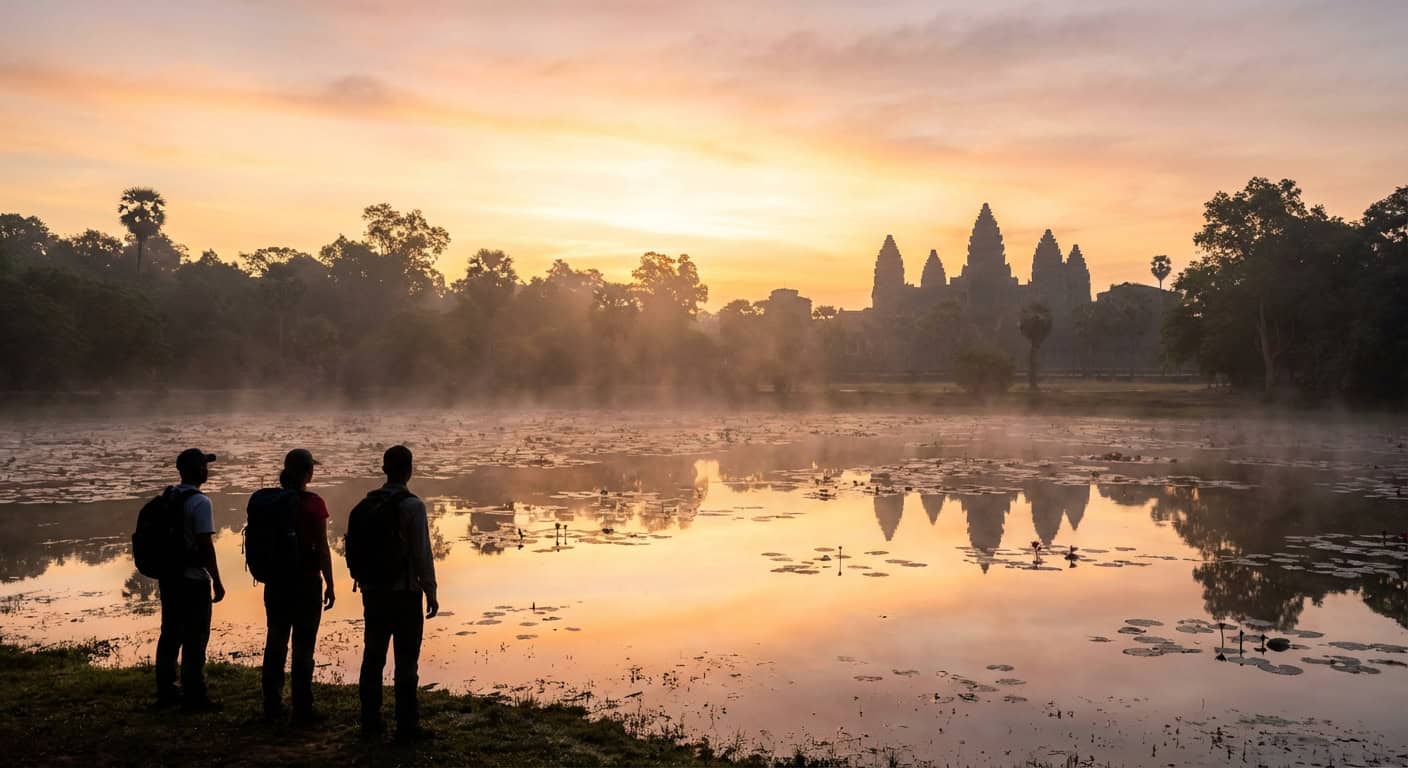
Siem Reap exists because of Angkor Wat, and Angkor Wat is everything they say it is. Buy at least a three-day temple pass. Wake up for sunrise at Angkor Wat (arrive by 5 AM), explore Angkor Thom and the Bayon, and don’t skip Ta Prohm — the temple consumed by tree roots from Tomb Raider. Pub Street handles nightlife when you’re templed out.
For the return to Bangkok, the bus crosses at Poipet — the most scam-heavy border in the region. Get a Cambodian e-visa online beforehand, ignore anyone redirecting you to a “consulate” building, and walk straight to the actual immigration building. Read up on travel safety tactics before this border crossing.
Transport between stops
The cheat sheet for each major leg:
Bangkok to Chiang Mai: Overnight sleeper train, 12-14 hours, $15-$30.
Chiang Mai to Pai: Minivan, 3-4 hours, $5-$8. Take motion sickness medication.
Thailand to Luang Prabang: Mekong slow boat, 2 days, $30-$50.
Laos to Hanoi: Fly. One hour, $50-$150. Do not take the Hell Bus.
Hanoi to Hoi An: Overnight sleeper train, 12-15 hours, $15-$30.
Hoi An to HCMC: Domestic flight, one hour, $30-$50.
HCMC to Phnom Penh: Giant Ibis bus, 6-7 hours, $15-$20.
Phnom Penh to Siem Reap: Bus, 6 hours, $10-$15.
Siem Reap to Bangkok: Bus via Poipet, 8-10 hours, $15-$25.
Remember: “Travel days are lost days. A four-hour bus ride in SE Asia often takes seven to eight hours door-to-door.” The go-to booking platform across all countries is 12Go.asia.
Budget for the full trail
The backpacker consensus: $1,000 to $1,500 USD per month for a comfortable standard — dorm beds, street food with the occasional sit-down meal, activities included, and a reasonable amount of socializing. The full six-to-ten-week trail runs roughly $2,000 to $4,500 depending on pace. The single biggest budget killer is alcohol. Stick to local beers (Bia Hoi in Vietnam is 25 cents a glass) and your wallet will thank you.
Laos and Cambodia are the cheapest countries on the route. Thailand is the most expensive, though still remarkably affordable. The universal principle: moving slowly is cheaper than moving fast. Every transit day costs bus fare plus the overhead of arriving somewhere new.
Meeting fellow backpackers along the trail
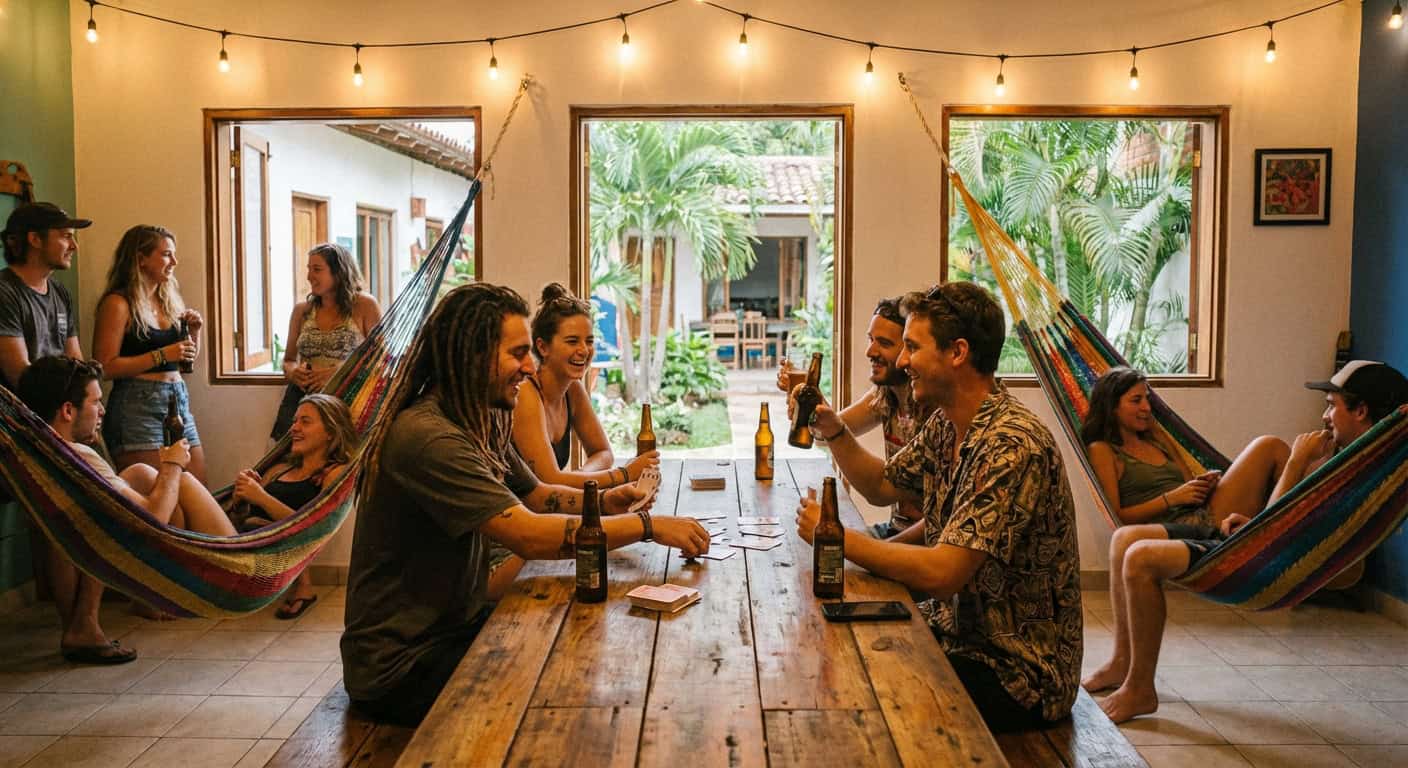
This is where the Banana Pancake Trail is at its best. You will meet people without trying. You’ll likely travel with someone from a hostel dorm for days or weeks, part ways, then run into them again three countries later. That’s not exaggeration — it’s practically the default experience.
The number one tip: stay in hostels with good common areas. A hostel with a bar, pool, or organized events is where friendships happen instantly. Social chains like Mad Monkey reliably deliver the communal vibe across the trail. If you’re new to this, the hostel life guide covers everything from dorm etiquette to picking the right spot.
Certain trail legs are social accelerators. The slow boat forces two days of close-quarters bonding. Ha Giang Loop tours turn strangers into a tight crew. Vang Vieng’s tubing throws everyone together. And going clockwise means you’ll keep crossing paths with the same travelers at your pace.
The biggest mistake is over-planning. If every hostel is booked and every bus ticket locked in, you can’t extend your stay when you meet people heading somewhere interesting. Leave room for spontaneity — the trail is well-trodden enough that you can book transport a day or two ahead. If you’re traveling solo and want to be intentional about finding your crew, HitchHive helps you connect with travelers heading the same direction, especially when your trail family scatters. For why traveling with others transforms the whole experience, this piece on shared travel captures it well.
A few final trail truths
Don’t overpack — you can buy cheap clothes anywhere on the trail, and laundry costs almost nothing. Don’t book everything in advance — the trail is forgiving and last-minute logistics almost always work. Carry crisp US dollar bills for visa-on-arrival payments in Laos and Cambodia. And don’t try to party every single night — temple fatigue and burnout are real by month two.
The trail offers everything from Full Moon Party chaos to silent meditation retreats. The best trips embrace the full spectrum. Go hard in Vang Vieng, decompress in Luang Prabang, dance on Pub Street in Siem Reap, sit quietly before Angkor Wat at dawn. Whether you’re planning your first solo trip or your fifth, the Banana Pancake Trail remains the best classroom for learning how to travel. If you want to find companions for specific legs of the journey, HitchHive makes it easy to connect with people on the same path.
Continue your journey
Want to explore beyond the mainland trail? Check out these guides:
- Best Backpacking Routes Through Southeast Asia — The complete overview of every route option from 2-week sprints to 3-month deep dives
- Southeast Asia Island Hopping Guide — Swap the overland trail for turquoise water and white sand islands
- Off the Beaten Path Southeast Asia — Escape the trail entirely with Borneo, Sumatra, and Southern Laos
Leave a Reply