
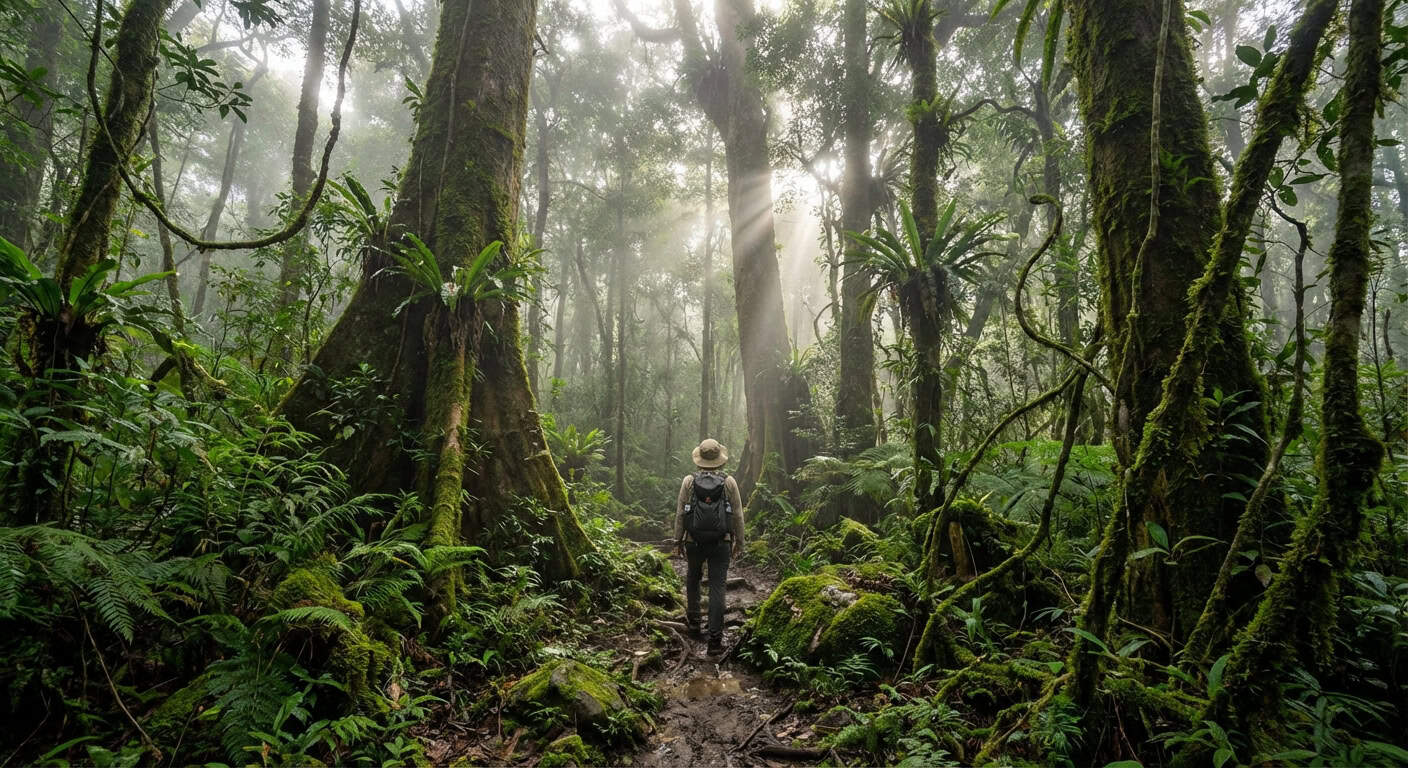
Why the best of Southeast Asia is where the crowds aren’t
Here’s something I figured out a few months into my first Southeast Asia trip: the places everyone talks about are usually the least interesting places to actually be. The Full Moon Party is a blur of neon paint and overpriced buckets. Khao San Road is fun for exactly one evening before it starts feeling like a fever dream on repeat.
The places that stuck with me were the ones I almost didn’t go to. A volcanic lake in Sumatra where I was the only foreigner for days. A riverside town in Cambodia where the biggest decision was which hammock to nap in. A cave system in Vietnam so enormous it felt like a different planet.
If you’re building your backpacking route through Southeast Asia, carve out time for the places in this guide. As one Redditor put it: “Skip Halong Bay if you have to, but do not skip Phong Nha.” The less-visited corners of this region are often cheaper, friendlier, and more memorable than anything on the classic Banana Pancake Trail. That trail is worth doing, but the real magic happens when you step off it.
Malaysia: Southeast Asia’s most underrated country
Malaysia gets criminally overlooked. Most backpackers treat Kuala Lumpur as a layover, maybe hit Langkawi, and move on. That’s a mistake. Malaysia has great food, genuine cultural diversity, excellent infrastructure, and accessible rainforest, all significantly cheaper than you’d expect.
Penang and George Town
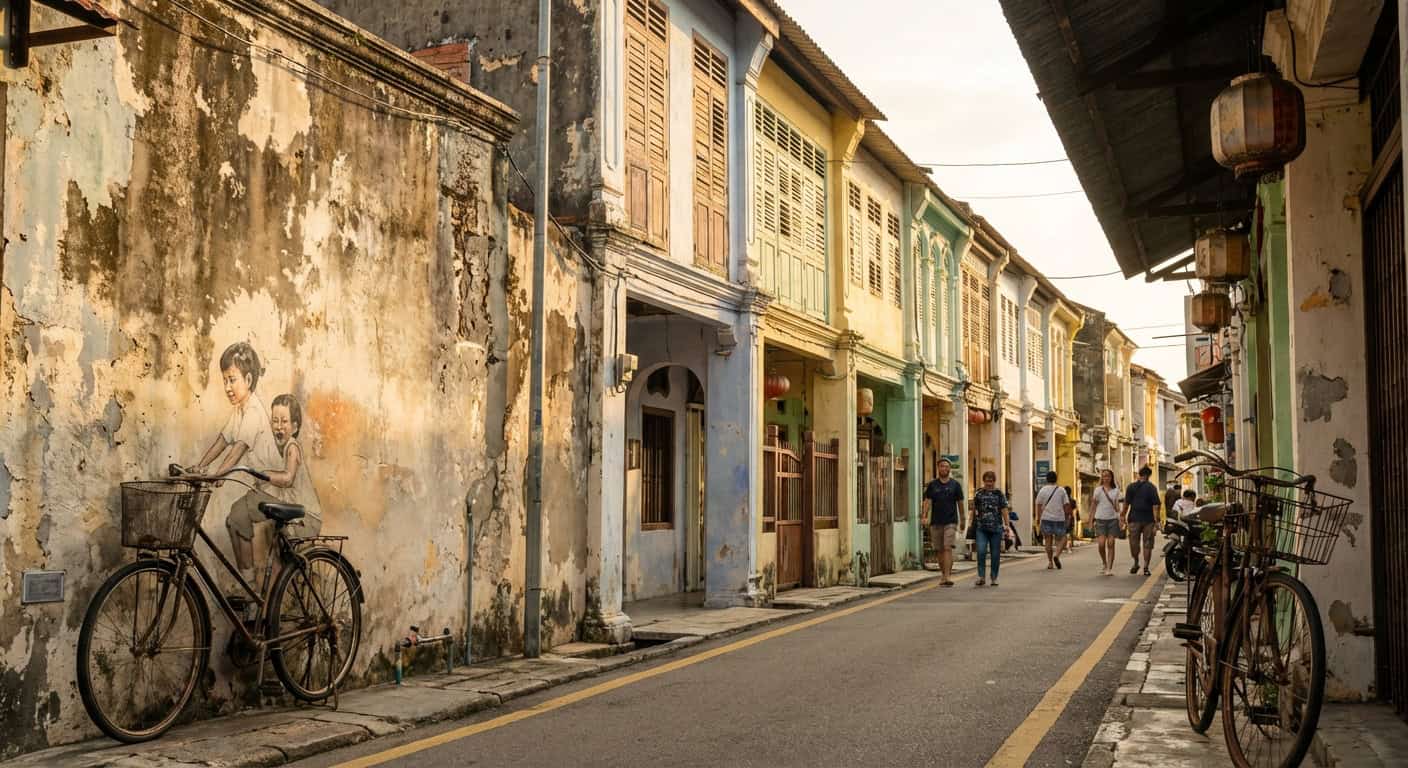
George Town has the best street food in Southeast Asia. The city sits at a culinary crossroads of Malay, Chinese, Indian, and Peranakan cooking, and the result is staggering. Char kway teow from decades-old hawker stalls. Assam laksa that’s sour and spicy and completely addictive. Roti canai at two in the morning because the mamak stalls never close.
George Town is also a UNESCO World Heritage Site with colonial architecture, street art murals, and a walkable old quarter. Most backpackers still skip it. If you care about food as a travel experience, Penang is non-negotiable. Rent a motorbike to see the quieter side of the island beyond the city.
Borneo: Kuching and the Sarawak rainforest
Malaysian Borneo feels like a different country. Kuching, Sarawak’s capital, has a beautiful waterfront, excellent food (Sarawak laksa and kolo mee are mandatory), and is the perfect base for rainforest day trips. Bako National Park is the best budget wildlife experience in Borneo: proboscis monkeys, silver-leaf monkeys, and pitcher plants on accessible trails, no expensive tours needed.
Advice from backpacker forums: do not rush Borneo. “Save it for a separate trip where you can do it justice.” If you have five or six days, pick one region. Kuching for culture and rainforest. Kota Kinabalu for mountains and islands. Do not try to cram both into a single week.
Ipoh and Cameron Highlands
Ipoh sits between KL and Penang and remains one of Malaysia’s best-kept secrets. The food is arguably better and definitely cheaper than Georgetown, with Cantonese-influenced white coffee, bean sprout chicken, and dim sum. The limestone cave temples are genuinely unique. Reddit consensus: “worth it for the food alone.” If you plan trips around meals, check out the best cities for culinary travel and add Ipoh to the list.
Nearby Cameron Highlands offers relief from equatorial heat at 1,500 meters elevation: rolling tea plantations, the BOH Tea Estate, and mossy forest trails that feel otherworldly. Well-known among Malaysians but still under most backpacker radars.
Sumatra, Indonesia: real adventure
Almost nobody goes to Sumatra, and that’s what makes it special. As one Redditor noted, “Everyone goes to Bali and forgets about the diversity and beauty of Sumatra.” The caveat: travel here is deceptive. A “short” distance on the map can eat an entire day. Plan accordingly, and you’ll be rewarded with experiences that feel genuinely wild.
Bukit Lawang: walking with orangutans
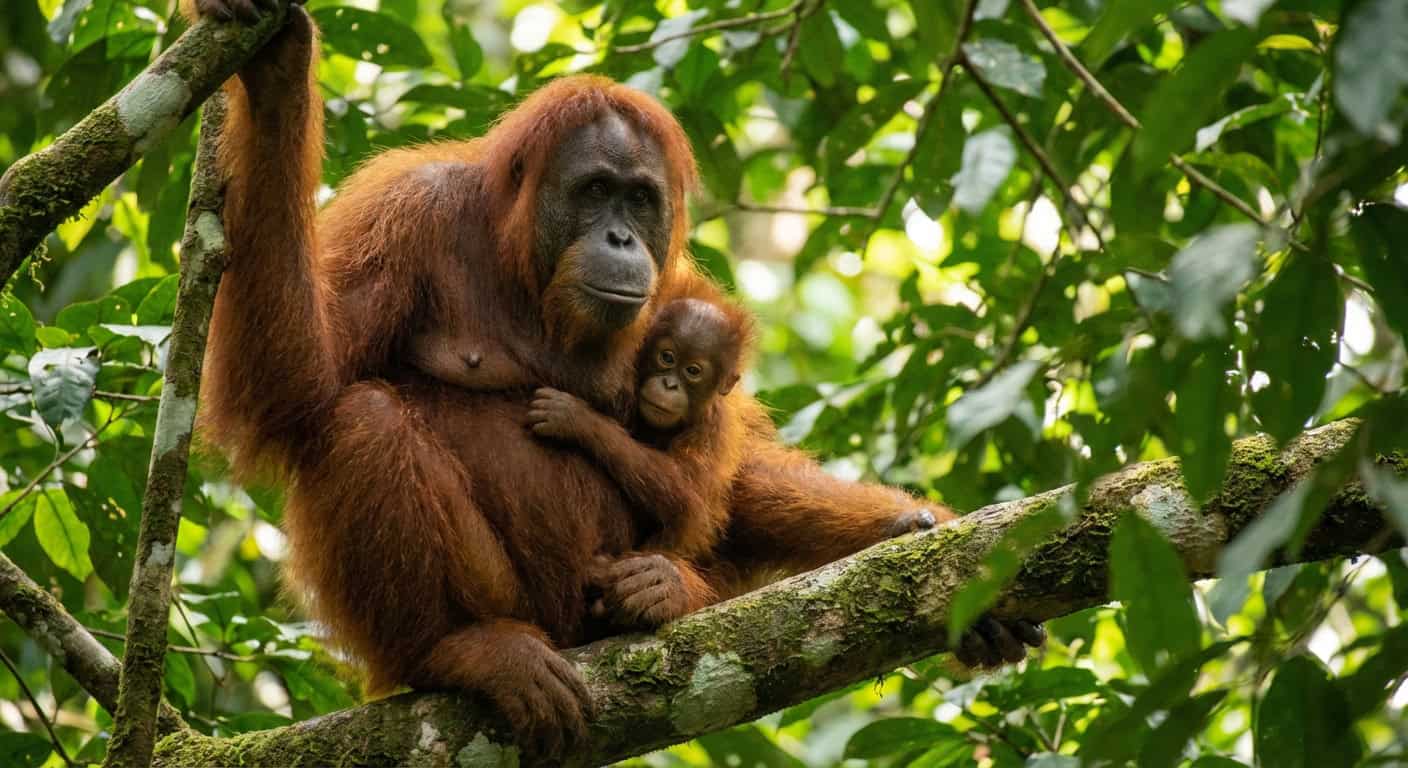
Bukit Lawang is the gateway to Gunung Leuser National Park, one of the last places on earth to see orangutans in their natural habitat. Multi-day jungle treks take you deep into the rainforest to encounter these animals up close.
A word on ethics: the orangutans here are semi-wild and habituated to humans. For a more ethical experience, travelers recommend Ketambe, further south in the same park, where orangutans are truly wild. If you do go to Bukit Lawang, choose responsible operators like Green Hill Guesthouse or Sumatra EcoVentures. Nearby Batu Katak, just thirty minutes away, sees far fewer visitors and offers karst forest trekking with a chance to spot the enormous Rafflesia flower.
Lake Toba: the world’s largest volcanic lake
Lake Toba is staggering in scale, formed by a supervolcanic eruption 74,000 years ago. Stay on Samosir Island in the village of Tuktuk, rent a scooter, and ride the loop through landscapes “devoid of tourists” once you leave the main village. The Batak culture is distinct from anywhere else in Indonesia. Visit the Batak Museum, try babi panggang karo and tuak palm wine, and spend evenings watching the sun set over the caldera rim.
Transport tip: Fly into Silangit Airport instead of Medan to save hours. Do not try to combine Bukit Lawang and Lake Toba in under a week. The recommended loop runs Medan to Bukit Lawang to Berastagi (hike the active volcano Mount Sibayak at sunrise) to Lake Toba.
Southern Laos: the anti-tourist trail
Northern Laos gets all the attention. The south offers something completely different: a total escape from the backpacker circuit at a pace that makes the rest of Southeast Asia feel frantic.
4000 Islands (Si Phan Don)
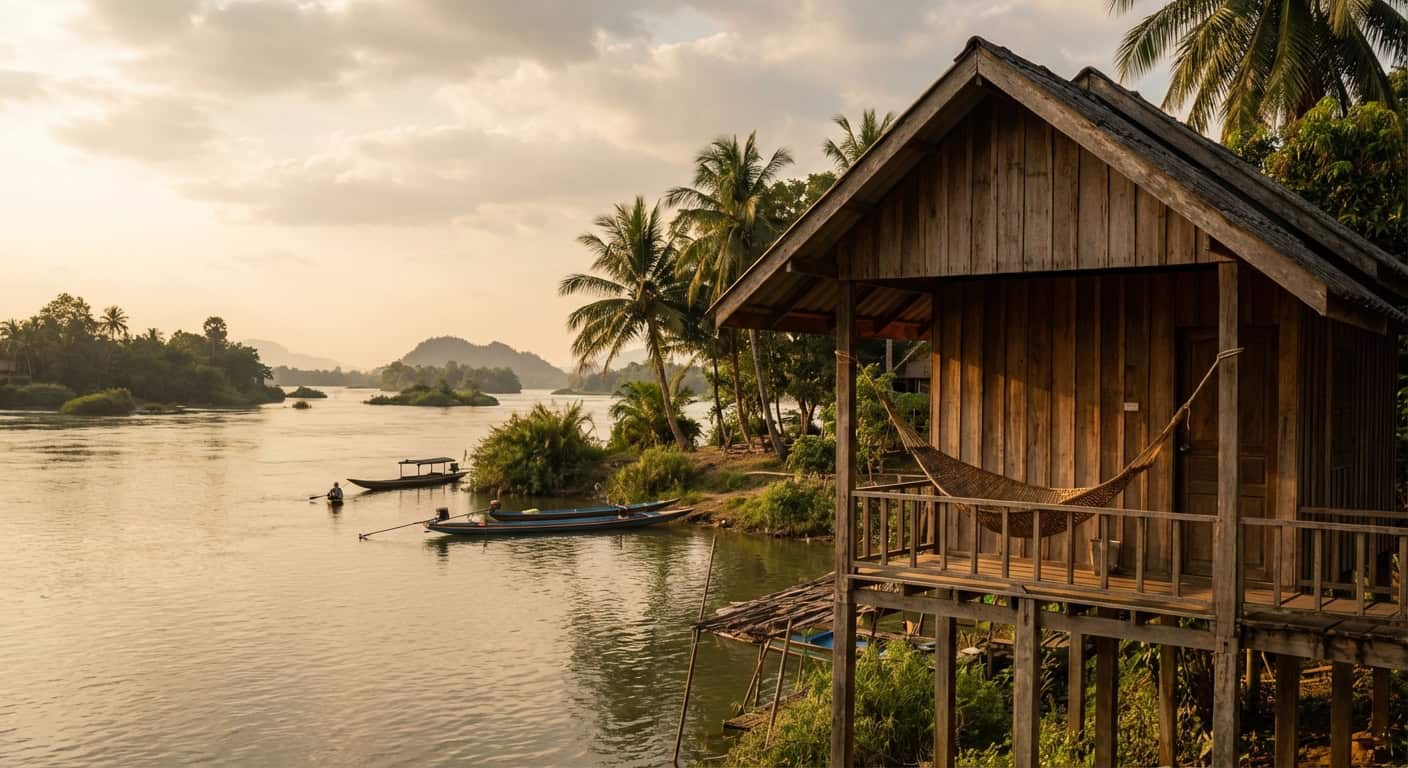
The 4000 Islands is where the Mekong splinters into a labyrinth of channels near the Cambodian border. Don Det is the social backpacker hub; Don Khone, connected by a historic French railway bridge, is quieter and closer to waterfalls. The Reddit consensus is overwhelming: go.
There isn’t much to “do” here, and that’s the point. “It’s very chill and not much to do but for me that was the appeal. I loved getting up late and cycling round the islands.” Rent a bicycle, see Li Phi Waterfalls, take a boat to spot rare Irrawaddy dolphins, and watch Mekong sunsets from your hammock. It’s the kind of shared experience that bonds people, sitting around with strangers who’ve become friends while the river slides by.
Logistics: From the north, break up the long bus from Vientiane by stopping in Thakhek or Pakse. From Cambodia, bus directly from Siem Reap (Asia Van Transfer is reliable). Bring crisp US dollars for visa on arrival. The Laos-Cambodia border crossing has known “stamping fee” corruption of two to five dollars each side. Annoying but safe.
Bolaven Plateau: coffee and waterfalls
From Pakse, rent a motorbike for a two-to-three-day loop through the Bolaven Plateau. Massive waterfalls like Tad Fane and Tad Yuang, coffee plantations producing excellent arabica, and roads through landscapes unlike anything else in the country. If adventure travel is your thing, this is a highlight that most backpackers miss despite being easy to access.
Vietnam’s hidden side
Vietnam is firmly on the backpacker map. But two destinations remain genuinely special and comparatively under-visited.
Phong Nha: the world’s most spectacular caves
Phong Nha is the single most recommended destination in Vietnam among experienced backpackers online. Thread after thread, year after year, the message is the same: this place is unmissable.
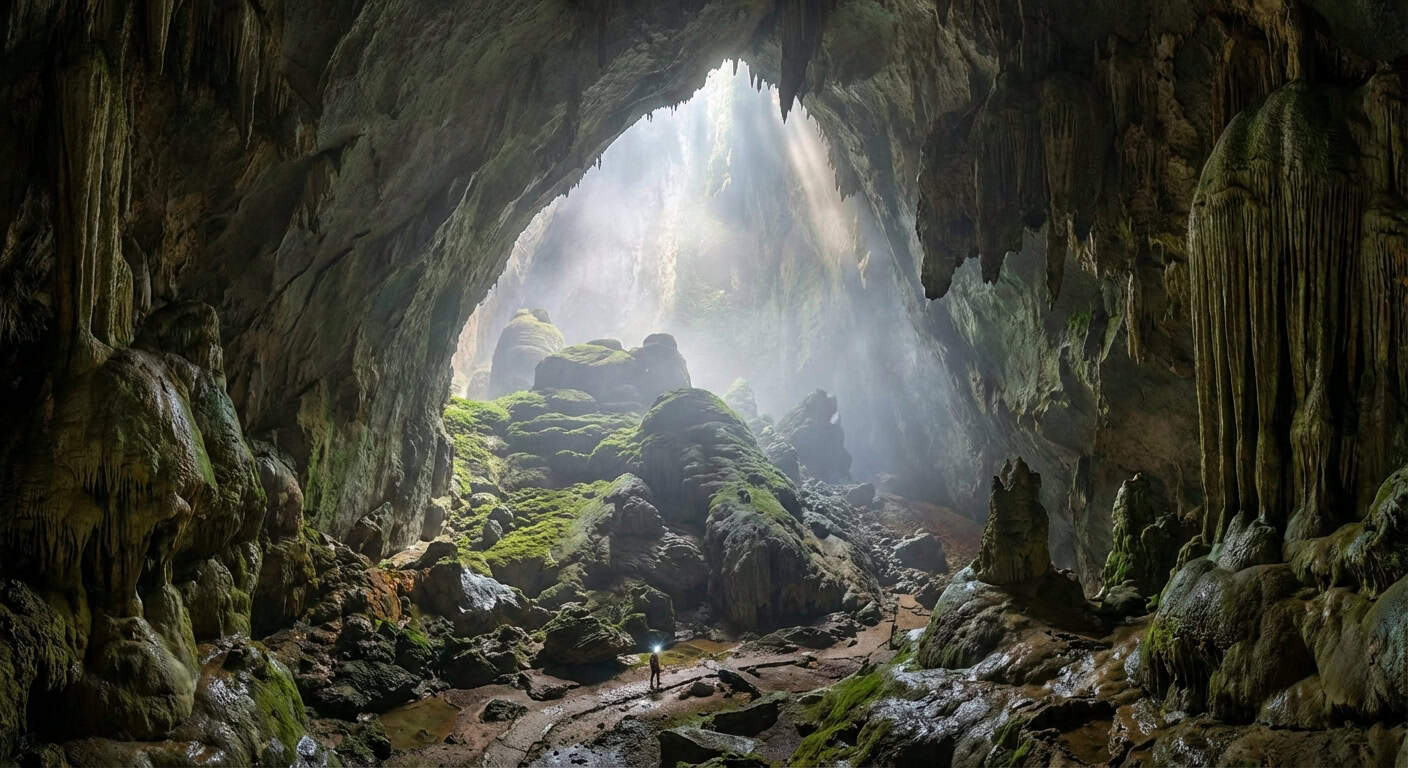
Phong Nha-Ke Bang National Park contains the world’s largest cave (Son Doong) and dozens more. You don’t need to spend thousands on the Son Doong expedition. Paradise Cave is dry, massive, and walkable. Dark Cave involves zip-lining into darkness and swimming through a mud bath inside a mountain. The Duck Stop in Bong Lai Valley is a quirky farm experience every backpacker here talks about. For serious caving, Oxalis Adventure is the gold standard; Jungle Boss is a solid, more affordable alternative.
Beyond caves, the rural beauty catches people off guard. Ride a motorbike through rice paddies and you’ll see a Vietnam untouched by commercialism. The road from Phong Nha to Khe Sanh along the West Ho Chi Minh Road is “one of the most spectacular and empty roads in Asia.”
Getting there: Train to Dong Hoi, then a short ride to Phong Nha village. Easy Tiger for the social crowd, Phong Nha Farmstay for quieter vibes. Budget at least three days.
Ha Giang Loop: the ultimate motorcycle adventure
The Ha Giang Loop is three to four days of the most dramatic mountain scenery on earth: deep gorges, terraced rice paddies on impossibly steep slopes, ethnic minority villages, and roads carved into cliffsides. It’s no longer truly hidden, but it remains genuinely adventurous and a world away from Hanoi or Hoi An. For something even more remote, experienced travelers suggest the Cao Bang area near Ban Gioc Waterfall.
If you’re planning these adventures, connecting with other riders through HitchHive can help you find travel companions, which is useful since riding mountain passes is both safer and more fun with a group.
Cambodia beyond Angkor
Almost every backpacker does the same Cambodia loop: Phnom Penh, Siem Reap, maybe Sihanoukville. Angkor Wat is extraordinary, but Cambodia has so much more.
Kampot and Kep: the Kampot coma
Kampot is a riverside town that backpackers describe with an affectionate warning: you might get “stuck” here. The phenomenon is so common it has a name, the “Kampot Coma,” and it refers to how the town’s pleasant lethargy makes it nearly impossible to leave on schedule.
Stay on the river for the best experience. Visit La Plantation for a free pepper tour and tasting. Ride a scooter up Bokor Mountain to explore the eerie abandoned French hill station. Kayak through the Green Cathedral’s mangrove waterways. For food, Rusty Keyhole is a local legend for BBQ ribs. Nearby Kep is famous for its crab market and pepper crab dish. From Kep, day-trip to Rabbit Island for bamboo huts and zero wifi. Kampot and Kep are a masterclass in why the connections you build in quieter places tend to run deeper than those forged in party hostels.
Battambang: where Cambodia gets real
Battambang is Cambodia’s second-largest city but feels like a town. The bamboo train draws some visitors, but the real appeal is colonial architecture, solid backpacking infrastructure, and the Phare Circus, a social enterprise that puts on impressive acrobatic shows. Battambang gives you everyday Cambodian life that Siem Reap’s tourist economy can’t replicate.
How to actually get to these places
The logistics are where most people get tripped up. None of these places are difficult to reach. They just need more planning than booking a flight to Bangkok.
Malaysia (Borneo): AirAsia runs cheap flights from KL to Kuching and Kota Kinabalu. Book in advance for the best fares.
Sumatra: Fly into Medan for Bukit Lawang (three to four hours by private driver, recommended over buses). For Lake Toba, fly directly into Silangit Airport.
Southern Laos: Bus from Siem Reap to Don Det, or fly into Pakse. Always carry US dollars for visa on arrival.
Phong Nha: Train to Dong Hoi is easiest. Night trains save a hotel night.
Kampot: Three to four hours by bus from Phnom Penh. Good connection point toward Vietnam.
The general principle: getting there takes longer than you expect but costs less than you fear. If you’re weaving these into a broader Southeast Asia backpacking itinerary, build in buffer days. The island hopping guide covers maritime routes that complement these overland adventures perfectly.
Why hidden gems make the best travel stories
When you’re in a place that isn’t optimized for tourism, interactions are more genuine. The family running the guesthouse in Tuktuk isn’t performing hospitality for reviews; they’re just being hospitable. The travelers you meet in these places tend to be more intentional, more curious, more open. The conversations are better. The stories are better.
Your money stretches further too. A day in Kampot costs a fraction of Siem Reap. A week on Samosir Island is cheaper than a weekend on Bali. Once you settle into a place like Don Det or Phong Nha, daily expenses drop to levels that make extended travel sustainable.
And here’s what matters most: these places change you in ways the well-trodden path rarely does. Sitting in a cave the size of a cathedral. Watching the Mekong from a hammock as the sun turns everything gold. Locking eyes with an orangutan fifteen feet above your head in a Sumatran rainforest. These are the reason you left home in the first place.
If you’re looking for travel companions who share this mindset, who’d rather find the village noodle shop than the rooftop bar, HitchHive is built for exactly that. Connect with travelers heading to the same off-grid destinations and turn solo plans into intentional journeys with people who get it.
Continue your journey
Ready to plan your unconventional Southeast Asia trip? These guides will help:
- Best Backpacking Routes Through Southeast Asia — Compare all the major route options and find your perfect itinerary
- The Banana Pancake Trail Guide — The classic mainland route that connects perfectly with these hidden gems
- Southeast Asia Island Hopping Guide — Add paradise islands to your off-the-beaten-path adventure
Leave a Reply