
Buenos Aires has been calling remote workers for years, and here’s why they keep coming back
I’ll be honest with you: Buenos Aires is not the dirt-cheap paradise it was in 2022. The days of $3 steak dinners and $400/month apartments are gone. But here’s the thing, the nomads who fell in love with this city during those golden years are still here. And new ones keep arriving every week. That should tell you something.
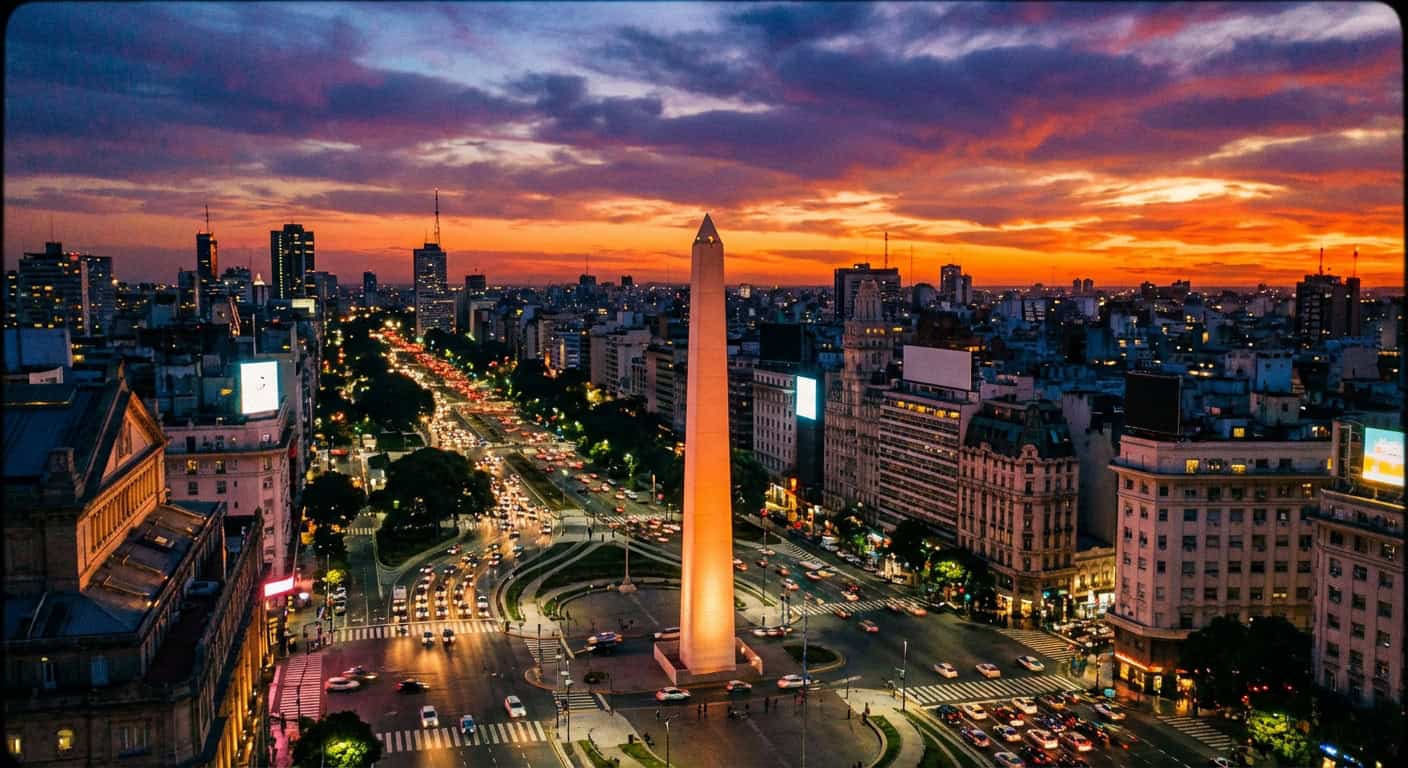
Buenos Aires is the Paris of South America, and I don’t mean that in some lazy travel-blogger way. I mean it literally feels like a European capital that somehow ended up on the wrong continent. The wide boulevards, the ornate architecture, the cafe culture where people sit for hours arguing about politics over cortados. Except here, dinner doesn’t start until 10 PM, the nightlife runs until sunrise, and the entire city operates on a rhythm that makes remote work feel less like grinding and more like living. If you’re looking for the best cities for digital nomads, Buenos Aires belongs near the top of any serious list.
This is your complete guide to making it work as a remote worker in Argentina’s capital, from the neighborhoods where you’ll actually want to live, to the visa situation nobody seems to agree on, to the money strategies that will save you hundreds every month. Whether you’re planning your first month or your first year, this is what you need to know as part of your South American digital nomad journey.
The blue dollar advantage (and why it’s complicated now)
Let’s address the elephant in the room first, because this is the single biggest factor that draws digital nomads to Buenos Aires, and sometimes disappoints them.
Argentina has a famously complicated currency situation. For years, there was a massive gap between the official exchange rate and the “Blue Dollar” (the parallel market rate). If you brought physical US dollars and exchanged them on the informal market, your money stretched dramatically further than using a credit card at the official rate. During the peak in 2022-2023, nomads were effectively paying half-price for everything.
That gap has narrowed significantly. Here’s where things stand now: foreign Visa and Mastercards offer a continuously updated exchange rate (the MEP rate) that is nearly as good as the Blue Dollar rate. This is a game-changer. You no longer need to carry backpacks stuffed with cash to get a decent deal.
But cash still matters. Here’s the strategy that experienced nomads swear by:
- Use your Visa/Mastercard for daily spending: restaurants, groceries, and anything with a card terminal. The MEP rate is competitive.
- Use Western Union for rent and large cash needs. The WU rate is typically the best you’ll find. Go to larger main branches early in the morning, because smaller branches frequently run out of cash. If you hear “no hay plata,” try the next one.
- Bring some physical US dollars as backup. Crisp $100 bills get the best rates. Small shops, taxis, and tips often require cash.
The bottom line: Buenos Aires is no longer a budget destination on par with Southeast Asia. Budget for $1,500 to $2,500 USD per month for a comfortable lifestyle. That puts it roughly on par with Southern Europe, think Lisbon or Barcelona pricing. But the quality of life, especially the social scene and walkability, still makes it a good value. For a full breakdown, check our Buenos Aires cost of living guide.
Visa and logistics: easier than you think
Argentina is one of the most relaxed countries in the world when it comes to letting you stay. Here’s the reality on the ground.
The tourist visa (what most nomads actually use)
Citizens of most Western countries get 90 days on arrival, no application, no pre-approval, just show up with your passport. This is what the vast majority of digital nomads use, and it works perfectly for stays of up to six months.
When your 90 days are up, you have two clean options:
- Extend at immigration: Visit the Direccion Nacional de Migraciones office in Retiro for an additional 90-day extension.
- The Uruguay run: Take a ferry to Colonia del Sacramento with Buquebus or Colonia Express, spend a pleasant day wandering cobblestone streets, and return with a fresh 90-day stamp. This is so common among nomads that it’s practically a rite of passage.
And if you overstay? Argentina has an incredibly relaxed policy. You pay a small fine at the airport when you leave, usually the equivalent of $20 to $40 USD. There’s no ban on re-entry. I’m not recommending it as a strategy, but knowing this exists takes a lot of stress out of the equation.
The digital nomad visa
Argentina does technically have a Digital Nomad Visa. On paper, it gives you six months (renewable for another six) and theoretically exempts you from local taxes on foreign income. In practice? The online application portal is notoriously buggy, processing times are unpredictable, and the Reddit consensus is overwhelmingly clear: don’t bother unless you specifically need it for legal or employer reasons. For stays under six months, the tourist visa approach is simpler in every way.
The rentista visa
If you’re thinking long-term (a year or more), look into the Rentista visa. It requires proof of passive income or a guaranteed income stream and leads to permanent residency. It’s more paperwork, but it’s the path if Buenos Aires becomes home. For more on visas across the region, see our digital nomad guide.
Where to live: the neighborhood breakdown
Buenos Aires is a city of distinct barrios, and choosing the right one will make or break your experience. Here’s the honest breakdown.
Palermo Soho and Palermo Hollywood
This is where the digital nomad machine runs. Palermo Soho has the trendy cafes, the coworking spaces, the street art, and more English speakers per square block than anywhere else in the city. Palermo Hollywood, just north, is slightly quieter with a strong food and bar scene.
The good: Infrastructure is built for you. Fast wifi in every cafe, coworking options everywhere, safe to walk at night, and you can build a complete daily routine without ever needing a word of Spanish.
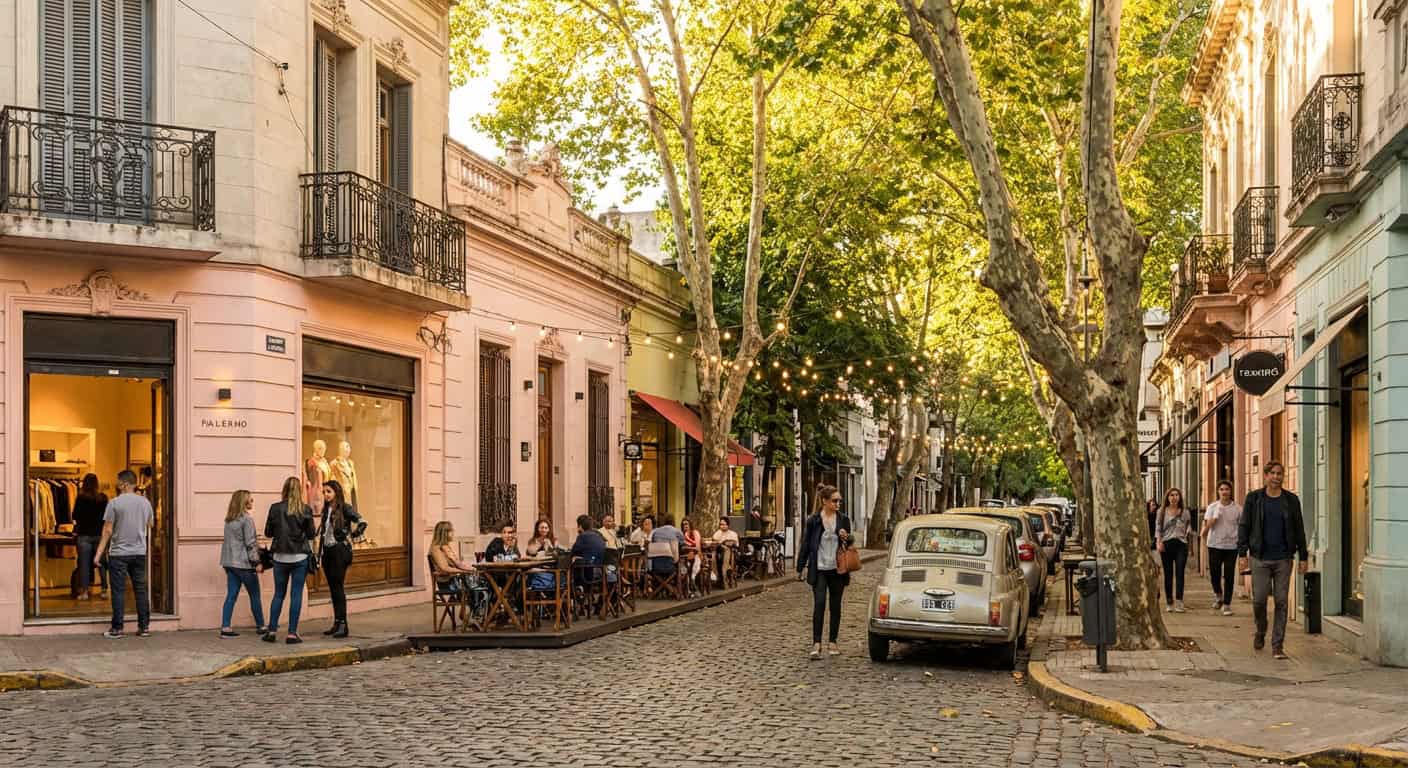
The honest: It’s often called “Buenos Aires Disney” because it can feel like a bubble, polished, tourist-friendly, and removed from the “real” city. Palermo Soho is also noisy thanks to the nightlife. If you need quiet for early morning calls, Palermo Hollywood is the better choice.
My take: Start here for your first month. There’s a reason every nomad recommends it. Once you know the city, branch out if the bubble bothers you.
Villa Crespo: the insider pick
If the digital nomad forums had a “best-kept secret” award, Villa Crespo would win it every year. It’s directly adjacent to Palermo (you can walk to everything in Soho in 10 to 15 minutes) but it’s cheaper, quieter, and feels significantly more local.
Villa Crespo has its own excellent restaurant scene (especially along Calle Thames and around Parque Centenario), and the growing number of specialty cafes makes it increasingly viable as a work base. This is where locals actually live, and if you want to share authentic experiences rather than tourist ones, this is the move.
Recoleta
Recoleta is the “old money” neighborhood: Parisian architecture, wide tree-lined avenues, and a quiet, upscale atmosphere. It consistently gets cited as the safest-feeling neighborhood for walking alone. The famous Recoleta Cemetery is here, along with excellent museums and elegant confiterias.
The downside: it skews older and more residential. If you’re under 35 and looking for a social scene, you’ll find yourself taking taxis to Palermo most nights. But for focused work during the day and peaceful evenings, it’s hard to beat.
San Telmo
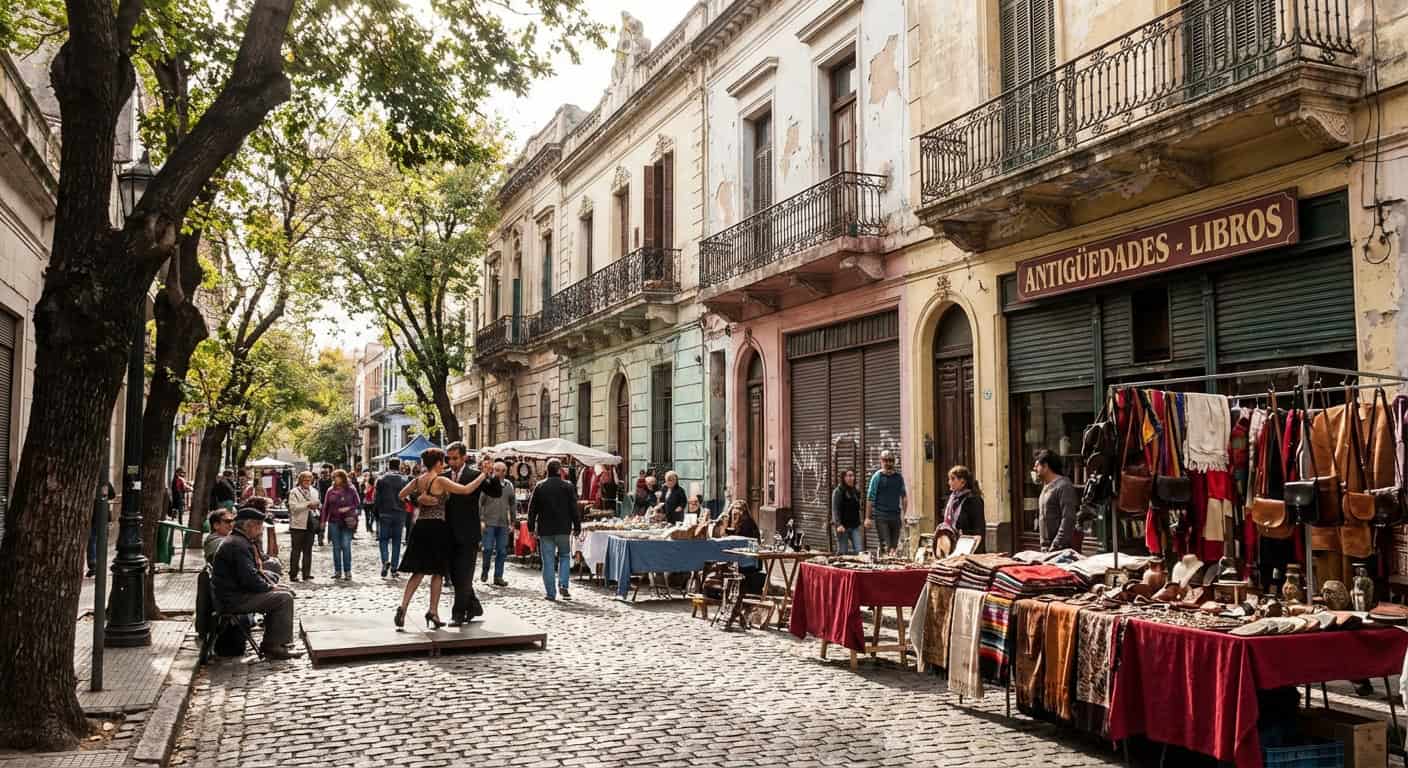
San Telmo is where Buenos Aires shows its grit and soul. Cobblestone streets, crumbling colonial architecture, tango halls, and the legendary Sunday antiques market around Plaza Dorrego. It’s the most photogenic neighborhood in the city.
But you need to be realistic about safety. The streets change dramatically after dark. What feels charming and lively during the day can feel deserted and uncomfortable by 10 PM. Most experienced nomads recommend visiting San Telmo regularly but sleeping in Palermo or Villa Crespo. If you do stay in San Telmo, stick close to Plaza Dorrego and the main commercial streets.
Where not to stay
Microcentro (Downtown): Cheap accommodation, but it’s a ghost town at night and significantly less safe than the northern neighborhoods. The area around Retiro train station should be avoided after dark. And while La Boca has the famous Caminito street for photos, do not wander beyond that single tourist strip.
Internet and connectivity
Buenos Aires has solid internet infrastructure, but with some caveats that matter for remote workers.
Residential internet (Fibertel/Telecentro) is generally good. Fiber connections are increasingly common in Palermo and Recoleta, delivering 50-100+ Mbps. However, micro-outages are a real thing. The connection drops for 30 seconds, reconnects, drops again. For casual browsing this is fine; for a client presentation on Zoom, it can ruin your day.
The solution that every experienced nomad recommends: always have a mobile hotspot backup. Mobile data in Argentina is cheap. You can get a prepaid SIM from Personal, Claro, or Movistar for very little. When your apartment wifi hiccups mid-call, tether your phone and you’re back in seconds. For detailed workspace options with reliable internet, see our guide to coworking spaces and cafes in Buenos Aires.
Coworking spaces like WeWork and AreaTres have enterprise-grade connections that rarely drop. If your work involves daily video calls, a coworking membership might pay for itself in reduced anxiety alone. Read more about staying productive while traveling.
Healthcare and safety
Healthcare
Argentina has universal public healthcare, and it’s technically available to tourists. The public hospitals (like Hospital Italiano or Hospital Aleman) are respected, though wait times can be long. Most nomads opt for private clinics, which are excellent and surprisingly affordable compared to the US, with a specialist consultation costing $30 to $60 USD out of pocket.
Pharmacies are everywhere and well-stocked. Many medications that require prescriptions in the US or Europe are available over the counter in Argentina. Get travel insurance before you arrive, but know that the medical infrastructure is solid.
Safety: the real talk
Buenos Aires is considered one of the safer capitals in Latin America, significantly safer than Rio or Bogota. But petty crime is real and rising due to economic pressures. Here’s what you actually need to know for your personal safety:
The biggest threat is phone snatching. “Motochorros” (thieves on motorcycles) are the primary concern. They target people walking with their phones visible near the curb. The rule is simple: never use your phone on the street near the road edge. If you need to check Google Maps, put your back against a building wall.
Practical safety tips from experienced residents:
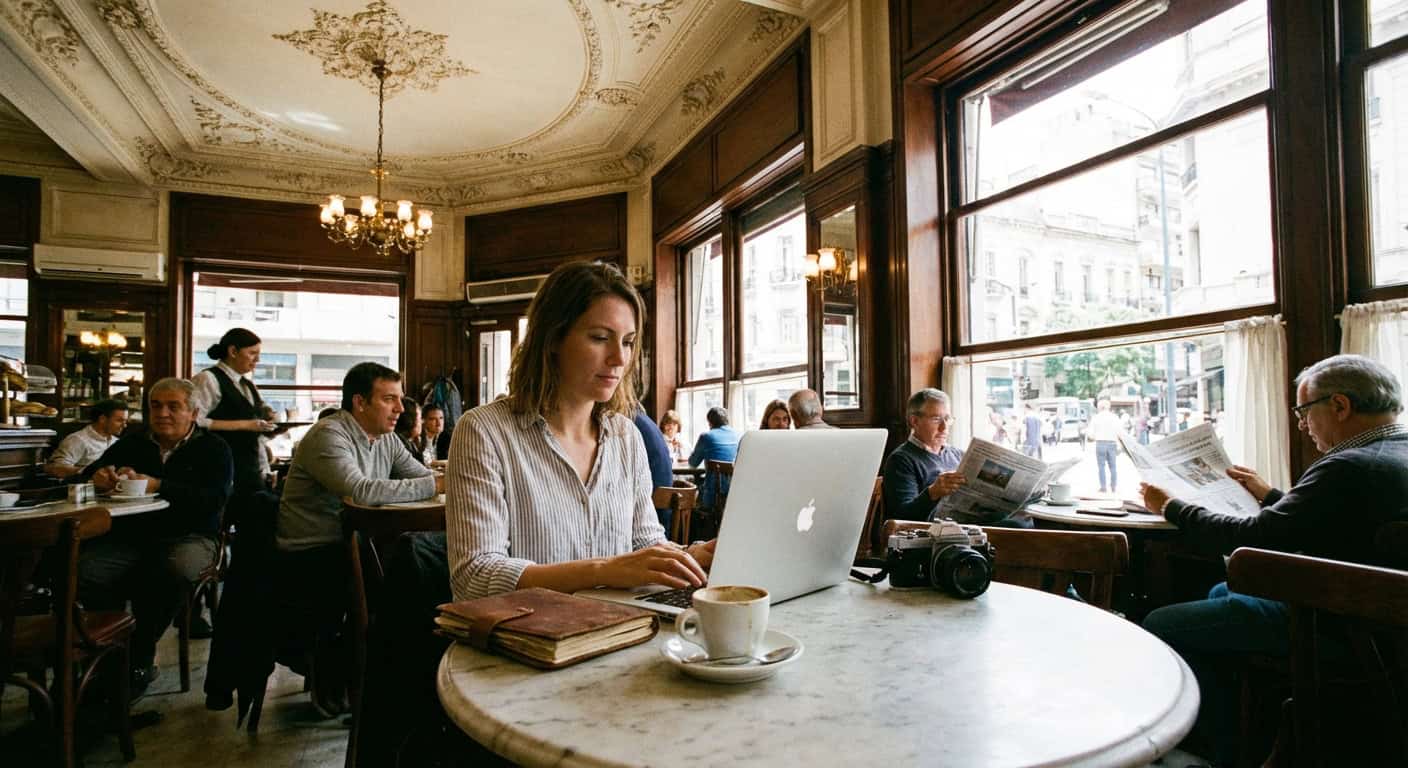
- Sit inside cafes when working, away from the door. Thieves occasionally run in, grab a laptop near the entrance, and jump on a waiting motorbike.
- Never hang your backpack on the back of your chair at sidewalk tables. Keep it between your legs with the strap around your ankle.
- On the Subte (metro), wear your backpack on your front. This is standard local practice.
- Watch out for the “manchado” scam: someone spills something on you, offers to help clean up, and an accomplice steals your bag while you’re distracted. If anyone spills anything on you, walk away immediately.
- Don’t leave your phone on restaurant tables. Vendors sometimes place items on top of your phone and pick both up when they leave.
None of this should scare you off. Use the same street smarts you’d use in any major city, and you’ll be fine. Palermo, Recoleta, and Belgrano are all very walkable during the day and reasonably safe at night.
The social scene: late nights and language exchanges
This is where Buenos Aires truly shines, and it’s the reason people keep coming back despite the rising costs.
First, you need to understand the rhythm. Dinner starts at 10 PM. Drinks at midnight. Clubs don’t get going until 2 AM and run until 6 or 7 in the morning. If you’re an early-to-bed person, you’ll need to adjust or accept that you’re missing a big part of what makes this city special.
Portenos (locals) are warm, chatty, and incredibly social, but they tend to have tight-knit lifelong friend groups that can be hard to break into deeply. The best approach is activity-based socializing:
- Mundo Lingo is the undisputed champion for meeting people immediately. It’s a free language exchange event held at different bars throughout the week. You wear flag stickers indicating the languages you speak, and the standing-room format makes it natural to circulate and talk to anyone. This is genuinely the best single thing you can do in your first week.
- Spanglish Exchange offers a more structured alternative, with 10-minute language rotations. Better if you prefer sitting down and having focused conversations.
- Tango classes are surprisingly social and a genuine window into local culture. You don’t need a partner to show up.
- CrossFit gyms and running clubs draw a young, social crowd.
- BA Digital Nomads on Facebook and WhatsApp runs regular Thursday meetups.
The nomad community here is one of the strongest in South America, comparable to Medellin’s scene. Between coworking events, language exchanges, and the WhatsApp groups, you can have plans every night of the week within days of arriving. For more on building your nomad community, these events are the fastest on-ramp. And if you’re arriving as a solo traveler, Buenos Aires is one of the easiest cities to find travel buddies thanks to the density of the expat scene.
Best time to visit
Buenos Aires is in the Southern Hemisphere, so the seasons are flipped from North America and Europe.
- March to May (Autumn): The sweet spot. Warm days, cool evenings, the city is buzzing after summer holidays, and the parks turn golden. This is when the nomad community is at its peak.
- September to November (Spring): Also excellent. The jacaranda trees bloom purple across the city, temperatures are comfortable, and outdoor life returns after winter.
- December to February (Summer): Hot and humid, and many locals leave for beach holidays. The city feels emptier, but coworking spaces and cafes are less crowded. The heat can be brutal, 35+ degrees Celsius with high humidity.
- June to August (Winter): Cool but rarely truly cold (5-15 degrees Celsius). Many apartments lack central heating, so expect to wear layers indoors. Fewer nomads, which means smaller social circles but cheaper rent.
My recommendation: arrive in March or September for the best balance of weather, social life, and value.
Getting around
Buenos Aires is one of the most walkable cities in Latin America. In Palermo, Recoleta, and San Telmo, you can handle most daily life on foot.
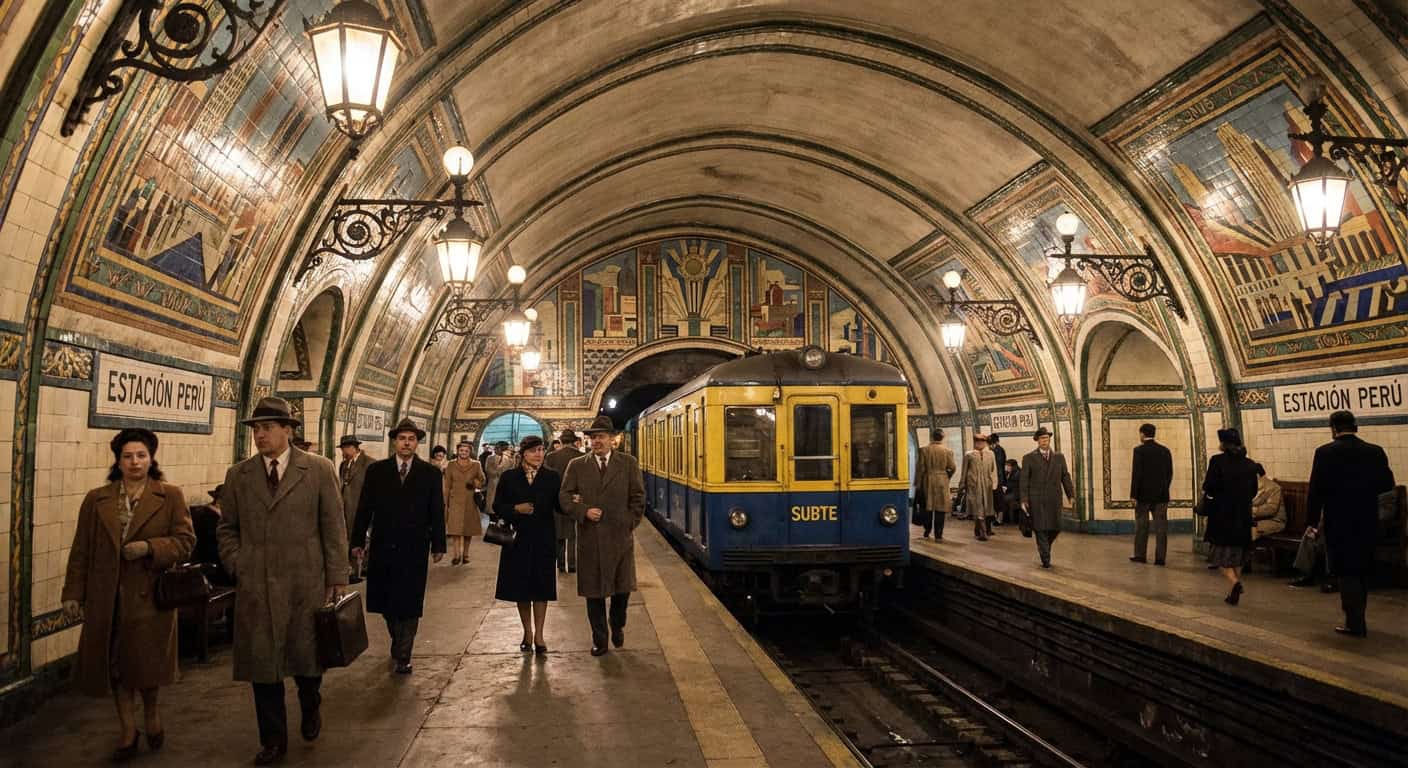
The Subte (Metro): Six lines covering the core of the city. It’s cheap, fast, and reliable during business hours. Line D runs through Palermo, Belgrano, and towards the center, so staying near a Line D station gives you easy access to most of the city. It gets packed during rush hour, but for midday travel it’s the best option.
Uber and Cabify: Use them exclusively for car transport. Do not hail random black-and-yellow taxis unless you speak Spanish confidently. Taxi scams (fake bills, inflated routes) are common enough that app-based rides are worth the small premium. Uber technically operates in a legal gray area in Buenos Aires, but it works fine and is widely used.
Colectivos (Buses): Buenos Aires has an enormous bus network that goes everywhere, and rides cost almost nothing. The catch: you need a loaded SUBE card (available at kiosks) and some familiarity with the routes. Google Maps does a decent job with bus directions now. For daily commuting on a budget, buses are unbeatable.
EcoBici: The city’s bike-share system is free for residents and available to visitors with a simple registration. Dedicated bike lanes are expanding, especially through Palermo. Great for short trips on clear days.
Cost of living at a glance
Here’s the quick snapshot. For the full deep-dive with current prices, head to our dedicated Buenos Aires cost of living breakdown.
- Rent (1BR apartment, Palermo): $700 – $1,200 USD/month on Airbnb; less if you find a direct rental or negotiate a longer stay.
- Coworking: $80 – $200 USD/month depending on the space.
- Eating out: A “Menu Ejecutivo” (lunch special) runs $5-8 USD. Dinner at a nice restaurant: $15-25 USD. Coffee at a specialty cafe: $2-4 USD.
- Transport: Subte ride under $0.50 USD. Uber across the city: $3-8 USD.
- Total comfortable budget: $1,500 – $2,500 USD/month.
The key to saving money: eat lunch specials (almuerzo ejecutivo), cook some dinners at home using groceries from markets like Mercado de San Telmo, and avoid the tourist-trap restaurants on the main Palermo drags.
Workspaces overview
Buenos Aires has one of the best coworking and cafe-work cultures in Latin America. The quick version: AreaTres and La Maquinita are the big names for dedicated coworking, WeWork is the reliable corporate option, and the specialty cafe scene (Cuervo, Lattente, Libros del Pasaje) gives you excellent alternatives for lighter work days. We’ve written a full guide to coworking spaces and cafes in Buenos Aires with specific names, prices, wifi speeds, and neighborhood breakdowns.
One safety note: do not work with your laptop at outdoor sidewalk tables. Sit inside, away from the door. This is universal advice from every long-term nomad in the city.
Continue your journey
Buenos Aires is an incredible base, but South America has so much more to offer remote workers. Explore the rest of our South America digital nomad guide to discover other cities, or check out what makes Medellin such a compelling alternative. If Buenos Aires has you hooked, dig deeper with our guides to things to do in Buenos Aires and the real cost of living.
For more destination ideas and planning resources, browse our guides on the best cities for digital nomads and our backpacking guide for budget-conscious travelers who want to combine work and exploration.
Find your people
Buenos Aires is one of those rare cities where you can land alone on a Tuesday and have dinner plans with a group by Thursday. The nomad community here is active, welcoming, and genuinely fun, but you have to show up. Go to Mundo Lingo your first week. Join the BA Digital Nomads WhatsApp group. Say yes to the coworking happy hour even if you’re tired from your flight.
The connections you make here tend to stick. Something about sharing medialunas at a Palermo cafe at midnight, or taking the ferry to Uruguay together on a whim, creates the kind of shared experiences that turn strangers into lifelong friends.
At HitchHive, we believe the best travel happens when you find the right people to share it with. Buenos Aires makes that easier than almost anywhere on earth.
Leave a Reply