
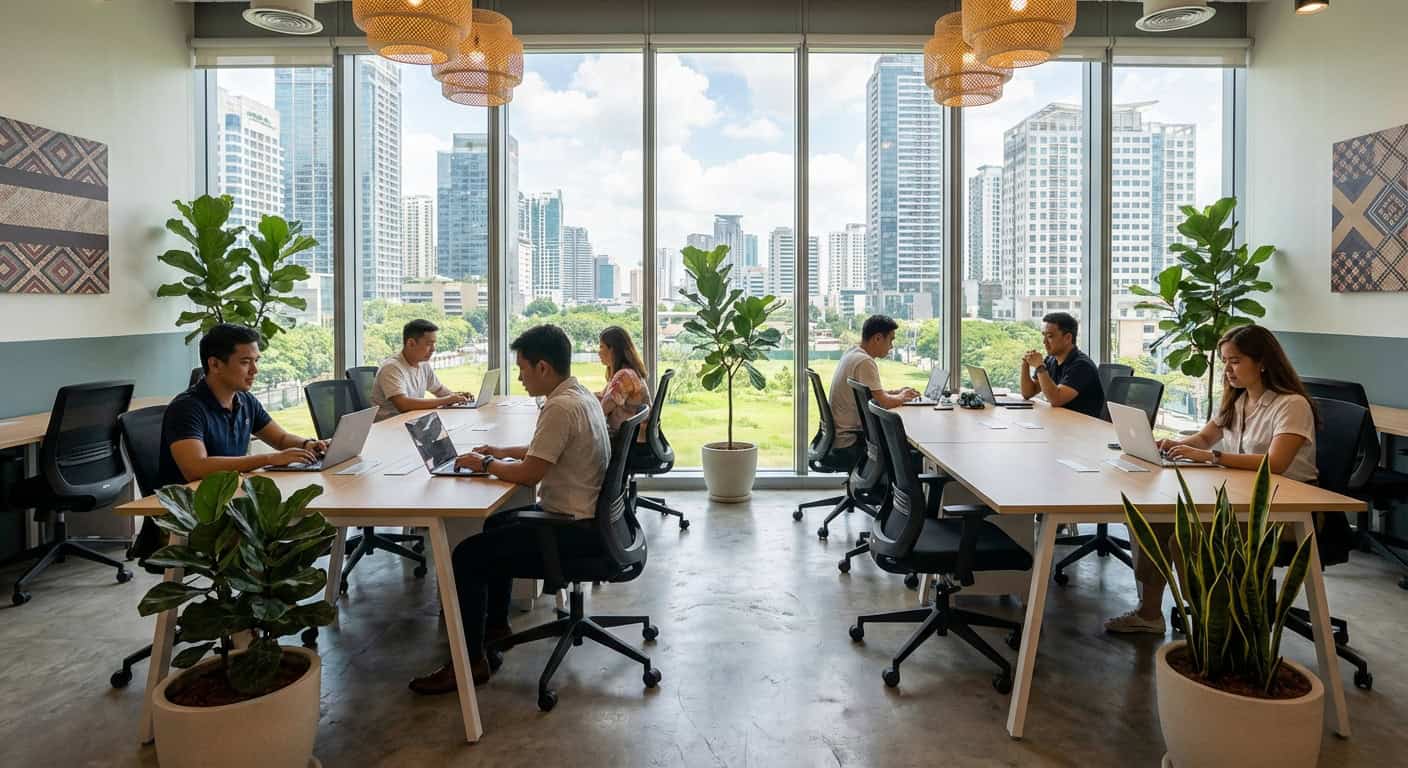
Why Manila’s workspace scene punches above its weight
Here’s what nobody tells you about working remotely from Manila: the coworking scene is genuinely world-class. While most digital nomads obsess over Bali and Chiang Mai, Manila has quietly built one of the most diverse workspace ecosystems in Southeast Asia. You’ve got proper coworking spaces with fiber internet and ergonomic chairs, hidden cafes where baristas double as life coaches, and hotel lobbies that rival any WeWork for a fraction of the price.
The reason is simple. Manila has a massive BPO and freelancer economy. Millions of Filipinos work remotely for international clients, which means the infrastructure for getting things done on a laptop is baked into the city. When you’re building your list of the best cities for digital nomads, Manila’s workspace density in Makati and BGC deserves serious attention.
I spent months testing spaces across the city, and what I found changed how I think about remote work setup. This guide is every workspace recommendation I’d give a friend who just landed at NAIA with a MacBook and a deadline. For the full picture of living and working in Manila, check out our complete Manila digital nomad guide, and our Philippines digital nomad guide covers the broader country picture.
The coworking spaces: Makati
Makati is the center of Manila’s professional world, and its coworking scene reflects that. Unlike BGC’s polished corporate vibe, Makati coworking spaces tend to feel more human. Here are the ones worth your money.
Acceler8
This is the one everyone recommends, and for once, the hype is justified. Acceler8 has branches in both Salcedo and Legazpi Villages, and they’ve nailed the balance between serious workspace and creative community. The interior design is genuinely beautiful, not in a “we put a succulent on every desk” way, but thoughtfully designed spaces with natural light and comfortable furniture. Day passes run around 560 to 620 PHP, which is mid-range for Makati. Monthly hot desk memberships bring the daily cost down significantly.
What makes Acceler8 special is the community. Unlike the sterile corporate spaces where everyone wears noise-canceling headphones and avoids eye contact, people here actually talk to each other. The staff organizes regular events, and the mix of local freelancers and international nomads creates the kind of organic networking that building a nomad community is really about. WiFi is reliable, consistently hitting 50 to 100 Mbps on speed tests. The air conditioning is cold enough to justify bringing a sweater, which in Manila’s heat is exactly what you want.
The Company (Rada Street)
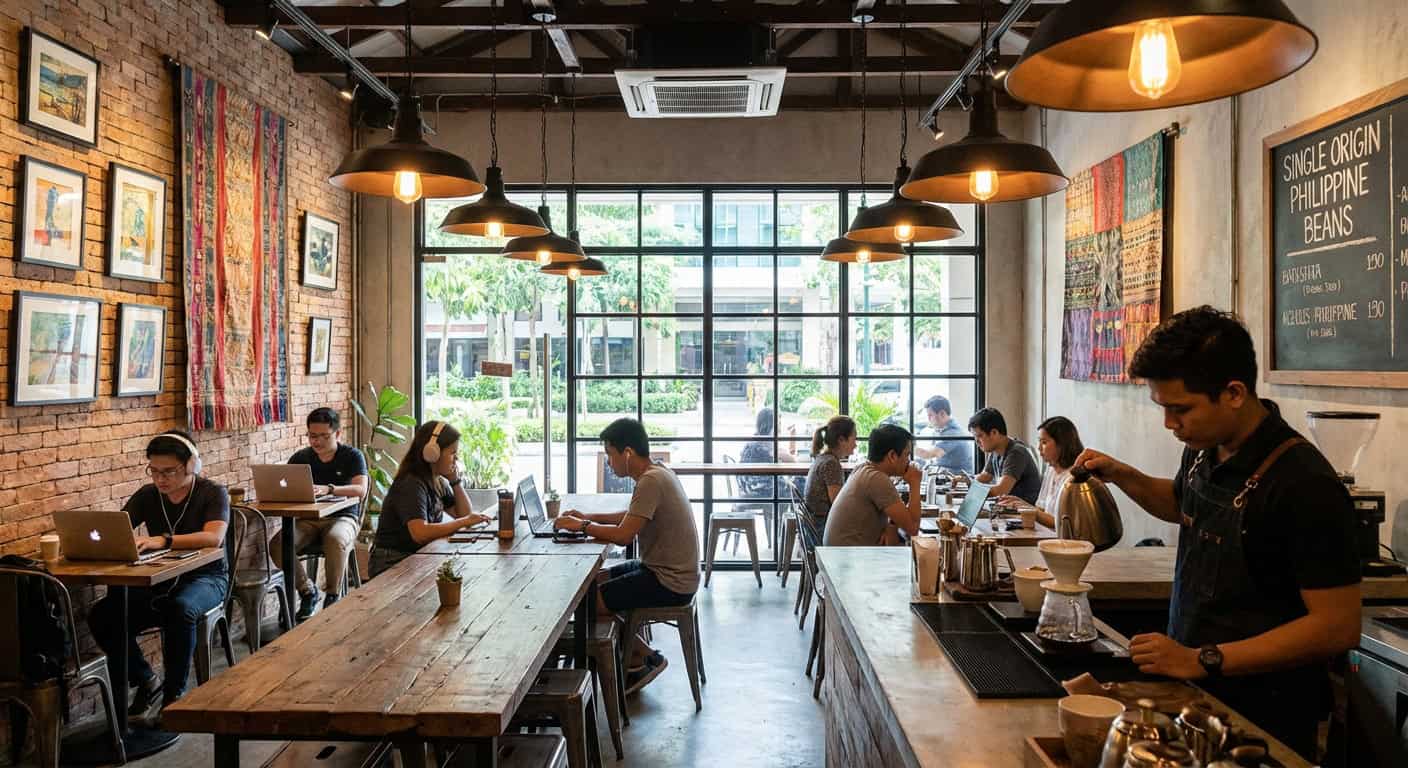
If Acceler8 is the popular kid, The Company is the one your coolest friend told you about. Located on Rada Street in Makati, this space is consistently described as “cozy” by everyone who walks in. The staff is genuinely hospitable in a way that feels distinctly Filipino, not corporate-friendly, actually friendly. The included coffee is proper brewed stuff, not the instant Nescafe you get at lesser spaces.
Day rates hover around 800 PHP, and the space is open 24/7. That last part matters enormously if you work US or European hours. Many “premium” coworking spaces in Manila technically close their amenities by 6 PM, turning off the AC and limiting keycard access. The Company doesn’t play those games. You can work at 3 AM and everything still works. For any remote worker whose schedule doesn’t follow Filipino business hours, this is the place.
Common Ground (Rockwell)
Common Ground sits inside Rockwell Center, which is one of Makati’s most well-managed commercial enclaves. The space itself is clean, professional, and well-equipped. It’s a good choice if you need meeting rooms or private phone booths for client calls. The real tip here is to ask about promos. Common Ground regularly runs 50 percent off deals or multi-month discounts, which can bring a hot desk membership down from eye-watering to reasonable. Without a promo, it’s one of the pricier options, so never pay full rate without asking first.
CoSY
For budget-conscious nomads, CoSY is the answer. Now located in the Omron Building near Cash and Carry, it has day passes around 750 PHP with reliable internet and a no-frills but functional workspace. It lacks the Instagram-worthy interiors of Acceler8, but if your priority is getting work done without emptying your wallet, CoSY delivers. The crowd skews more local freelancers and students, which gives it a different energy from the expat-heavy spaces.
The coworking spaces: BGC
Bonifacio Global City is Manila’s “Singapore-lite” district. Everything is cleaner, newer, and more expensive. The coworking spaces reflect this.
KMC Solutions
KMC is the reliable workhorse of Manila coworking. They have multiple locations across BGC, and the experience is consistently professional. Gigabit fiber internet, ergonomic chairs, cold AC, and clean meeting rooms. If you need to hop on a video call with a client and look like you’re in a proper office, KMC delivers that impression. The trade-off is the vibe. It feels more like a serviced office than a creative hub. You won’t make friends here organically, but you will get an absurd amount of work done.
Clock In (Bonifacio High Street)
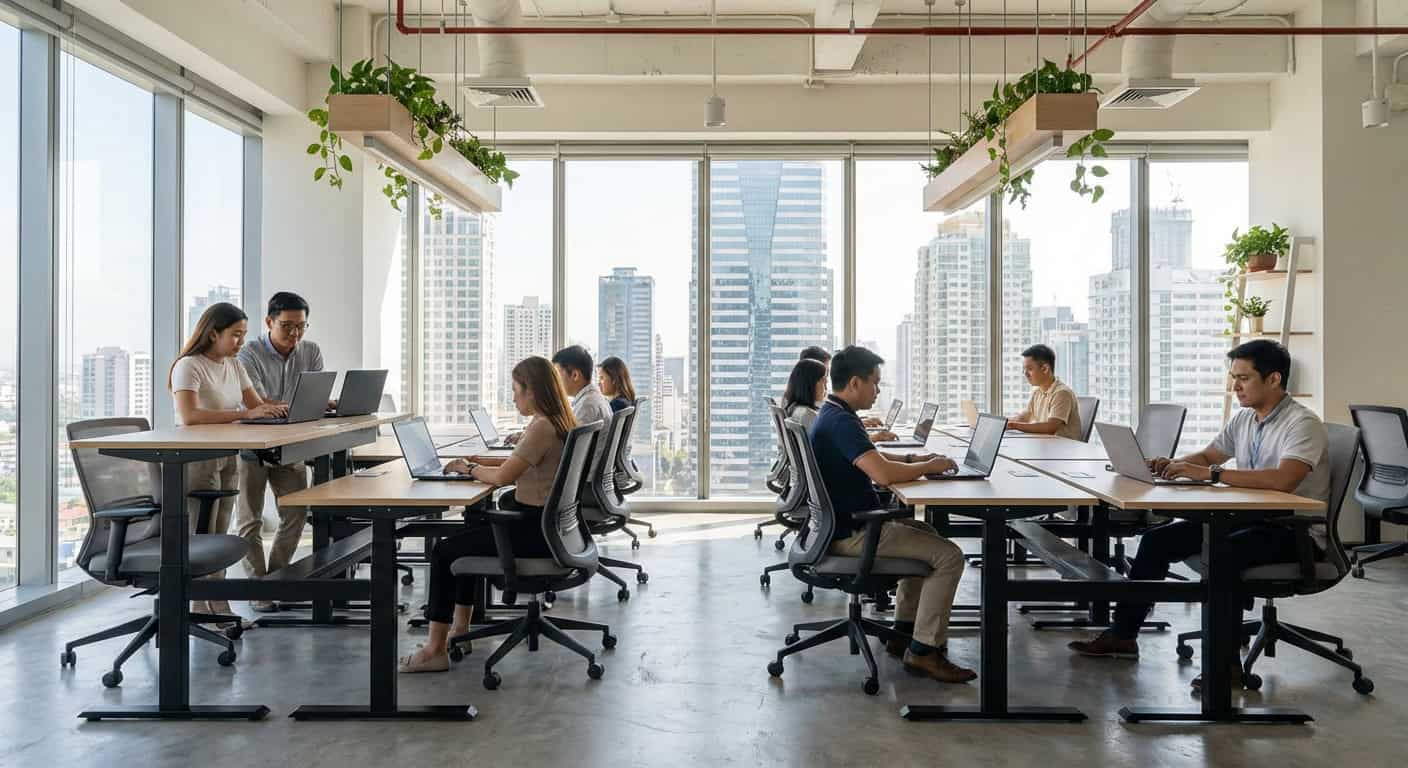
Located near High Street, Clock In is a solid pick for freelancers and startup people in BGC. It sits inside an Ayala Mall, which means easy access to food courts, pharmacies, and everything else you need without stepping outside into the Manila heat. The WiFi consistently tests as some of the fastest among coworking spaces, which makes sense given the mall’s infrastructure. Day passes are affordable, and the location makes it a natural meeting point if you’re catching up with other nomads in the area.
WeWork and the premium tier
WeWork has a presence in BGC, and it is exactly what you’d expect. Reliable, polished, and expensive. Hot desk memberships run north of 800 PHP per day. The real frustration I’ve heard from multiple nomads is that despite the “All Access” label, some amenities effectively shut down in the evenings. If you work US time zones, which many remote workers in Manila do, you might find the air conditioning off and access restricted. Ask specifically about after-hours policies before committing.
For those who need true 24/7 access in BGC, look at Zone Offices or Workhub instead. Both cater specifically to the night-shift and international-hours crowd that Manila’s BPO culture created. Sales Rain is another option worth investigating for overnight access.
The cafe scene: where the real work happens
Here’s an open secret about Manila’s remote work culture: many experienced nomads never set foot in a coworking space. The cafe scene is that good, and the economics are hard to argue with. A day at a coworking space costs 500 to 800 PHP. A day rotating between two cafes costs you maybe 300 PHP in coffee and food. If you’re staying productive while traveling, sometimes the right cafe beats a coworking space.
Makati cafes
Commune (Poblacion) is the OG recommendation for nomad-friendly cafes. It has a balcony area, decent local coffee, and a culture that’s genuinely welcoming to laptop workers. It can get crowded and noisy during peak hours, so arrive early or go during off-peak times.
Sherlock Makati is the hidden gem that keeps getting mentioned in every Reddit thread. The ground floor is a standard cafe, but the private space upstairs is where the magic is. Fast WiFi, quiet atmosphere, and baristas who’ll chat with you during breaks without being intrusive. If you need focused deep work, this upstairs section is gold.
Bad Cafe (Legazpi Village) shows up in nearly every “where to work in Makati” discussion. It’s quiet, has good outlets, excellent food, and the kind of atmosphere that makes a four-hour work session feel natural rather than forced.
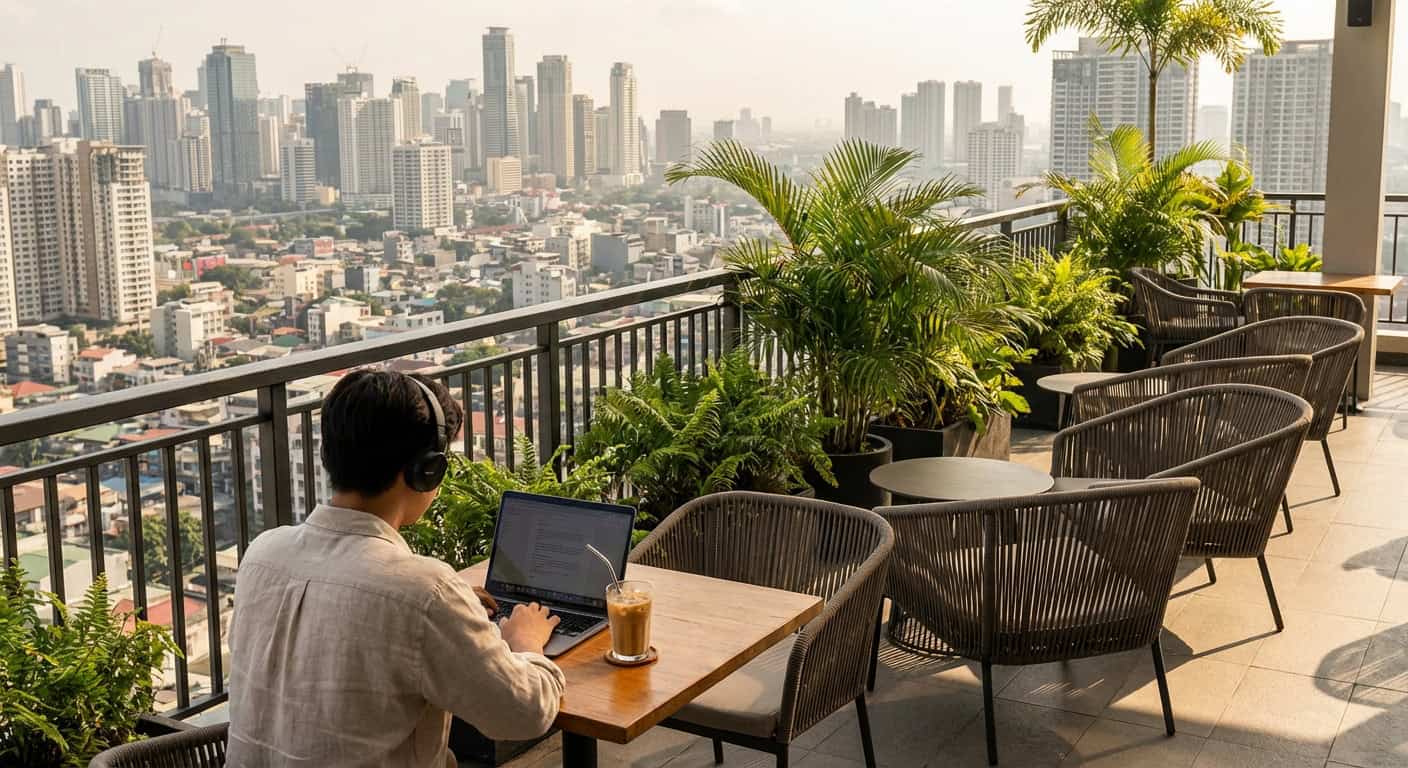
Malongo Atelier Barista (Legazpi Village) is the pick for people who want aggressive air conditioning and natural light. It’s rarely crowded, has reliable WiFi, and the huge windows make it feel airy rather than cramped. Multiple nomads specifically mentioned it as their “deep work” cafe.
Pao Cafe (Yakal Street) is the late-night option. Open until 4 AM, serving Vietnamese food, and generally quiet. The coffee isn’t the main draw, but if you need a workspace at midnight, your options are limited and Pao Cafe reliably fills that gap.
BGC cafes
Toby’s Estate (SM Aura) benefits from the mall’s WiFi infrastructure, which means more reliable internet than standalone cafes. The second floor is usually quieter and has more outlets. Pair the cafe’s coffee with the mall’s connectivity and you’ve got a solid setup.
UCC Clockwork (Burgos Circle) has power outlets on the second floor and a quieter atmosphere than most BGC chains. It’s a reliable backup when your first-choice cafe is packed.
One pro tip that keeps coming up from experienced Manila nomads: skip Starbucks entirely. Manila Starbucks locations are noisy, many have covered their outlets to discourage laptop campers, and the WiFi is mediocre. Independent cafes and specialty chains are universally better for actual work.
WiFi reality check
Manila’s internet has improved dramatically. Forget whatever you read in blog posts from 2019. Fiber connections from Converge, PLDT, and Globe now deliver 300 to 600 Mbps symmetrical speeds in Makati and BGC for around $30 to $50 USD per month. Your apartment internet, if you’re in a modern building in either district, will likely be faster than what you had back home.
The real risks are not speed but reliability. Power outages, called brownouts locally, can knock out your connection. BGC’s newer infrastructure means fewer random power fluctuations than some older Makati buildings. Here’s the backup strategy that every serious remote worker in Manila follows: get a Smart or Globe 5G SIM card as a mobile hotspot. 5G coverage in Makati and BGC can hit 100 Mbps or more, which is more than enough for Zoom calls. Some nomads carry both carriers because coverage varies block by block. Smart is generally cited as slightly faster for 5G in Metro Manila.
For coworking spaces specifically, expect consistent 50 to 100+ Mbps at the established names. Cafe WiFi is more variable. Always have your phone hotspot ready as a backup, and consider bringing a small USB-C ethernet adapter if you’re doing anything bandwidth-intensive. If you want more strategies for maintaining your workflow on the road, our complete digital nomad guide covers connectivity planning in depth.
Tips for choosing your setup
After months of testing different configurations, here’s what I’ve learned about picking the right workspace approach in Manila.
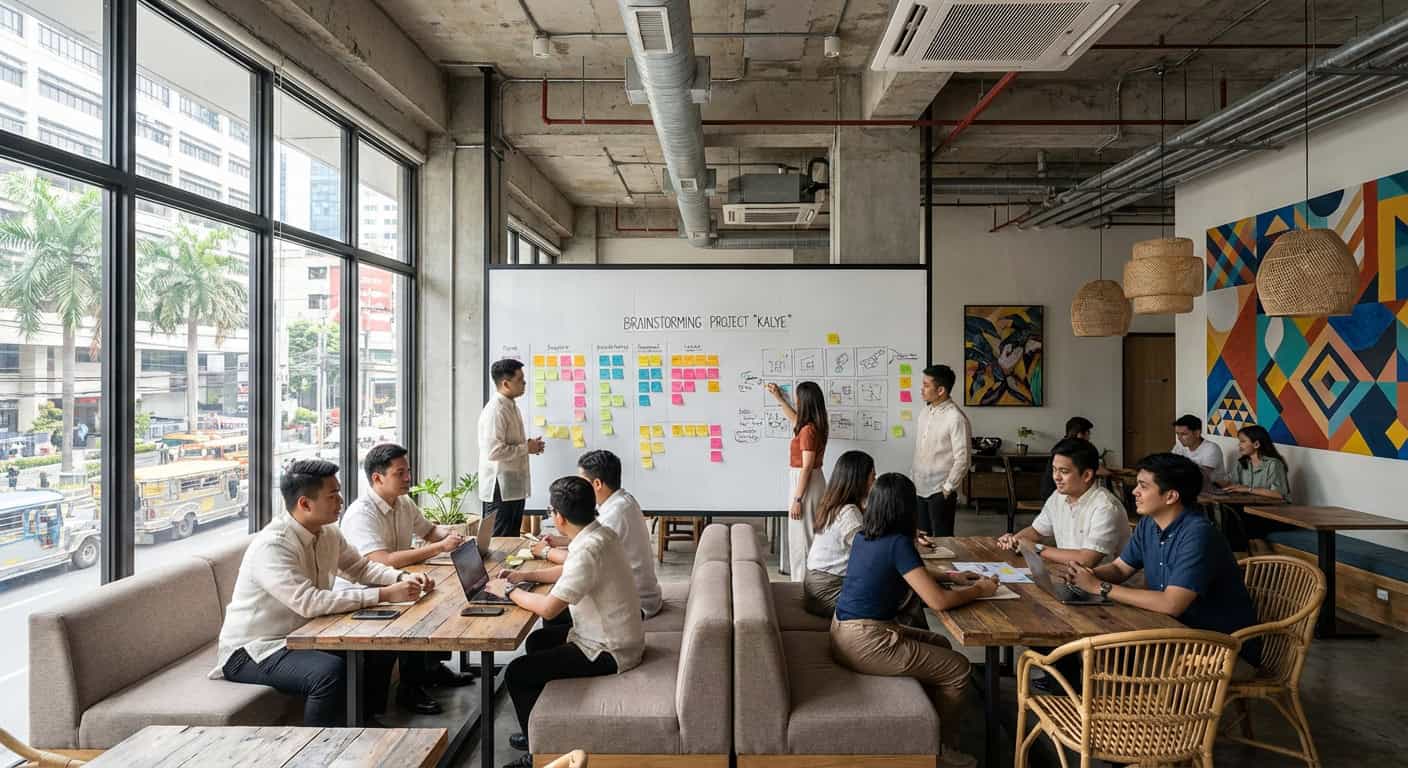
Go coworking if you need guaranteed fast internet for video calls, you want to meet other professionals, or you work non-standard hours and need 24/7 access. The productivity boost from a dedicated workspace pays for the day pass cost, especially if your work involves deep focus or client-facing calls.
Go cafe if you’re doing independent work that doesn’t require constant video calls, you want variety in your daily routine, or you’re watching your budget carefully. The cafe rotation strategy, where you have three to four reliable spots and cycle between them, works brilliantly in Manila because the density of good cafes in Makati and BGC is exceptional.
Work from your apartment if you’ve confirmed the building has fiber internet and you’ve got a proper desk setup. Ask any potential Airbnb host for a speed test screenshot before booking. Some condos still run slow DSL while the unit next door has 200 Mbps fiber. Never assume “WiFi included” means fast. Many nomads find that a comfortable apartment with reliable fiber is the best daily workspace, supplemented by one or two coworking days per week for social interaction and a change of scenery.
The hybrid approach is what most long-term Manila nomads settle into. Work from home most days, cowork once or twice a week for the social element, and hit a cafe when you need a change of environment. This keeps costs low while preventing the isolation that finding your travel crew is really about avoiding.
Continue your journey
If you’re setting up your work life in Manila, these guides will help you plan the rest:
- Manila Cost of Living for Digital Nomads — full budget breakdown so you know what your workspace costs fit into
- Things to Do in Manila on Your Days Off — what to do when you finally close the laptop
- Coworking Spaces and Cafes in Cebu — Cebu’s best workspaces if you’re comparing islands versus city life
Find your workspace crew
The best coworking space in Manila isn’t a building. It’s the people you end up working alongside. Whether you need a Zoom accountability partner, someone to split a coworking membership with, or just a fellow nomad who understands why you’re working at 2 AM Philippine time, the right people transform a workspace into a community. Use HitchHive to connect with other digital nomads and remote workers in Manila. Your next regular coffee-and-code companion might already be in the city.
Leave a Reply