
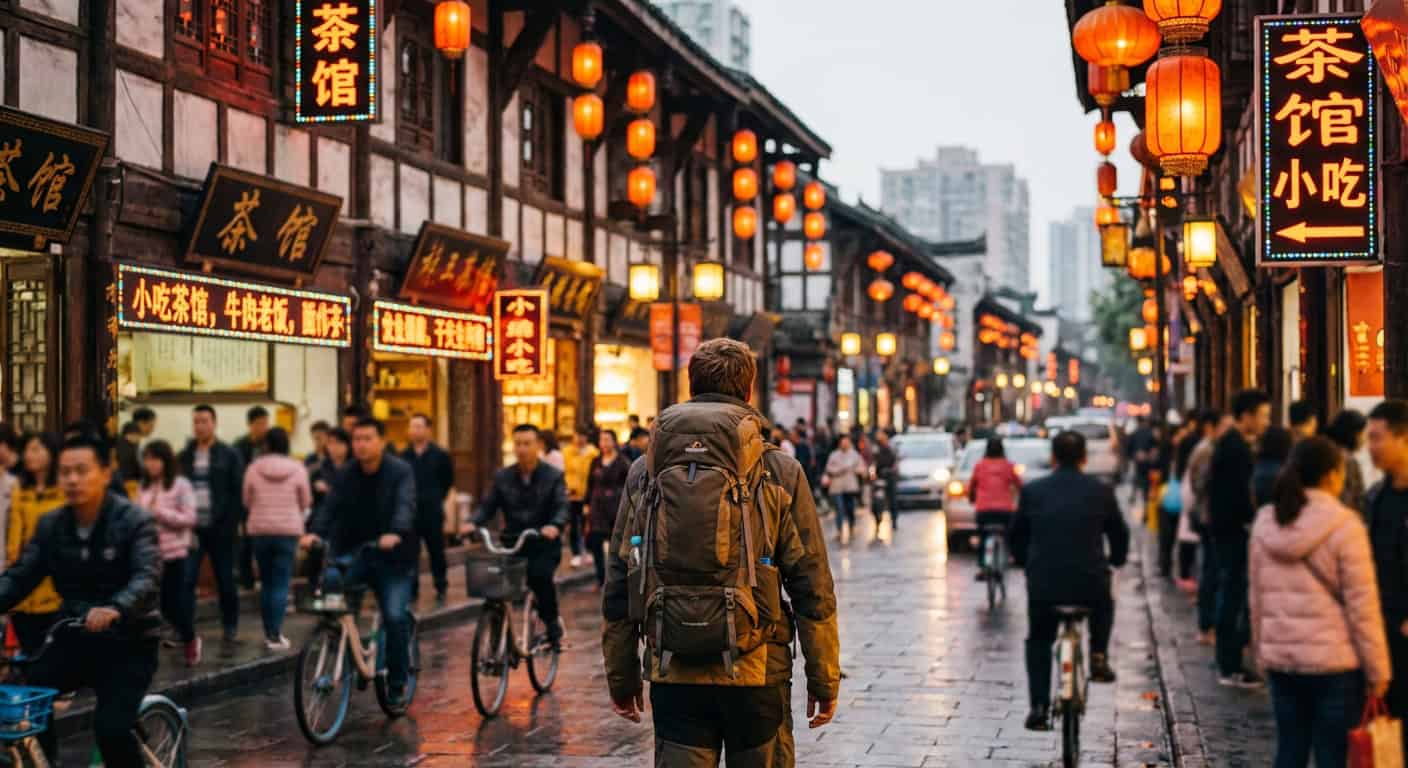
Why Chengdu caught me off guard
I almost skipped Chengdu. My original plan had me flying from Shanghai straight to Southeast Asia, and honestly, I didn’t think a city in inland China would have much to offer a backpacker. Everyone talks about Beijing’s history and Shanghai’s skyline. Nobody was telling me to go to Chengdu. That turned out to be exactly why I should have gone sooner.
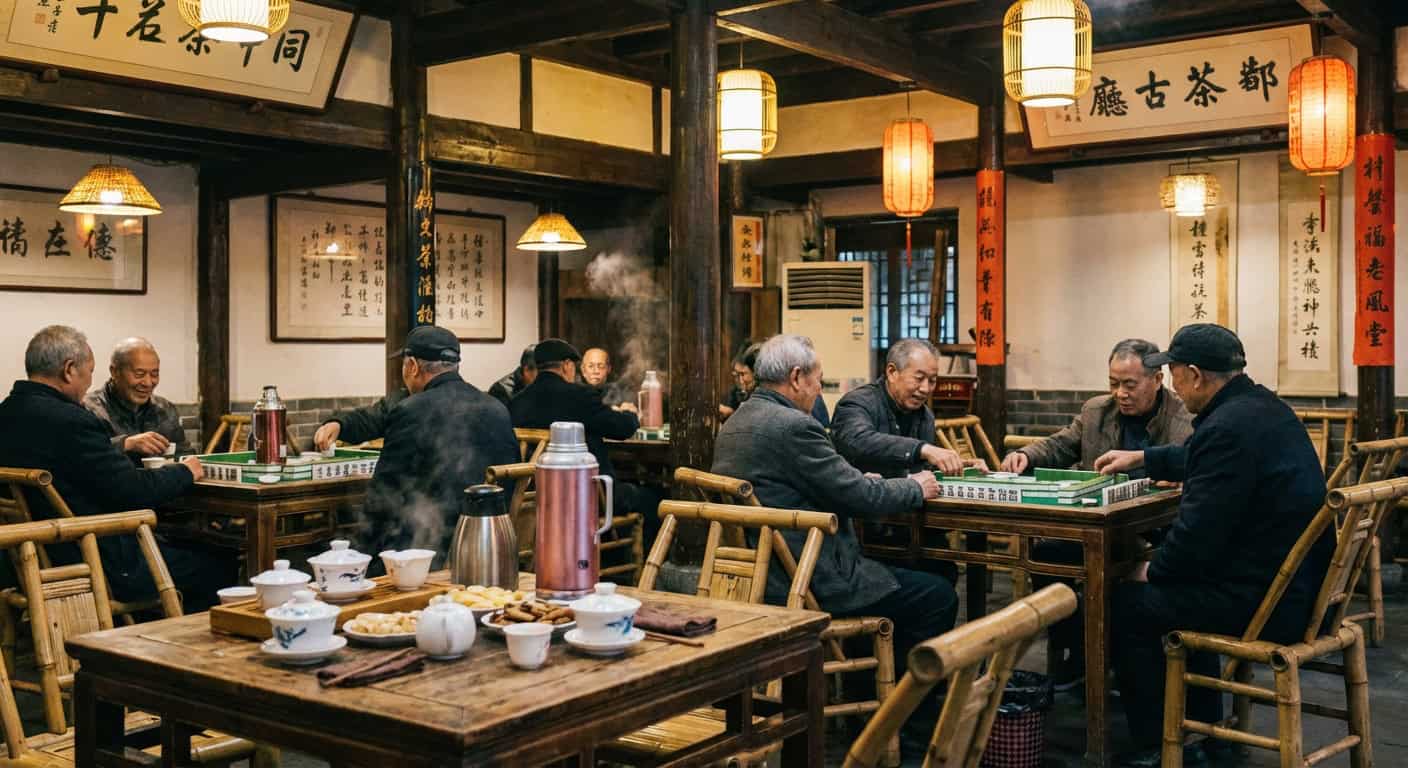
Chengdu is the capital of Sichuan province, a city of over 20 million people, and it moves at a pace that makes no sense for its size. There’s a local phrase for it: man shenghuo, or “slow life.” People sit in parks drinking tea for hours on weekday afternoons. Mahjong tiles clack on folding tables set up on sidewalks. Old men get their ears cleaned by street vendors while napping in bamboo chairs. Shanghai is for business. Chengdu is for living. I came here planning to stay four days. I stayed three weeks.
If you’re working your way through Asia on a backpacking trip, Chengdu is an easy city to miss and a hard one to leave. This guide covers everything I figured out the slow way so you don’t have to.
Getting into China: visas and paperwork
China’s visa situation is more complicated than most of Southeast Asia, so sort this out early. The standard tourist (L) visa is what you want. US passport holders can apply for a 10-year multi-entry visa, and the process got simpler in 2024 when they dropped the requirement for booked flights and hotels. You still need to fill out the COVA online application, but for Americans, you can upload a basic itinerary listing your planned cities instead of confirmed reservations.
For most other nationalities, you need either a fully booked (refundable) itinerary with flights and hotels, or a formal invitation letter from someone in China. If you’re using an invitation letter from a friend, make sure it includes exact travel dates, the host’s ID card number, their address, and phone number. Consulates want a copy of the front and back of the host’s Chinese ID too.
There’s also the 144-hour visa-free transit option if you’re just passing through. The rule is straightforward: you must be traveling from Country A through China to Country C. Hong Kong, Macau, and Taiwan count as “Country C.” The catch is you cannot fly USA to Beijing and back to the USA. That’s a round trip, not transit. You also need to enter and exit through the same transit region in most cases, so don’t plan on landing in Beijing and leaving from Shanghai. If you go this route, print your onward flight confirmation on paper. Airline check-in agents need to see it before they’ll let you board, and “let me pull it up on my phone” doesn’t always cut it.
One thing nobody mentions in budget travel guides: your job description on the visa application matters. Avoid listing anything related to media, journalism, or film production, even if that’s your actual field. It can trigger a requirement for a journalist visa instead of a tourist visa. If you work in marketing for a media company, “marketing manager” is a safer description than “media producer.”
Neighborhoods: where to base yourself
Chengdu is big, but the parts you’ll actually use as a backpacker cluster around a few distinct areas. Don’t book anything long-term before you arrive. Get a hostel for two or three nights, walk around, and figure out what suits your pace.

Chunxi Road and Tianfu Square
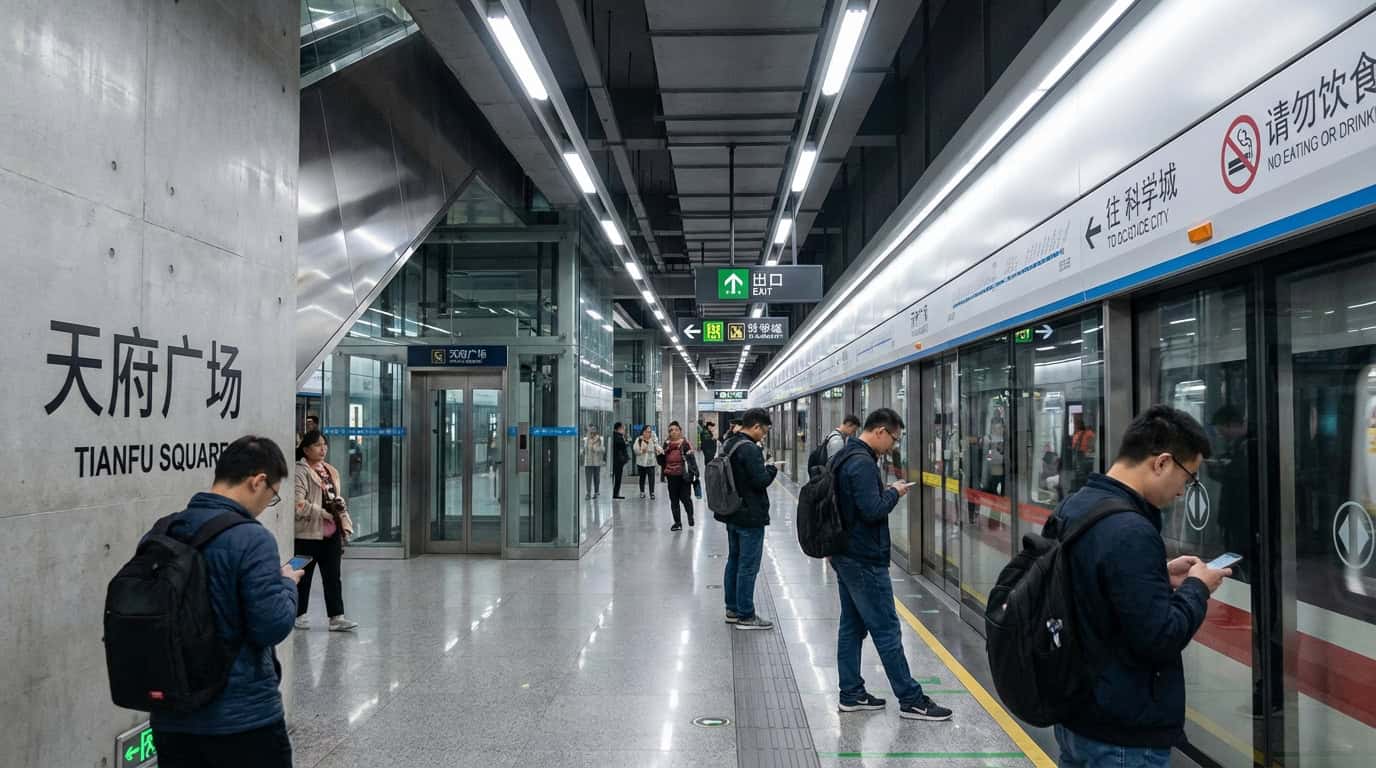
This is the center of the city and the most practical base for first-timers. Chunxi Road is where subway Lines 1, 2, and 3 intersect, so you can get almost anywhere without transfers. The area has the usual mix of chain shops and malls, but the side streets hide excellent local restaurants and late-night food stalls. Even at midnight, you can find food and grab a DiDi (China’s ride-hailing app) without waiting. Flipflop Lounge Hostel, one of the most recommended hostels in the city, is within walking distance. If you want convenience and a social scene, start here.
Wuhou and Yulin
South of the center, the Wuhou district is quieter and more local. Yulin, a neighborhood within Wuhou, is where I ended up spending most of my time. It has tree-lined streets, small bars, and hole-in-the-wall restaurants where you’ll be the only foreigner. Yulin Life Plaza is a local food hub with dozens of cheap restaurants packed into a few blocks. Rent and hotel prices drop compared to Chunxi Road. If you want a “real neighborhood” feeling rather than a tourist base, this is it.
Wenshu Monastery area
The streets around Wenshu Monastery have an older feel. Tea houses, vegetarian restaurants, and traditional courtyard hotels. It’s cheaper than the center and peaceful in a way that most of Chengdu’s downtown areas are not. The monastery itself is free to enter and has working monks, a tea garden, and one of the best vegetarian restaurants in the city. If you’re the type who picked up a hostel life habit and prefers quiet mornings to party nights, this neighborhood works.
University districts
The areas around Sichuan University are where you’ll find the cheapest food in the city. Student-priced “fly restaurants” (cang ying guan), tiny places with plastic stools and handwritten menus, serve full meals for next to nothing. The food is authentic and uncompromising on spice. These neighborhoods also have a younger energy and cheaper accommodation options.
Getting around the city
Chengdu’s metro system is excellent and expanding constantly. It already has multiple lines covering most areas a tourist would visit, and a single ride costs 2 to 7 yuan (under $1 USD) depending on distance. You can pay with Alipay by scanning the QR code at the turnstile, which eliminates the need for a transit card. For a city of 20 million people, the trains are clean and well-signed in both Chinese and English.
DiDi is the app you want for taxis. It works like Uber, you set your destination, get a price, and the driver comes to you. This avoids the meter games that can happen with street taxis. Set it up through your Alipay app before you need it. Regular taxis exist too, but always insist on the meter if you hail one on the street.
Cycling is an underrated option. Chengdu has the Tianfu Greenway, a 100-kilometer car-free loop around the city that locals use for jogging, cycling, and hanging out. Shared bikes from Meituan and Hello are everywhere. Scan one with your phone, ride it, and park it when you’re done. It’s the cheapest and often fastest way to cover short distances, especially when the metro doesn’t go exactly where you need.
One practical note: download Amap (also called Gaode Maps) instead of relying on Google Maps. Google Maps works poorly in China even with a VPN. Amap has accurate public transit directions, walking routes, and real-time traffic. The interface is mostly in Chinese, but the map itself shows enough to navigate by.
Internet and the Great Firewall
This is the part of traveling in China that trips people up the most. Google, Instagram, WhatsApp, Facebook, YouTube, and most western apps are blocked behind China’s Great Firewall. If you don’t prepare for this before you land, you’ll be cut off from everything you normally use.
You have two options. The easier one is a roaming eSIM from providers like Nomad, Airalo, or Holafly. These route your data through servers in Hong Kong or Singapore, which means the Firewall doesn’t apply to your mobile data. You can use Google, check Instagram, and message people on WhatsApp without any extra software. The downside is you’re paying roaming data rates, which add up if you’re streaming video or making long calls.
The second option is a VPN on local wifi. If you’re staying in hostels or apartments and using their wifi, you need a VPN installed before you arrive. Download and set it up in your home country. Astrill is the most reliable option, though it costs more. LetsVPN is a cheaper alternative that works well on mobile. Skip ExpressVPN and NordVPN for China specifically. Travelers report they’ve become unreliable there.
The combination most backpackers use: an eSIM for daily phone use and a VPN as backup for hostel wifi. This keeps you connected without burning through expensive roaming data on your laptop. If you’re trying to travel solo through China, maintaining your communication channels is non-negotiable.
Money and payments
China runs on mobile payments. Cash still exists, but many vendors, especially small food stalls and taxi drivers, won’t have change or will look at you like you’ve handed them a seashell. You need Alipay on your phone before you land.
Download the Alipay app and link your international Visa or Mastercard while you’re still in your home country. Alipay is more foreigner-friendly than WeChat Pay. For transactions under 200 RMB (about $28 USD), there’s no foreign transaction fee. Above that, expect a 3% surcharge. Ignore the old “TourCard” mini-app that some guides mention. It’s outdated. Just use the direct international card linkage in the main Alipay app.
WeChat is worth setting up too, not just for payments but because it’s how Chinese people communicate. If you meet locals, they’ll want your WeChat, not your phone number. The payments feature works, but linking a foreign card to WeChat is less reliable than Alipay.
Carry some cash as a backup. ATMs in Bank of China branches accept foreign cards. A few hundred yuan in small bills covers emergencies and the occasional street vendor who only takes cash.
Where to sleep
Chengdu has a solid hostel scene. Three names come up repeatedly in every backpacker forum.
Flipflop Lounge Hostel is the social hub. It’s near Chunxi Road, has a rooftop bar, English-speaking staff, and organizes group activities like hotpot nights and city walks. If you’re arriving solo and want to meet people fast, this is where you go. The trade-off is noise. It’s a party hostel, and light sleepers may struggle.
Poshpacker Local Tea Hostel takes a different approach. Pod-style beds with privacy curtains, solid lockers, and a location right next to a subway station. It’s quieter and cleaner than Flipflop, and the pod design means you actually sleep well. Better for people who want a social common area but a restful bed.
Desti Youth Park Hostel has the biggest common area with a bar, making it easy to find groups heading out for dinner or drinks. Mrs. Panda Hostel, near the bus station, is good if you’re planning day trips since it’s convenient for catching morning buses to Leshan or Mount Emei.
Budget hotels are another option. Use Trip.com rather than Booking.com for Chinese hotels. The inventory is larger and prices are lower. For around 150 to 250 yuan per night ($20 to $35 USD), you can get a clean private room with wifi and air conditioning. The Wuhou and Yulin neighborhoods have the best value.
Safety and health
Chengdu is extremely safe. Violent crime against foreigners is essentially unheard of. The city feels safe at all hours, including late-night walks through residential neighborhoods. I never felt uneasy anywhere in the city.
The scams to watch for are monetary, not physical. The classic one: someone approaches you on Chunxi Road or near tourist sites, says they’re a student wanting to practice English, and invites you to a “tea ceremony.” You end up at a private teahouse with a bill for hundreds of dollars. The fix is simple: never follow a stranger to a teahouse. If someone approaches you in a tourist area with perfect English and a big smile, politely decline.
Health-wise, the tap water is not drinkable. Boil it or buy bottled water. For minor health issues like colds or stomach trouble, pharmacies are everywhere and pharmacists can recommend over-the-counter treatments. For anything more serious, Chengdu has good hospitals. Carry basic travel safety gear: a small first aid kit, any prescription medications you need, and proof of travel insurance.
One genuinely useful tip that every traveler to China repeats: bring your own toilet paper. Public restrooms, even in some restaurants, rarely provide it. Carry a small pack of tissues everywhere. This is not optional advice.
The language situation
English is much less common in Chengdu than in Shanghai or Beijing. Most restaurant staff, taxi drivers, and shop workers speak zero English. Signs in tourist areas have some English, but once you step outside the main attractions, everything is in Chinese.
This is manageable with the right apps. Pleco is the best Chinese dictionary and translation app. Point your camera at a menu or sign and it translates in real time. Baidu Translate and DeepL both work well for conversation translation. If you’re trying to explain something to a taxi driver, type it out in English and show them the Chinese translation on your screen.
Learn a few phrases. “Ni hao” (hello), “xie xie” (thank you), “duo shao qian” (how much), and “bu yao la” (no spice) will get you surprisingly far. Even failed attempts at Mandarin tend to make people friendlier and more patient with you.
The language barrier is real but it shouldn’t stop you from going. I spent three weeks in Chengdu speaking almost no Mandarin and got along fine with translation apps and pointing at things. The worst that happens is some confused laughter and extra hand gestures.
Meeting other travelers
Chengdu’s backpacker scene is smaller than Bangkok’s or Chiang Mai’s, but it exists and it’s growing. The hostel common rooms are the main social engine. Flipflop and Desti both have bars and organized activities that make it easy to fall into a group without trying too hard. If you’re staying more than a few days, the regulars at your hostel become your default friend group.
WeChat is how you stay in touch with people you meet. Exchange WeChat IDs instead of phone numbers or Instagram handles. There are also WeChat groups for expats and travelers in Chengdu where people post about meetups, restaurant recommendations, and day trip plans. Ask at your hostel front desk for group invites.
Meetup.com has occasional events in Chengdu, though the scene is thinner than in tier-one cities. Language exchange meetups are a good way to meet both locals and other foreigners. HitchHive is another way to connect with travelers heading through the city. Some of my best experiences came from finding travel buddies to split the cost of day trips to Leshan or Mount Emei.
The shared experience of navigating China’s quirks together, the payment apps, the Firewall, the Google-less existence, turns acquaintances into friends faster than almost anywhere else I’ve traveled. Struggling through the same confusions bonds people. Use HitchHive to find other travelers in the city and you’ll have company for hotpot by your second night.
Best time to visit
Chengdu’s weather runs through distinct seasons, and when you go changes your experience significantly.
March through May is the best window. Temperatures are comfortable (15 to 25 degrees Celsius), the parks are green, and it’s before the summer humidity hits. This is when Chengdu is at its most pleasant for walking around and spending time outdoors.
September through November is the second-best option. The summer heat breaks, and autumn colors show up in the surrounding mountains. This is ideal timing if you’re planning side trips to Jiuzhaigou or the Western Sichuan highlands.
June through August brings heat and humidity. Temperatures push above 35 degrees Celsius and the air feels heavy. The city is overcast and muggy. It’s manageable, but outdoor sightseeing becomes less enjoyable. Locals cope by spending even more time in air-conditioned tea houses.
December through February is cold, grey, and damp. Chengdu rarely sees snow, but the persistent overcast skies and temperatures around 3 to 8 degrees Celsius can feel bleak. Chengdu is famous for having very few sunny days in winter. If you’re coming from backpacking Southeast Asia, the transition is stark.

Chengdu as a base for bigger trips
One of the best reasons to come to Chengdu is what surrounds it. The city is the gateway to Western Sichuan, which has some of the most dramatic mountain scenery in China. Many backpackers use Chengdu as a launchpad for multi-day trips into the highlands.
Leshan Giant Buddha is the most accessible day trip: a high-speed train gets you there in about an hour. The Buddha itself is 71 meters tall, carved into a cliff face overlooking the confluence of three rivers. Go early and expect crowds. You can either hike down the narrow staircase next to the Buddha (which can mean a two to three hour queue) or take the boat for a faster view from the water.
Mount Emei is one of China’s four sacred Buddhist mountains and works as an overnight trip. Stay near the summit to watch the sunrise above the clouds. Mount Qingcheng and the Dujiangyan Irrigation System (a 2,000-year-old engineering project that still works) make another solid day trip by train.
For serious trekking, Mount Siguniang (Four Sisters Mountain) has real hiking, not the paved-staircase kind you find at most Chinese scenic spots. The Changping Valley trail is a 25-kilometer day hike, and Haizi Valley offers multi-day camping and trekking. The “Sichuan Loop” running from Chengdu through Kangding, Litang, and Daocheng Yading to Shangri-La takes you through Tibetan culture and high-altitude landscapes that look like Patagonia. For the full breakdown of what to see around the city, check out day trips from Chengdu and the guide to things to do in Chengdu.
What it actually costs
Chengdu is cheap by any standard, and absurdly cheap compared to coastal Chinese cities. For detailed numbers, check the Chengdu budget travel guide. Here’s the rough picture.
A hostel dorm bed runs 40 to 80 yuan per night ($6 to $11 USD). A private room in a budget hotel is 150 to 250 yuan ($20 to $35). Street food meals cost 10 to 25 yuan ($1.50 to $3.50). A sit-down restaurant meal runs 30 to 60 yuan ($4 to $8). Metro rides are 2 to 7 yuan. A DiDi across town rarely exceeds 30 yuan.
At $25 to $35 per day, you can eat well, sleep in a hostel, use public transit, and see the city comfortably. At $50 per day, you’re living well with private rooms and restaurant meals. Chengdu rewards the budget-conscious without requiring you to suffer for it.
The food situation
I’m keeping this brief because there’s a whole separate Chengdu food guide that goes deep. But you need to know what you’re walking into.
Sichuan food is not just spicy. It’s “mala,” which means numbing-spicy. Sichuan peppercorns create a tingling, buzzing sensation on your lips that is completely different from chili heat. Your first mala hotpot will feel like a medical event. By your third, you’ll be addicted.
The dishes to try first: mapo tofu (the real version is nothing like what you’ve had abroad), dan dan noodles (ask for “wei la” if you want mild spice), chuan chuan xiang (skewers cooked in spiced oil, eaten on tiny plastic stools on the sidewalk), and guokui (a crispy meat-filled flatbread that’s a good non-spicy option). Bingfen, a cold sweet jelly dessert, is your best friend between spicy courses.
The brave can try rabbit heads. Chengdu is one of the few places in the world where rabbit heads are a common street snack. The cheek meat tastes like dark chicken meat. It’s less weird than it sounds once you get past the presentation.
Eat at the dirtiest, smallest places you can find. Fly restaurants, the hole-in-the-wall spots with plastic furniture and no English menu, serve the best food in the city. The fancier the restaurant looks, the more likely the food is watered down for tourists.
Continue your journey
If you’re planning your Chengdu trip, these guides cover the specific details:
- The backpacker’s guide to eating in Chengdu — where to find the best mala hotpot, street food, and cheap eats
- Things to do in Chengdu — pandas, parks, temples, and the best free activities in the city
- Day trips from Chengdu — Leshan Giant Buddha, Mount Emei, and Western Sichuan adventures
- Chengdu budget travel guide — day-by-day cost breakdown and money-saving strategies
- Backpacking Southeast Asia — routes and tips for continuing your trip south from China
Leave a Reply