
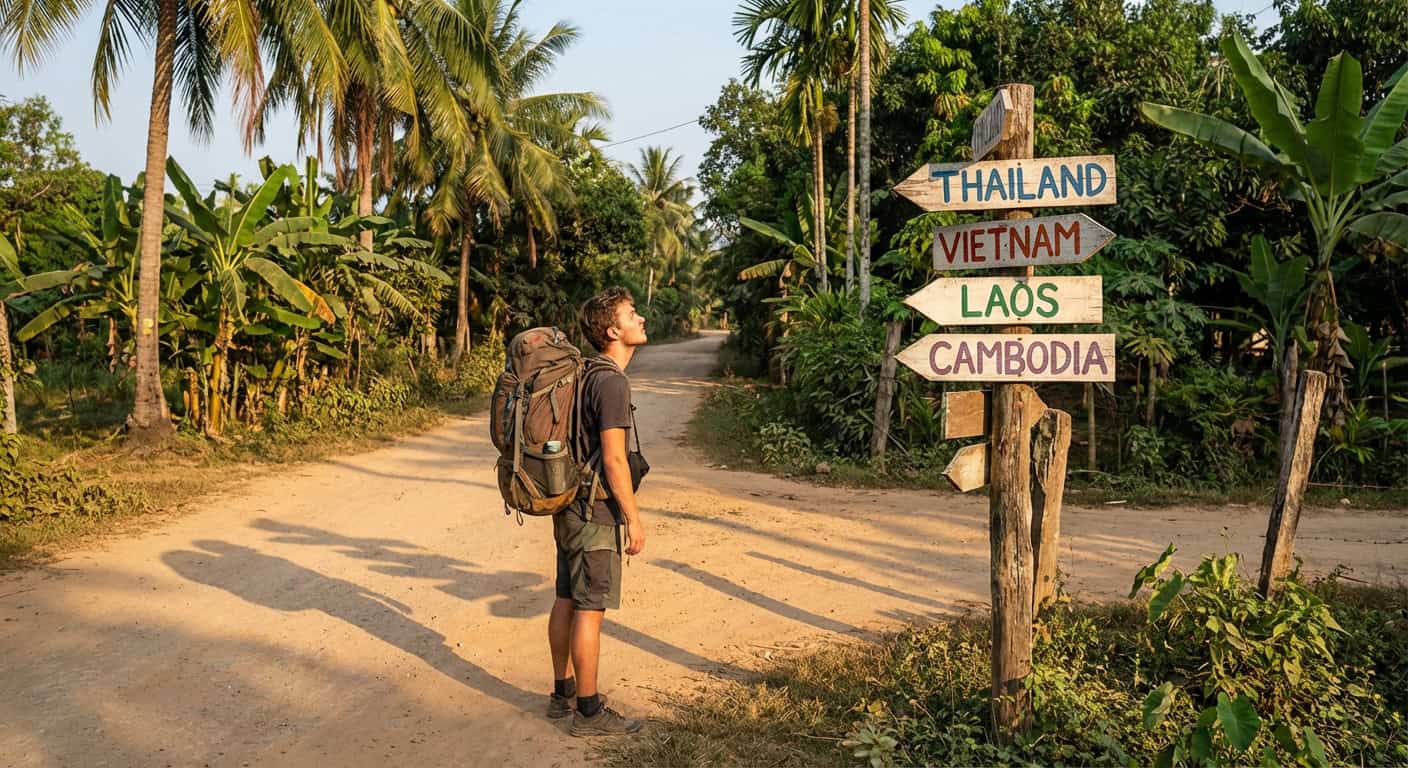
The best backpacking routes through Southeast Asia: complete itinerary guide
I spent weeks agonizing over the “perfect” Southeast Asia route before my first trip. Spreadsheets, color-coded maps, a day-by-day itinerary worthy of a military logistics officer. Then I landed in Bangkok, met a group at my hostel heading to Chiang Mai the next morning, and threw the entire plan out the window within 48 hours.
Here’s the thing: the route matters less than you think, but having a loose framework matters more than you’d expect. The travelers who enjoy Southeast Asia most understand the shape of the region, know what’s possible in their timeframe, and leave enough slack to follow the magic when it appears. This guide gives you that framework, whether you have two weeks or three months, covering routes, budgets, seasons, and the planning wisdom that separates a good trip from one you’ll talk about for years. If you’re starting from scratch, our Southeast Asia backpacking overview covers the fundamentals before you dive into route specifics.
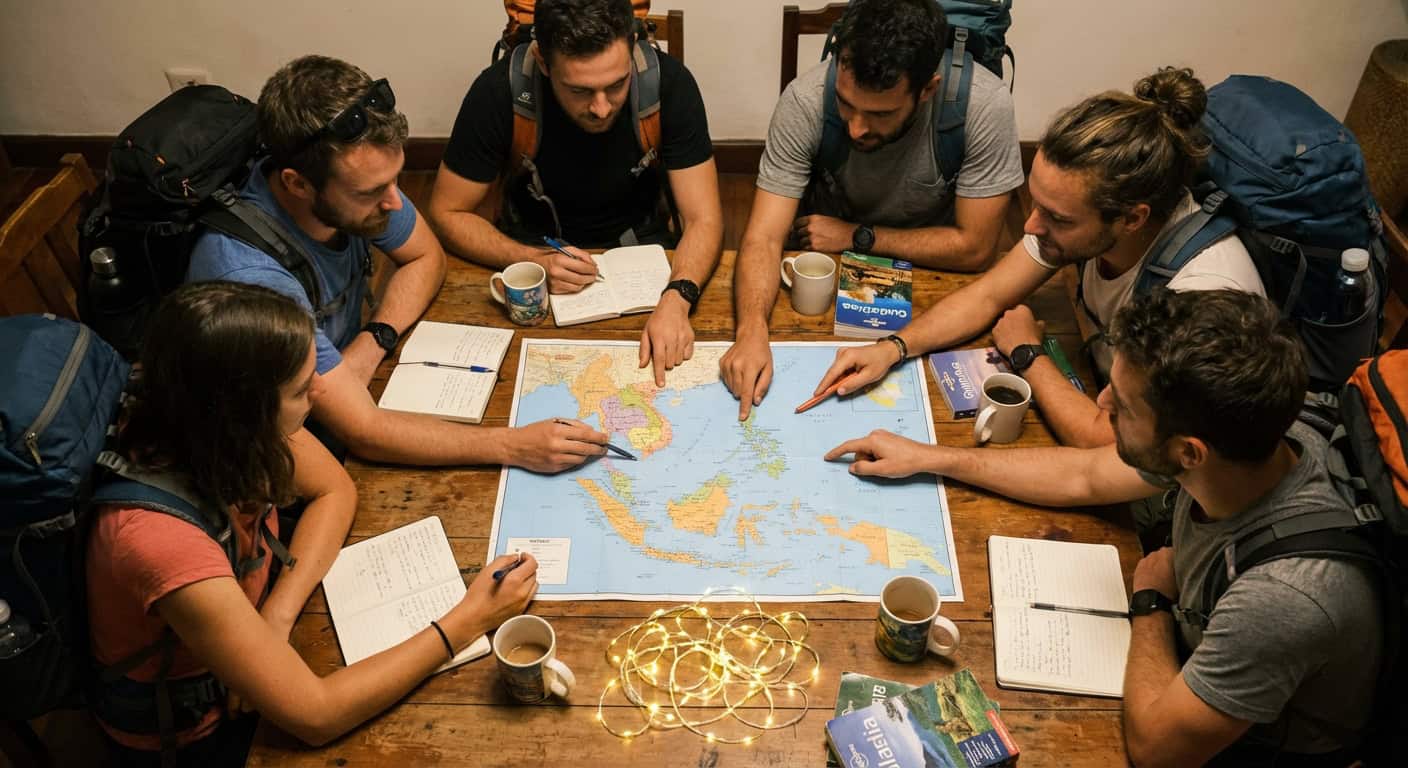
The 2-week sprint: one country, done right
Two weeks is not enough to “do” Southeast Asia. Experienced backpackers are nearly unanimous on this. If you try to squeeze Bangkok, Angkor Wat, Hanoi, and a Thai island into 14 days, you’ll spend more time in buses and airports than actually experiencing anything. The golden rule: pick one country, or even one region of one country, and do it properly.
Option A: Northern Thailand. Bangkok (2-3 nights) to Chiang Mai (4-5 nights) for temples, mountain culture, and the best food scene in the North. Add Pai (3 nights) for the laid-back mountain vibe, then a few days on Koh Tao for diving or Koh Phangan for beaches.
Option B: Vietnam Highlights. Hanoi (3 nights) with a day trip to Ninh Binh, then the Ha Giang Loop (4 days), consistently described as the single best travel experience in all of Southeast Asia. Fly south to Da Nang (2 nights) with a day in Hoi An, then finish in Ho Chi Minh City (2-3 nights).
The key principle is the “3-Night Rule”: staying only two nights gives you just one full day. Minimum three nights at any major destination. For more on making short trips work, our hostel life guide has you covered.
The 1-month classic: the sweet spot
One month is where Southeast Asia really opens up. But here’s the advice from every backpacking discussion: do not try to cram four countries into 30 days. Two neighboring countries is the sweet spot. Three is pushing it.
The counter-clockwise loop
The most recommended one-month route runs: Bangkok (3 nights) → Siem Reap (4 nights) → HCMC (2 nights) → North through Vietnam to Hanoi (10-12 nights) → Luang Prabang (4 nights) → Overland back to Thailand. This hits the non-negotiable highlights: Angkor Wat at sunrise, HCMC’s street food chaos, the Ha Giang Loop, and Luang Prabang’s serene beauty, all in a logical flow that minimizes backtracking.
If you only have 30 days and want to simplify further, the “must-do” non-negotiables according to experienced travelers are: Angkor Wat (Siem Reap), Hanoi plus the Ha Giang Loop (Vietnam), and one Thai island. Build your month around those three anchors and fill in the gaps based on what feels right once you’re on the ground.
The “book 3 nights, then wing it” philosophy
One of the most endorsed pieces of advice: book your first three nights in Bangkok, then wing it. Once you’re on the ground, you’ll meet people who just came from where you’re heading. They’ll tell you which bus company is a scam and whether that island is worth the ferry right now. A rigid itinerary forces you to leave new friends behind. Flexibility lets you find travel companions organically and adjust based on real-time intelligence.
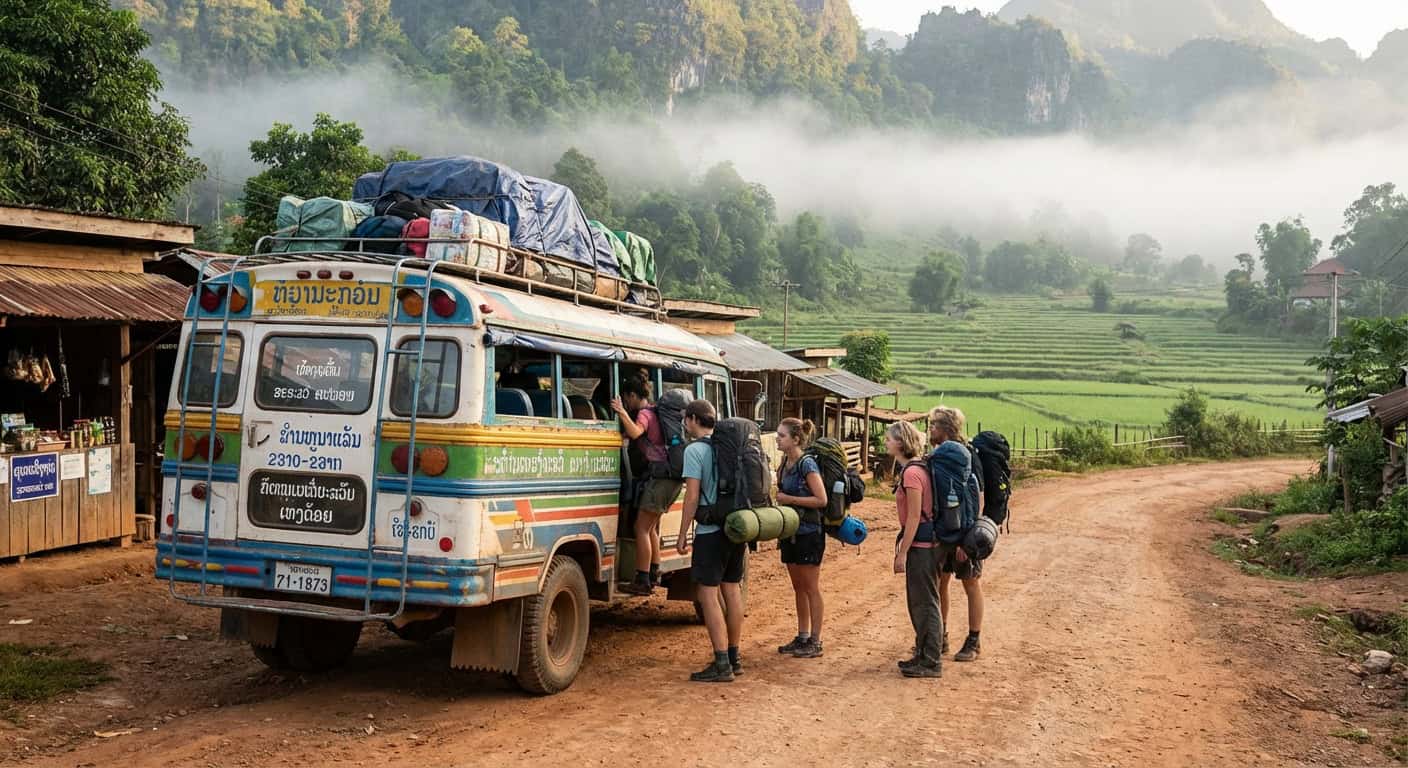
The 3-month deep dive: the full experience
Three months is where the Banana Pancake Trail becomes viable: Thailand, Laos, Vietnam, and Cambodia, with the option to add island time in Indonesia or the Philippines.
The “Golden Trio”: one month in Vietnam, one month in Thailand, one month in either the Philippines or Indonesia. This gives you three to four weeks per country, the sweet spot for getting beneath the surface. An alternative mainland split: Thailand (3-4 weeks), Laos (2-3 weeks), Vietnam (3-4 weeks), Cambodia (2 weeks).
Don’t skip Laos. Despite being the country most often rushed through, Laos was the highlight for many long-term travelers. The pace is slower, the scenery is great, and the tourist infrastructure is developed enough to be comfortable without being overwhelming. The slow boat from the Thai border to Luang Prabang is a quintessential social experience. Nong Khiaw offers better hiking and viewpoints than the more famous Vang Vieng, without the crowds. And the Bolaven Plateau in the south has waterfalls and coffee plantations far from tourist hordes. Give Laos at least two weeks.
The “Less Is More” rule: limit yourself to three or four countries maximum. Trying to tick off all five leads to burnout, temple fatigue, and seeing airports instead of the actual region. For spots that reward a slower pace, check out the hidden gems most backpackers miss.
Country-by-country: how long you actually need
Thailand: minimum two weeks, recommended three to four. You need time for both the North (Chiang Mai, Pai) and the South (islands, diving).
Vietnam: deceptively long geographically. North to south requires serious transit time, and the Ha Giang Loop alone takes four days. Two weeks is the absolute minimum, three to four weeks is recommended, and a full month is the sweet spot. Don’t underestimate this country.
Laos: one week hits Luang Prabang and Vang Vieng, but two to three weeks lets you experience the slower rhythm. The 4000 Islands in the south, where you do nothing but hammock by the Mekong, needs three to four nights alone.
Cambodia: five days is technically doable but feels rushed. Two weeks lets you do Angkor Wat properly (three-day pass recommended), explore Kampot where people routinely get “stuck” longer than planned, and maybe hit a southern island.
Indonesia: logistics are slow and island hopping eats time. Budget at least three weeks; anything beyond Bali needs a full month. Our island hopping guide breaks down the logistics in detail.
Malaysia: one to three weeks, with Georgetown in Penang as the unanimous food highlight, described by travelers as “the food capital of Southeast Asia.”
Philippines: geographically spread out. Two weeks minimum, a month is better. Singapore: two to three days maximum, best used as a transit hub on a backpacker budget.
When to go: seasons make or break your trip
This is the section most first-timers skip and most veterans say matters the most. Wrong timing means hazardous air, floods, or brutal heat. Right timing gives you clear skies and fewer crowds.
The golden window: November through February
November through February is the best overall window for mainland Southeast Asia: cool, dry season for Thailand, Laos, and Cambodia. This is when the clockwise route (Thailand North, into Laos, through Vietnam, down to Cambodia) flows perfectly with the seasons.
The burning season warning
From February through April, northern Thailand and Laos suffer from agricultural burning with AQI readings of 300+. March is the worst. Experienced travelers call it a hard no. As one put it, “you don’t want to be outside at all.” Head to Thai islands or southern Vietnam instead, and check the AirVisual app before committing to a destination. For more on health and safety considerations, see our travel safety guide.
Other seasonal considerations
Central Vietnam (Hoi An, Da Nang): avoid October-November due to floods and typhoons. Monsoon season (June-October) is more manageable than people think: usually a one-hour afternoon downpour, not 24/7 rain. Everything is greener, waterfalls are full, crowds thin out, and prices drop. Buy a cheap 7-Eleven poncho and embrace it.
Route direction by start month: November-February, go clockwise from Thailand North into Laos and Vietnam, riding the dry season the entire way. March-April, start with the southern Thai islands or go counter-clockwise to avoid burning season in the North, then work your way up when rains clear the smoke in May. June-September, prioritize Gulf coast islands (Koh Samui, Koh Tao are dry while the Andaman coast is in monsoon) and Indonesia, which is in its dry season. October-November, avoid central Vietnam but northern Thailand is perfect in November and December.
Budget breakdown by route length
Southeast Asia remains one of the most budget-friendly regions on earth, though post-2023 inflation has nudged prices up. Here’s what travelers consistently report spending, excluding international flights.
Shoestring: $1,000-$1,200/month. Hostel dorms ($8-15/night), street food, local transport, minimal drinking. Doable but requires discipline.
Comfortable backpacker: $1,500-$2,000/month. The sweet spot. Mix of dorms and private rooms, activities like diving or tours, a social budget for beers. Our budget travel hacks guide covers specific strategies for this range.
Mid-range: $2,000-$2,500/month. Private rooms, restaurants, guided tours. Flashpacker: $2,500+/month. Nice hotels and premium experiences.
The budget killers
The number one budget killer is alcohol. Stick to local beers (Chang in Thailand, Bia Hoi in Vietnam at 25 cents a glass) and your budget survives. Cocktails and imported spirits will double your daily spend. Moving too fast is the second biggest drain: every bus and flight costs money, and staying longer in one place is almost always cheaper than adding another destination. Other killers: scuba certification ($200-$400+), Singapore (keep it to two days), and taxi scams (always use Grab).
Essential money-saving tools
Agoda is often cheaper than Booking.com in Asia. 12Go.asia handles bus, train, and ferry bookings across borders. HostelWorld is best for finding social hostels. Grab is non-negotiable for city transport. Knowing your tools saves real money over a multi-week trip.
Route planning tips: hard-won wisdom
Don’t over-plan. Booking too far ahead kills the flexibility to stay longer where you love it or leave early from places you don’t. One to two days ahead for accommodation is usually plenty, except peak season (December-January) on popular Thai islands.
Budget for “slow days.” A “4-hour bus ride” in Southeast Asia often takes seven to eight hours door-to-door. Never plan activities on travel days.
Watch for scams. The classics are well-documented: fake visa offices at the Poipet border crossing between Thailand and Cambodia, tuk-tuk drivers in Bangkok claiming temples are “closed today” to redirect you to their friend’s shop, the notorious Khao San Road “VIP buses” that are intentionally terrible, and bag snatching from motorbikes in HCMC (keep phones in front pockets, away from the street side). Awareness is your best defense.
Temple fatigue is real. After three to four months, the enthusiasm for another ancient temple fades. Pace yourself, alternate cultural days with nature or beach days, and travel slower rather than faster.
Connect with other travelers. Hostel chains like Mad Monkey and Lub d are designed for meeting people. The slow boat to Luang Prabang is famous as a social experience. And if you want to find companions for specific route legs, HitchHive lets you connect with nearby travelers heading the same direction and join activity-based meetups. The shared experiences you build along the way will be what you remember most years later.
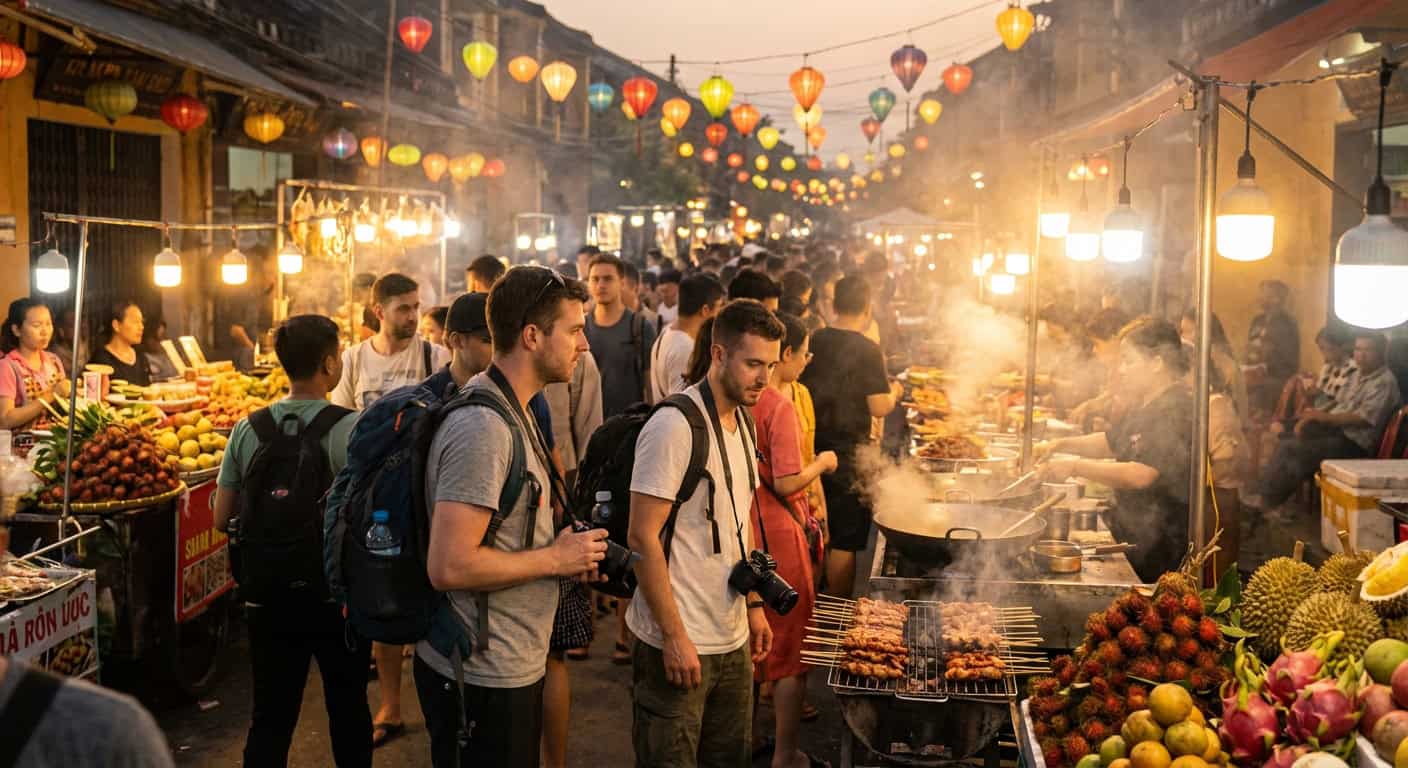
The backpacking community has a clear consensus on the non-negotiables: the Ha Giang Loop (Vietnam), Angkor Wat (Cambodia), the slow boat to Luang Prabang (Laos), and street food in Penang (Malaysia). If you do nothing else, do those four things.
Your route, your rules
Here’s what I’ve learned from my own trips and from absorbing the collective wisdom of thousands of backpackers: the best route through Southeast Asia is the one that matches your timeframe, your budget, and your willingness to let go of the plan when something better comes along. Two weeks? Pick one country and go deep. One month? Two countries, counter-clockwise loop, book three nights and wing the rest. Three months? The Golden Trio, less is more, don’t skip Laos.
Then hold it all loosely. As one traveler put it, “travel burnout is real. The best advice was to cut one to two countries to actually enjoy the destinations rather than just seeing airports and bus terminals.” The night you end up at a beach bar in Kampot with people you met that morning, deciding to stay three extra days because nobody wants to leave? That’s the trip. The spreadsheet was just what got you on the plane.
If you’re looking for fellow travelers to share the route with, HitchHive makes it easy to find people heading the same direction, join activity-based meetups, and turn solo legs into shared adventures. For the complete foundation on gear and preparation, our ultimate backpacking guide covers everything you need before boarding that first flight. And if you’re exploring destinations beyond Southeast Asia, the best cities for digital nomads guide can help you plan what comes next.
Continue your journey
Ready to plan your route? These guides break down the details:
- The Banana Pancake Trail: Backpacking Thailand to Vietnam Overland — The classic mainland loop with stop-by-stop breakdowns and transport tips
- Southeast Asia Island Hopping Guide — Everything you need to know about the best islands and how to hop between them
- Off the Beaten Path Southeast Asia — Hidden gems and underrated destinations most backpackers miss
Leave a Reply