
Buenos Aires has a cafe culture problem — and it’s perfect for remote workers
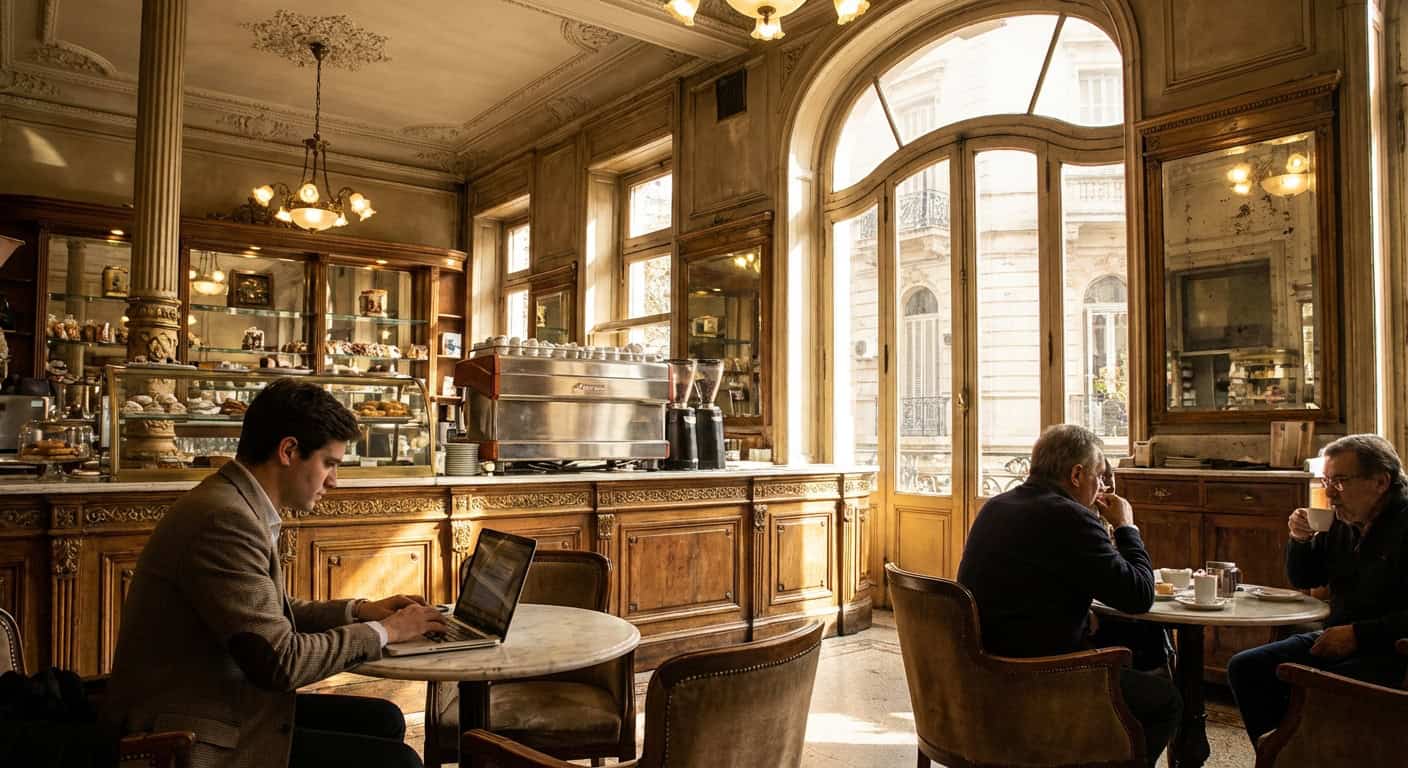
Here’s something nobody tells you before you arrive in Buenos Aires: the cafe culture here will ruin every other city for you. Portenos treat their cafes like second living rooms. People sit for hours — reading newspapers, arguing about football, nursing a single cortado through an entire afternoon. Nobody rushes you. Nobody gives you side-eye for opening a laptop. In a city where dinner doesn’t start until 10 PM, the cafe is where the day actually happens.
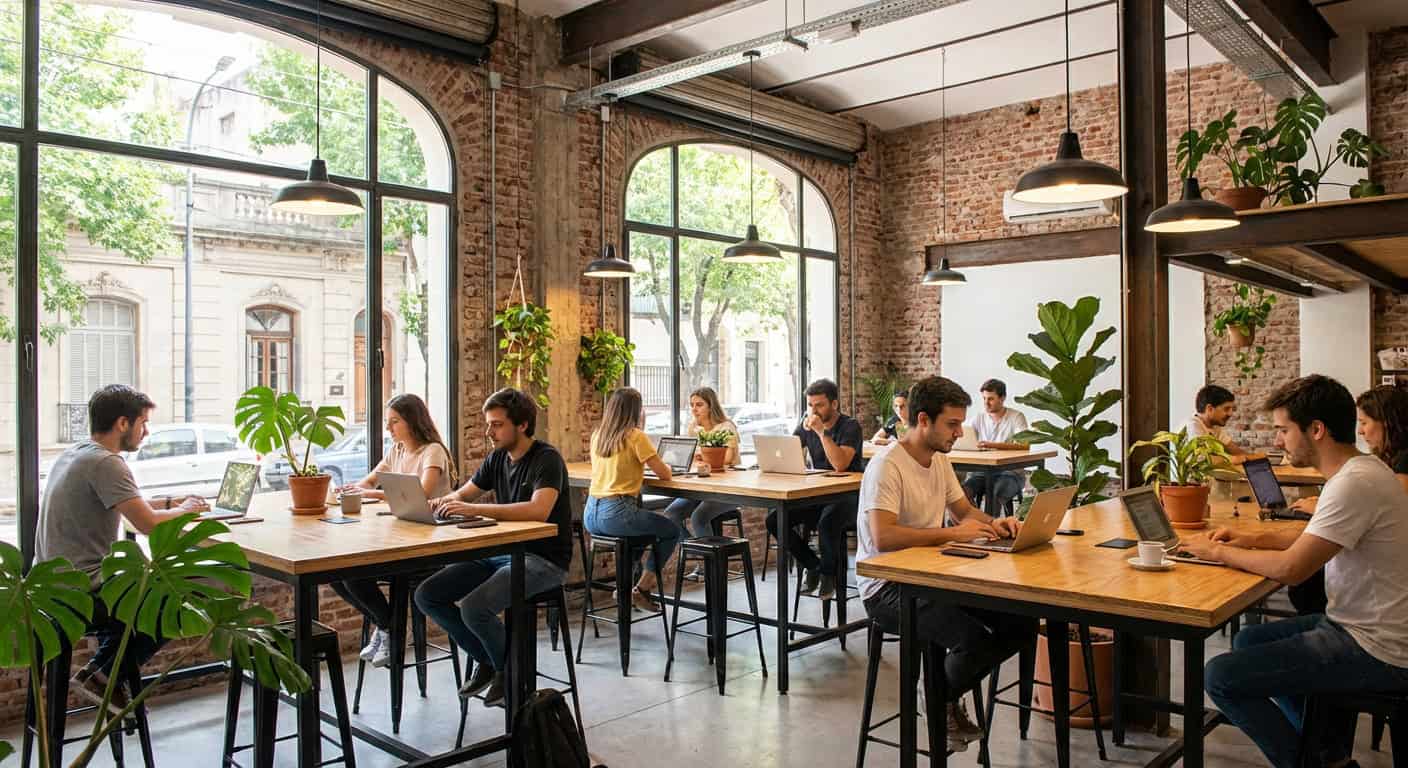
Layer on top of that a growing coworking scene that ranges from pool-equipped social hubs to sleek tech campuses, and you’ve got one of the best cities in the world for getting work done while actually enjoying your life. Whether you need bulletproof wifi for client calls or just a beautiful corner to write, this digital nomad hub delivers.
Here’s the full breakdown of where to work in Buenos Aires — the coworking spaces worth paying for, the cafes that welcome laptops, and the practical tips that will keep you productive and your equipment safe.
Best coworking spaces
AreaTres (El Salvador, Palermo)
If Buenos Aires has a “Google campus for freelancers,” this is it. AreaTres is the most frequently recommended coworking space in every nomad thread, and for good reason. The space is huge, modern, and well-maintained with fast, enterprise-grade internet that never drops.
What sets AreaTres apart is the community programming. They run regular tech talks, #A3Global networking events, and happy hours that draw a genuine mix of local startup founders and international remote workers. The vibe is professional but social — you can close deals and make friends in the same afternoon.
Best for: Tech workers, startup types, and anyone who wants both reliable infrastructure and real networking. If you’re looking to build your nomad community through professional connections rather than just happy hours, AreaTres is the move.
Pricing: Premium tier — expect to pay more than the city average, but members consistently say the internet reliability and event programming justify the cost.
La Maquinita (Palermo Soho, Niceto Vega)
This is the coworking space with the pool. Yes, an actual swimming pool in the courtyard, along with a large outdoor patio that becomes the social center of Palermo’s nomad scene on warm days.
La Maquinita has turned community-building into an art form. “Medialunas on Mondays” and “Free Beer Fridays” are coworking rituals that have been running for years. The Friday after-office gatherings regularly spill into dinner plans and bar crawls. If your goal is to arrive in Buenos Aires and have a social life within 48 hours, get a La Maquinita membership and show up on Friday.
The caveat: Success is also its weakness. The common areas can get crowded, and the wifi has been flagged by some users as unreliable during peak hours. If you have a critical Zoom call, book one of the private phone booths or meeting rooms rather than relying on the open floor.
Best for: Social butterflies, creative types, and anyone whose work doesn’t require pin-drop silence. The energy here is more “lively startup incubator” than “quiet corporate office.”
WeWork (Bellini Tower / Libertador)
Some nomads roll their eyes at WeWork — it’s corporate, it’s global, it feels like an airport lounge. But for one thing, WeWork is unbeatable: reliability. The internet is the fastest and most stable you’ll find in Buenos Aires. The AC works perfectly (not a given in Argentine summer). The chairs are actually ergonomic.
The Bellini Tower location near Plaza San Martin has great city views, while the Libertador location has a more laid-back feel. Neither has the social energy of La Maquinita or AreaTres — people tend to put their heads down and work quietly. If that’s what you need, it’s a feature, not a bug.
Best for: Anyone whose work demands absolute internet reliability and professional video call backdrops. Also great if you already have a WeWork membership from another country and want to use your credits. Perfect for those focused on staying productive while traveling.
Manawa
If AreaTres is the tech campus and La Maquinita is the party, Manawa is the chill friend’s apartment. It’s a smaller space with a sunny terrace, a ping-pong table, and a community manager who actually knows everyone’s name. The rules are relaxed, the vibe is creative, and the atmosphere encourages conversation without forcing it.
Best for: Creatives, writers, designers, and anyone who finds large coworking spaces overwhelming. Manawa is where you go when you want the benefits of working around people without the corporate or chaotic energy.
Huerta Coworking
The eco-friendly option. Huerta’s rooftop is filled with plants (the name means “garden”), and the space emphasizes sustainability throughout, from the furniture to the coffee. The energy is calm and focused, making it popular with people who find both WeWork’s sterility and La Maquinita’s chaos equally unappealing.
Best for: People who want a peaceful, green environment. The rooftop is genuinely lovely for brainstorming or taking calls on sunny days.
Selina
The hybrid hostel-coworking model. Selina attracts a younger, more transient crowd — backpackers who need to work for a few hours, travelers passing through for a week. The social energy is high (this is effectively a hostel common room with better wifi), but the workspace itself can feel cramped and noisy compared to dedicated coworking spaces.
Best for: Short-term stays where meeting other travelers is the priority over deep work. If you’re in Buenos Aires for a week and want instant social connections, Selina delivers. For a month-long stay focused on productivity, look elsewhere.
Best cafes for remote work
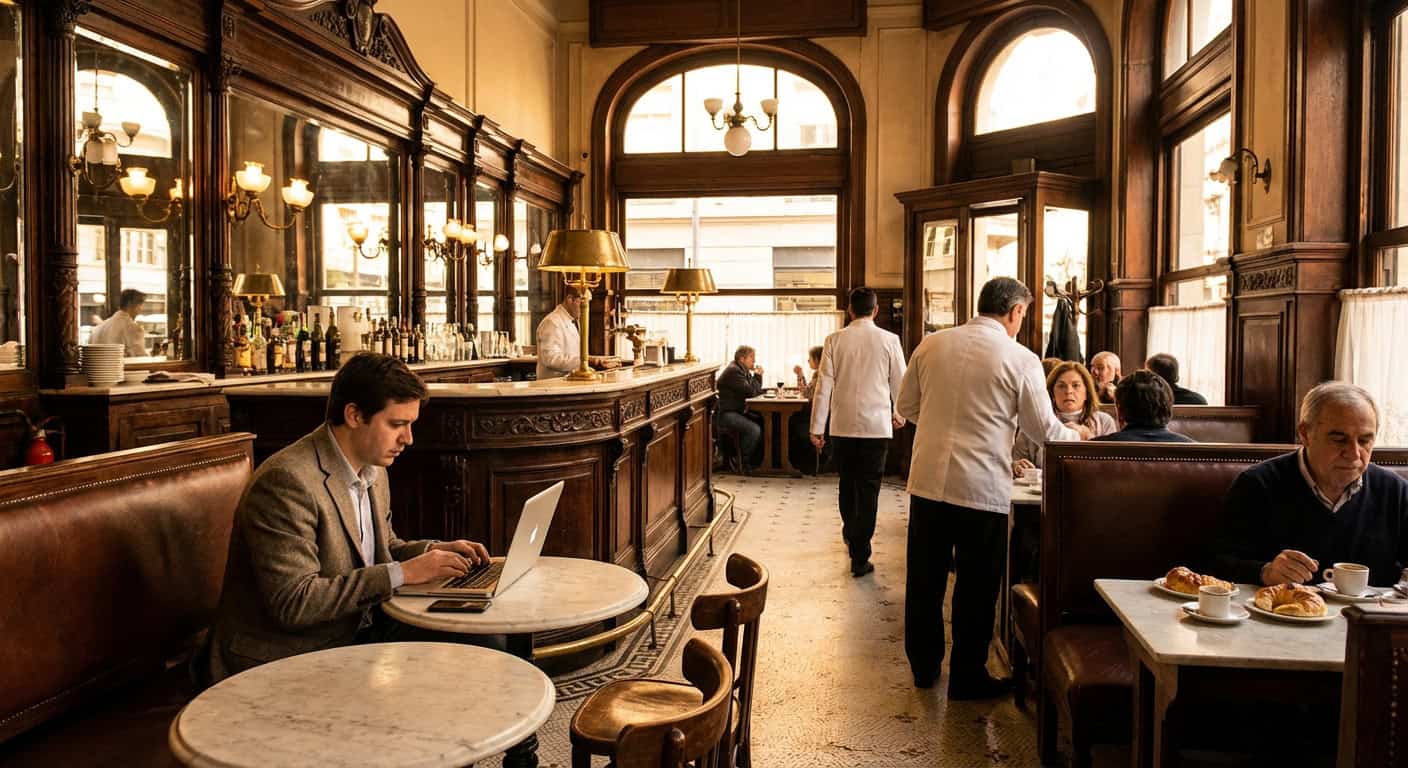
Buenos Aires cafe culture is legendary, but not every beautiful cafe is a good place to work. Here are the spots that nomads consistently recommend for actually getting things done.
Specialty coffee shops (work-friendly)
Cuervo Cafe: Widely considered the best flat white in Buenos Aires. It’s popular with the remote work crowd, which is both a plus (you won’t feel weird with a laptop) and a minus (it gets crowded). Arrive before 10 AM for the best seating.
Lattente: Excellent coffee in a compact space. Better for a focused 2-3 hour sprint than a full workday — seating is limited and the tables aren’t huge. But the quality of the coffee makes those hours count.
LAB Tostadores de Cafe: Industrial vibe, serious coffee, and often full of other people working. The atmosphere is “library with espresso” — quiet, focused, and nobody will interrupt you. One of the best spots for deep work.
Usina Cafetera (Palermo Hollywood): The wifi champion. Multiple users report “insanely fast” internet here compared to the city average. If you need to upload large files or stream without buffering, this is your reliable go-to.
Full City Coffee House: Colombian coffee and a decent workspace setup. Popular with the expat crowd, which makes it easy to strike up a conversation if you’re feeling social.
Bookstore cafes
Libros del Pasaje: A bookstore cafe that’s become the unofficial “intellectual coworking space” of Palermo. The atmosphere is quiet and studious — think library vibes with better coffee. If you’re a writer or need silence to concentrate, this is possibly the best workspace in the city that doesn’t charge a membership fee.
Reliable chains
Le Pain Quotidien: The communal tables are practically designed for laptops, the wifi is consistent, and the staff won’t bother you. It’s not glamorous, but it’s dependable — the coworking equivalent of a reliable Toyota.
Starbucks: Nobody goes to Buenos Aires for Starbucks coffee. But when every other cafe’s wifi has died and you have a client call in 15 minutes, the standardized, reliable wifi at Starbucks becomes genuinely useful. Keep it in your back pocket as an emergency option.
The neighborhood alternative: Belgrano
If you want to escape the Palermo nomad bubble entirely, head to Belgrano. All Saints Cafe near Barrio Chino has solid wifi and a relaxed environment. Oss Kaffe serves excellent specialty coffee in a Nordic-style setting. Belgrano feels more “lived in” by locals, which means fewer English speakers but also fewer distractions and more focus.
Neighborhood guide for workspaces
Palermo Soho
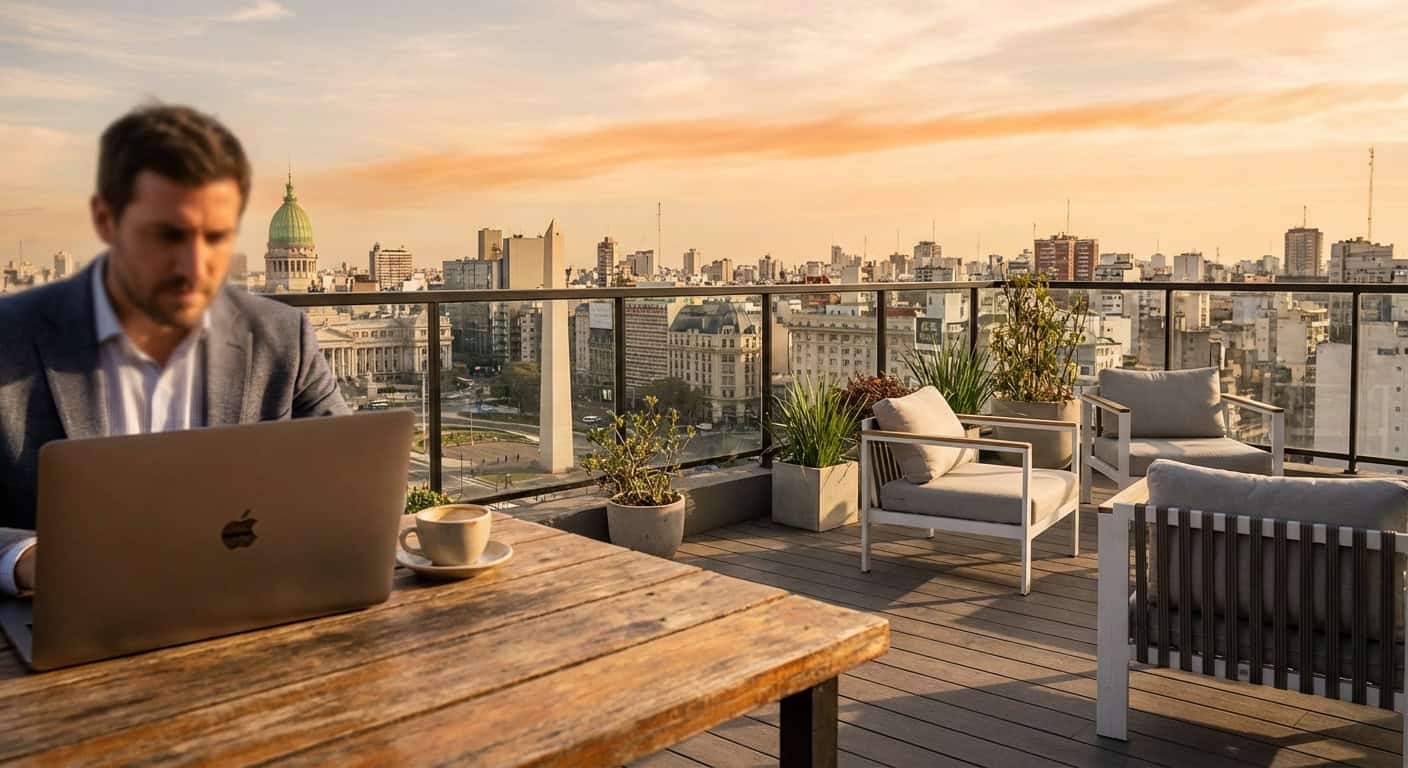
The epicenter. The highest concentration of both coworking spaces and laptop-friendly cafes in the city. If you’re only in BA for a month, you can build your entire work routine without leaving this neighborhood. Downside: the “nomad bubble” is real, and prices at cafes reflect the foot traffic.
Palermo Hollywood
Slightly quieter than Soho with fewer tourists. Usina Cafetera is here, along with several excellent lunch spots. Better for focused work during the day with Soho’s social scene just a short walk away for evenings.
Recoleta
Quieter, more traditional. The cafes here lean toward classic confiterias — beautiful, historic spaces with marble tables and bow-tied waiters. They’re generally laptop-tolerant, though the vibe is more “reading the newspaper” than “startup hustle.” Perfect for a change of scenery when you need calm.
Villa Crespo
Growing as a workspace neighborhood. Fewer dedicated coworking spaces, but an increasing number of specialty cafes that welcome the laptop crowd. Lower prices than Palermo with a more authentic neighborhood feel. The smart choice for long-term nomads who want to save money while staying close to the action.
Pricing comparison
Here’s a rough comparison to help you budget for your cost of living in Buenos Aires:
- WeWork hot desk: ~$150-200 USD/month (or use global credits)
- AreaTres monthly: ~$120-180 USD/month (premium tier)
- La Maquinita monthly: ~$80-150 USD/month depending on plan
- Manawa / Huerta monthly: ~$70-120 USD/month
- Day passes (most spaces): $10-20 USD/day
- Cafe “rent” (2-3 coffees + pastry): ~$8-15 USD/day, or $200-375 USD/month
The math is clear: if you work full days (6+ hours), a coworking membership is cheaper than cafe-hopping and gives you better infrastructure. If you only need a few hours of focused work, the specialty cafes are a better value and a more enjoyable experience. Many nomads split their week — coworking for heavy meeting days, cafes for creative or writing days.
Community and networking events
Buenos Aires is one of the strongest cities for nomad networking in all of South America. Here’s what’s happening:
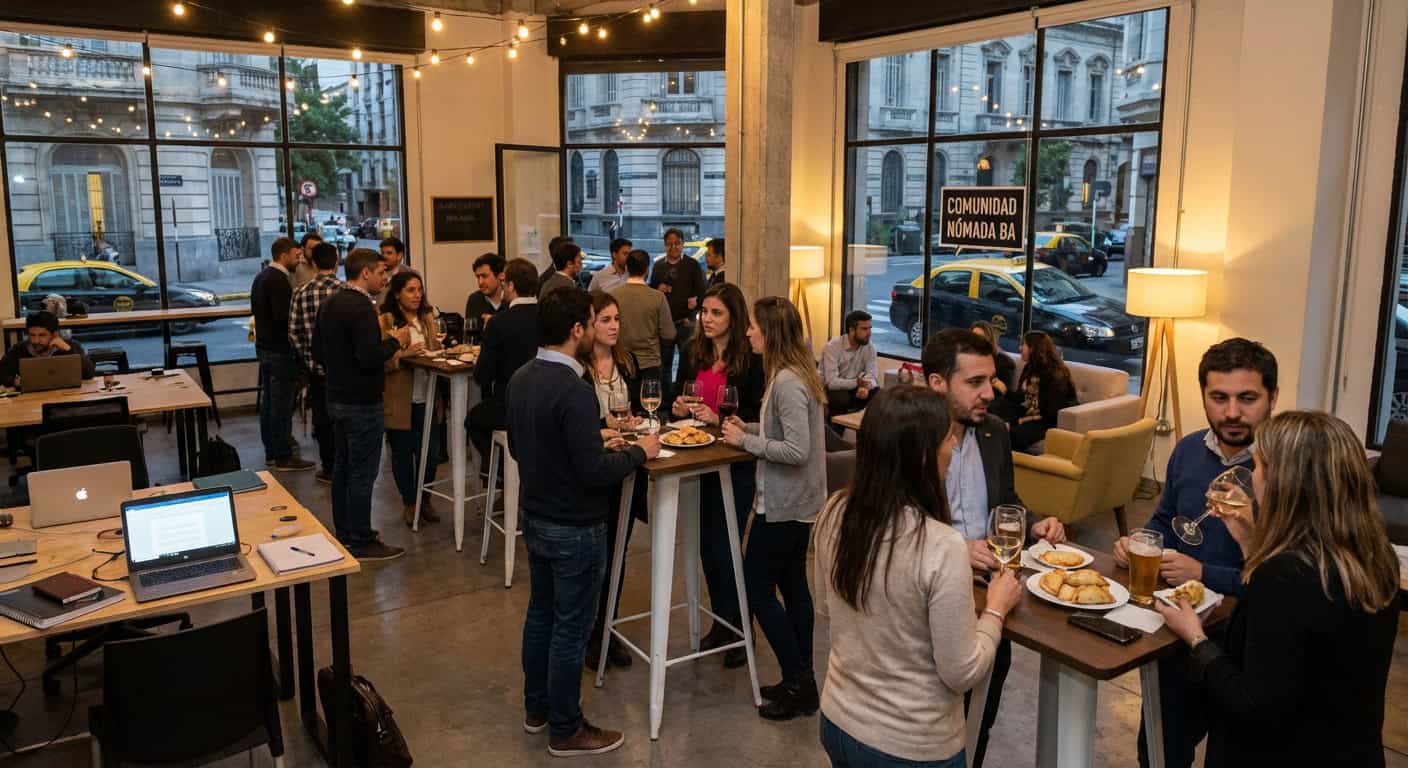
Coworking-hosted events: AreaTres runs tech talks and #A3Global networking nights. La Maquinita does Friday after-office drinks that regularly draw 50+ people. These are the easiest entry points — show up, grab a beer, and introduce yourself.
Mundo Lingo: Not technically a coworking event, but this language exchange (held at different bars throughout the week) is where the coworking and expat communities overlap. It’s the single best networking event in the city for breadth of connections.
BA Digital Nomads Meetup: Thursday night meetups organized through the Facebook group and WhatsApp community. These are nomad-specific and tend to attract people who are actively building businesses or freelancing — good for professional conversations over drinks.
Spanglish Exchange: More structured than Mundo Lingo, with speed-friending rotations. Excellent if you want to practice Spanish while meeting both locals and other nomads.
The pattern is clear: your coworking space isn’t just a desk, it’s a social platform. Choose one that matches your social energy level, and the connections will follow naturally.
Tips for working from Buenos Aires
Security is non-negotiable. Sit inside, away from the entrance. Never leave your laptop unattended — not even to use the bathroom. In cafes, keep your bag between your legs with the strap around your ankle. This isn’t paranoia; it’s standard practice among locals and long-term residents.
Always carry a mobile hotspot. Buy a cheap prepaid SIM (Personal, Claro, or Movistar) and keep it loaded with data. Cafe wifi is hit-or-miss, and the 30-second outage that ruins your Zoom call will happen at the worst possible moment. A mobile backup turns a crisis into a non-event.
Time zone advantage. Buenos Aires is GMT-3, which overlaps well with US East Coast hours and European afternoons. If you work with US clients, you’re one hour ahead of New York — your mornings are free for exploring the city, and you’re online when your team logs in. This is one of BA’s most underrated advantages compared to Southeast Asian nomad hubs.
The “cafe tax” adds up. If you buy 2-3 coffees and a pastry every day to justify your seat, you might spend $10-15 USD daily. Over a month, that’s $250-375 — often more than a coworking membership. Do the math for your situation.
Embrace the lunch special. “Menu ejecutivo” or “almuerzo” at neighborhood restaurants gives you a full meal (often drink included) for $5-8 USD. This is how locals eat during work hours, and it’s both cheaper and more enjoyable than ordering delivery to your desk. For more on how to enjoy the city beyond work, see our guide to things to do in Buenos Aires.
Check speeds before committing. Walk into any cafe or coworking space, ask for the wifi password, and run a quick speed test before ordering or signing up. Anything above 20 Mbps is fine for video calls. Below that, keep walking.
Continue your journey
Looking for coworking options in other South American cities? Check out our guide to coworking spaces and cafes in Medellin for another excellent remote work destination. For the bigger picture on working from South America, head back to our South America digital nomad guide, or explore the best cities for digital nomads worldwide.
Find your people
The best thing about working from Buenos Aires isn’t any single coworking space or cafe — it’s that the entire city feels designed for the kind of spontaneous connection that makes nomad life worth living. The coworking happy hour that turns into dinner at a parrilla that turns into a midnight walk through San Telmo. The cafe neighbor who becomes your accountability partner for the next month.
At HitchHive, we believe the best workdays end with good people and great stories. Buenos Aires makes that happen more naturally than almost anywhere we’ve been. Show up, open your laptop, and let the city do the rest.
Leave a Reply