
Why Da Nang is Vietnam’s best-kept secret for digital nomads
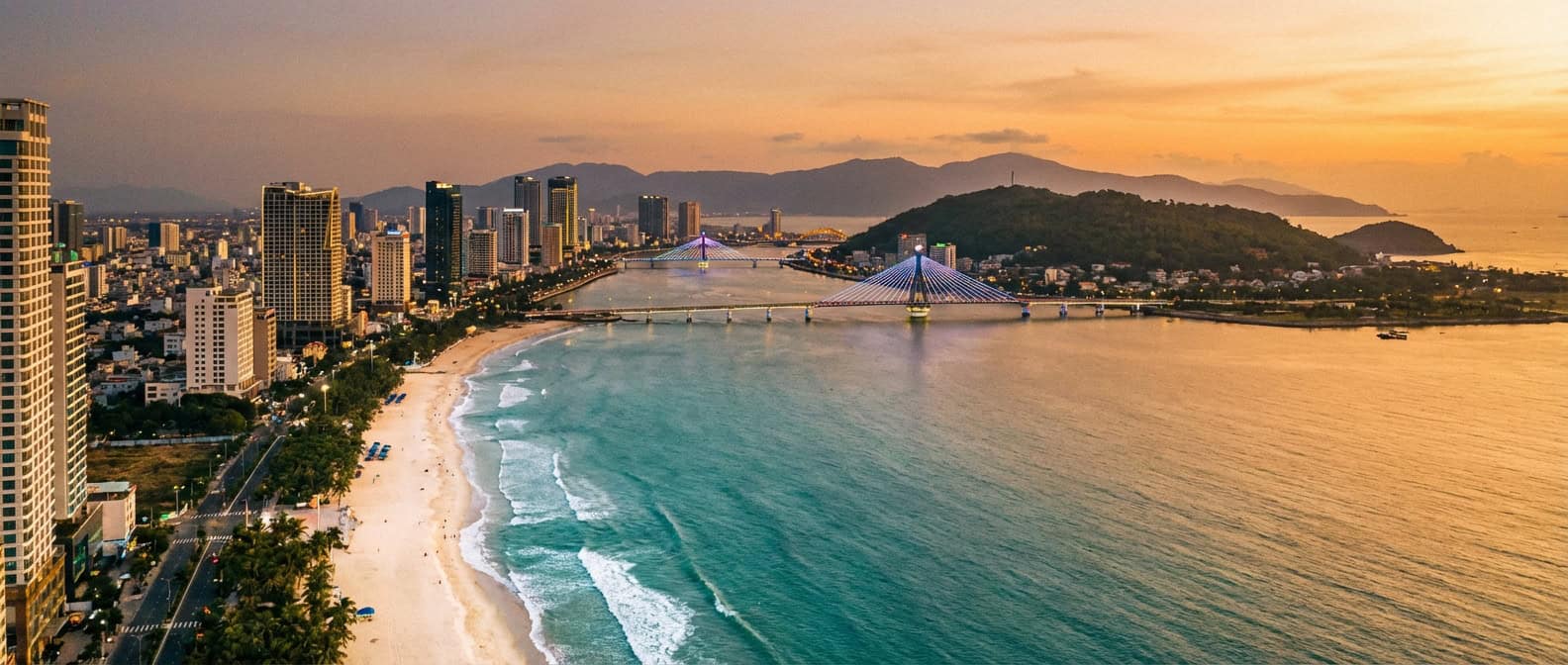
If you’ve spent any time in the digital nomad world, you’ve heard the Chiang Mai pitch a thousand times. Great food, cheap rent, solid community. But here’s the thing nobody told me before I landed in Da Nang: it’s basically Chiang Mai on the beach. Except the beach is a six-kilometer stretch of white sand, the seafood is absurdly fresh, and the city actually feels like it was designed for people who want to get things done.
Da Nang sits right in the middle of Vietnam’s coast, flanked by the lantern-lit streets of Hoi An to the south and the imperial city of Hue to the north. Da Nang is a natural stop on many of the best backpacking routes through the region. It has a modern international airport with direct flights across Asia, infrastructure that puts most Southeast Asian cities to shame, and a cost of living that lets you live like royalty on a freelancer’s budget. If you’re building your list of the best cities for digital nomads, Da Nang deserves a top-five spot.
I first came here planning to stay three weeks. I stayed five months. This guide is everything I wish someone had handed me on day one.
Visa and logistics: the 90-day rhythm
Vietnam now offers a 90-day multi-entry e-visa, which changed the game for remote workers here. Our detailed Vietnam visa guide covers every step of the process. Before 2023, you were dealing with 30-day stamps and constant visa anxiety. Now you get a solid three months to settle in, and the multi-entry part means you can pop out and come back without reapplying.
The catch: you must leave the country every 90 days. No extensions, no exceptions. The nomad community has this down to a science. Your two main options are a land border run to Lao Bao (the closest Vietnam-Laos crossing, about four hours by bus) or a cheap flight to Bangkok or Kuala Lumpur. Most people turn the border run into a mini-trip. Spend a weekend in Bangkok, eat your weight in Thai food, fly back.
Apply for your e-visa only through the official Vietnamese government portal. There are dozens of sketchy third-party sites that charge triple and sometimes just steal your money. The official site costs $25 USD, and you should allow one to two weeks for processing, though it often comes through faster. If you’re new to navigating visas and logistics as a remote worker, our complete digital nomad guide covers the fundamentals for every major destination.
Neighborhoods: where to plant your flag
Da Nang is not a huge city, but where you live will shape your entire experience. Don’t sign a lease before you arrive. Book a hotel or Airbnb for three to five days, walk around, and feel it out. That’s the single best piece of advice I can give you. Here’s how the main areas break down.
An Thuong: the nomad quarter
This is where most first-time nomads land, and for good reason. An Thuong is a tight grid of streets a few blocks from My Khe Beach, packed with cafes, western restaurants, smoothie bowls, yoga studios, and fellow laptop workers. It’s walkable, it’s convenient, and you’ll run into other nomads constantly without trying.
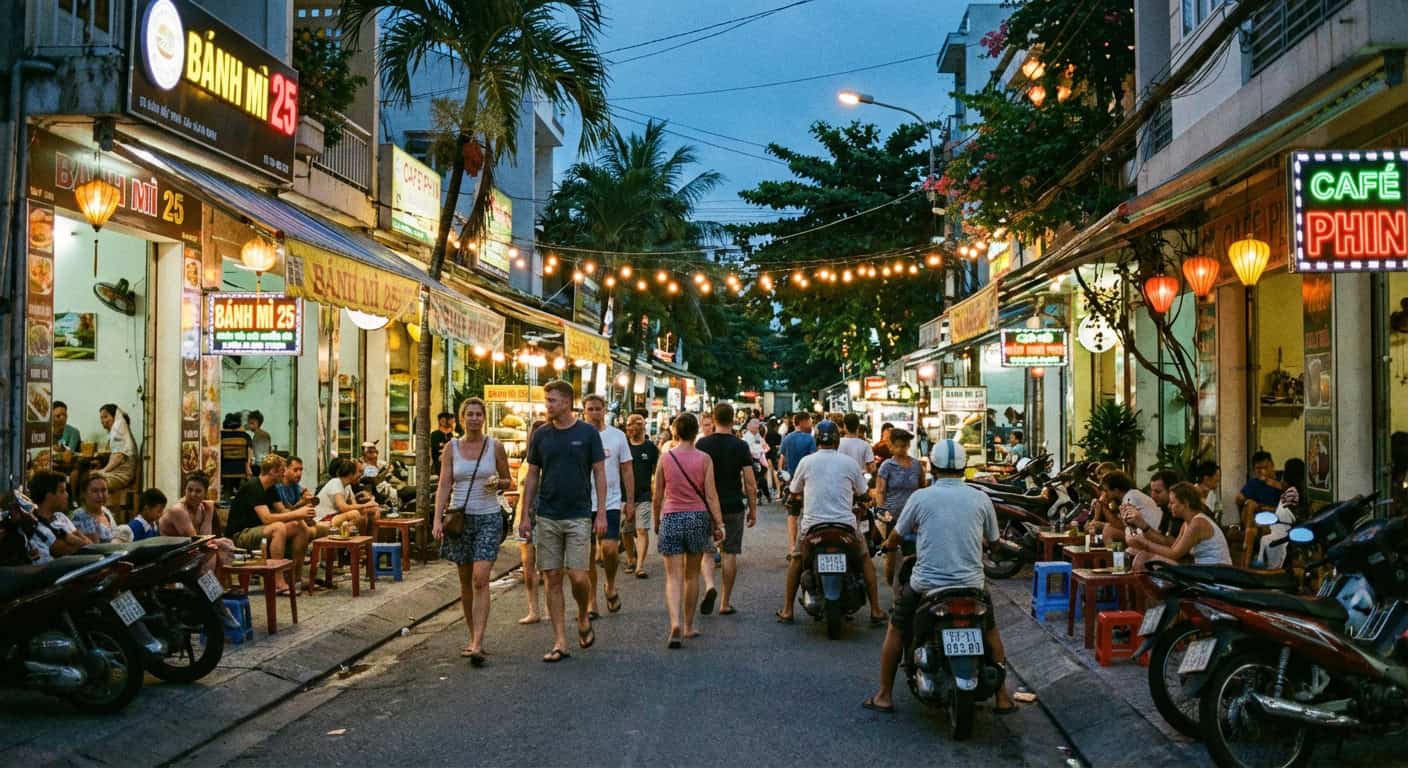
The downside: construction. Da Nang is booming, and An Thuong is ground zero. If you’re booking an apartment here, go for a higher floor and bring earplugs. The jackhammering usually stops by early evening, but mornings can be rough if you’re a late sleeper. Studios in An Thuong run $250 to $350 per month; a decent one-bedroom near the beach is $400 to $550. For the full pricing picture, check out the Da Nang cost of living breakdown I put together.
My An: the broader beach zone
Expand your radius a bit beyond An Thuong and you hit My An proper. It’s a wider residential area that still puts you within walking or short scooter distance of the beach. The vibe is cooler and more local. You’ll find fewer tourist-oriented smoothie bowls and more Vietnamese coffee shops where you’re the only foreigner. Rent drops a bit too. This is where I’d recommend settling if you’re staying longer than a month and want to feel like you actually live somewhere, not just visit.
Hai Chau: the city side
Cross the Han River and you’re in Hai Chau, the urban heart of Da Nang. This is where the locals live, where the street food is cheapest and best, and where the “real Vietnam” feeling lives. Rent is noticeably cheaper. The trade-off is that you’re a 10 to 15 minute scooter ride from the beach, and the cafe scene is more Vietnamese-style (tiny plastic chairs, strong drip coffee, zero English menus). If you’ve been traveling through Southeast Asia for a while and crave something less curated, Hai Chau delivers.
Son Tra: the nature escape
Son Tra peninsula juts out north of the city toward Monkey Mountain. It’s quieter, greener, and feels removed from the construction buzz. If you’re the type who wants to wake up, go for a trail run through the jungle, and then sit down to work, this is your neighborhood. You’ll need a scooter to get anywhere, and the social scene is thinner, but the peace and the views are unmatched.
Internet and connectivity
Let’s talk about the thing that actually matters for your paycheck. Vietnam’s internet is excellent. Most apartments come with fiber connections running 50 to 100+ Mbps. I consistently got 80 Mbps down in my apartment in My An, and Zoom calls were rock solid. Vietnam punches way above its weight on infrastructure.
For mobile, get a Viettel SIM card from an official Viettel store, not from a random kiosk at the airport. Airport SIMs are overpriced and sometimes come pre-loaded with weird plans. Walk to a Viettel shop (they’re everywhere) and get a data plan for a few dollars a month. MobiFone is a solid backup carrier. Use your phone as a 4G hotspot when cafe wifi gets sketchy, which is rare but happens. For more tips on staying productive on the road, including backup connectivity strategies, I’ve covered that in depth separately.
Workspaces: the cafe culture advantage
Here’s something that surprised me about Da Nang: most nomads here don’t use coworking spaces. The cafe culture is just too good. Vietnamese coffee culture runs deep, and Da Nang has embraced the laptop-friendly cafe model wholeheartedly. You’ll find places with fast wifi, air conditioning, power outlets at every table, and iced ca phe sua da for under a dollar. Many cafes are open from 7 AM to 10 PM and genuinely don’t mind you parking there for hours.

That said, coworking spaces have their place, especially for video calls and focused deep work. The city has a growing selection of well-run spaces. I’ve written a dedicated guide to the coworking spaces and cafes in Da Nang with specific recommendations, wifi speeds, and pricing for each one.
Healthcare and safety
Healthcare in Da Nang is better than you’d expect, with options across every budget.
Vinmec International Hospital is the top-tier choice. Western-standard facilities, English-speaking doctors, modern equipment. It’s expensive by Vietnamese standards but still cheap compared to anything in the US or Europe. This is where you go if something serious happens.
Family Medical Practice sits in the mid-budget range. Good for general checkups, minor injuries, and getting prescriptions. English-speaking staff, shorter waits than the public hospitals.
Hoan My Hospital is the budget-friendly local option. The experience is more chaotic and less English-friendly, but the medical care is competent and affordable. For minor stuff like colds, stomach issues, or allergies, skip the hospital entirely and walk into a Pharmacity. These pharmacies are everywhere, well-stocked, and the pharmacists can recommend over-the-counter treatments for most common ailments.
Safety-wise, Vietnam is one of the safest countries in Southeast Asia for travelers. Violent crime against foreigners is extremely rare. The main thing to watch for is motorbike-related trouble. Police checkpoints do exist, and riding without a valid International Driving Permit can result in fines. If you don’t have an IDP, use Grab (Vietnam’s ride-hailing app) instead of risking it. For a deeper dive into keeping yourself safe abroad, our travel safety fundamentals guide covers the essentials.
The social scene: building your circle
Let’s be honest: Da Nang’s nomad community is smaller than Chiang Mai’s or Bali’s. You’re not going to stumble into a coworking mixer every Tuesday. But the community is growing fast, and its size is actually a feature. People here tend to form tighter bonds because the scene isn’t overwhelming. You actually remember names.

You’ll need to make some effort, though. Join the Da Nang digital nomad Facebook groups. Show up to meetups. Talk to people at cafes. Coworking spaces double as social hubs, and the regulars become your de facto friend group within a couple of weeks. If building your nomad tribe is a priority, Da Nang rewards consistency over charisma. Just keep showing up.
HitchHive is another great way to find other digital nomads and travelers in Da Nang. I’ve personally connected with people through the app who became my regular coffee-and-work crew. There’s something about the shared experiences of figuring out a new city together that accelerates friendships in a way that doesn’t happen back home.
For those arriving solo and feeling uncertain, check out our guide on how to meet people while traveling. Da Nang’s compact size makes it one of the easier places to break into a social circle.
Best time to visit
Timing matters more in Da Nang than in most nomad cities because the weather swings are dramatic.
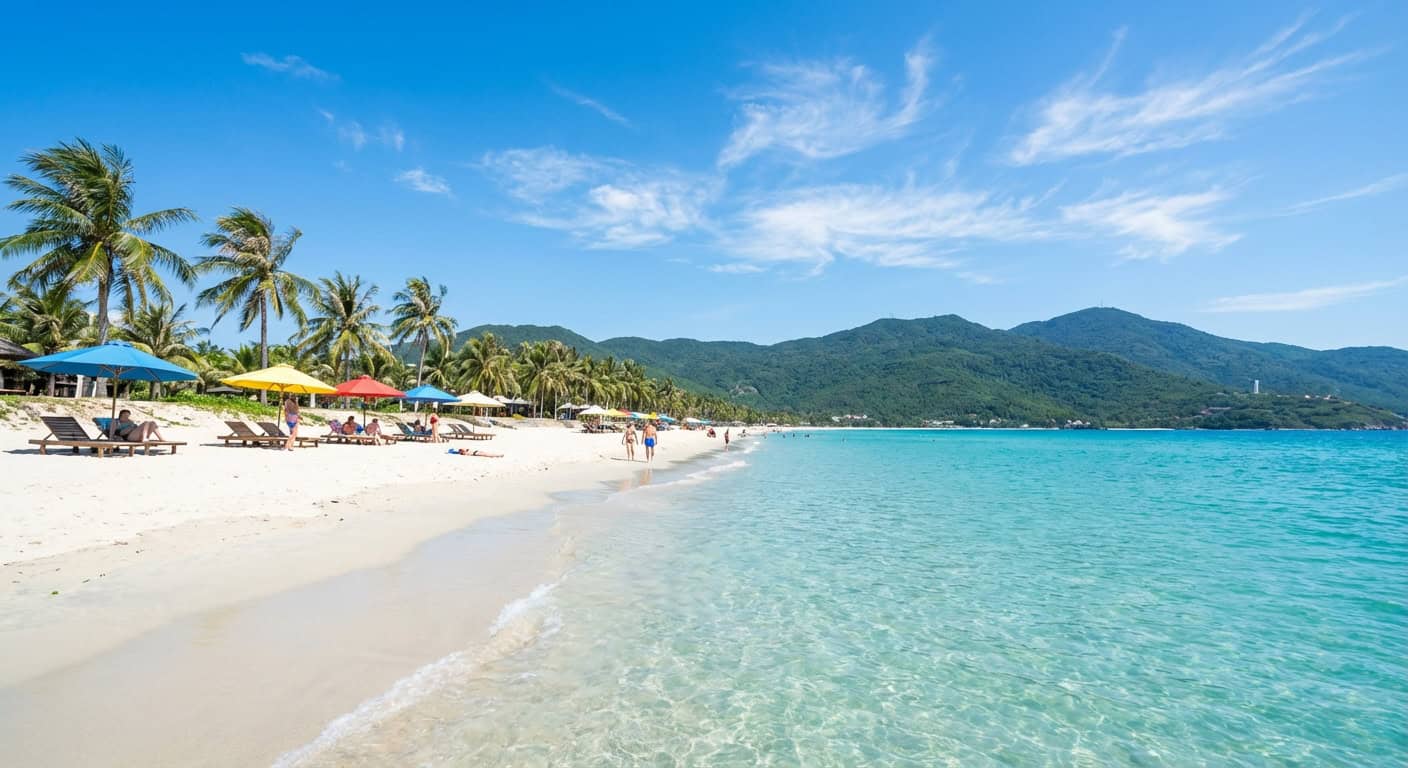
February through August is the golden window. Dry, warm, sunny. Beach days after work. Sunsets that make you question every life choice that kept you in an office. March through August is, frankly, perfect. This is when Da Nang earns its reputation.
September through January is rainy and typhoon season. October and November are the worst. I’m talking torrential rain, flooding streets, grey skies for days on end. January can be grey and cool. It’s not unlivable, but it’s a fundamentally different experience.
The savvy play that many long-term nomads use: split the year. Do Chiang Mai from November through February (their cool, dry season), then shift to Da Nang from February through August. You get the best weather in both cities and never have to suffer through either one’s miserable season. It’s the Southeast Asia cheat code.
Getting around Da Nang
Da Nang is a scooter city. I’ll say it plainly: renting a motorbike transforms your experience here. Without one, you’re limited to your immediate neighborhood and Grab rides. With one, the entire coast opens up. Morning coffee in Hai Chau, work from a cafe in An Thuong, sunset ride up Son Tra peninsula, dinner in a local spot you’d never find on foot.
Scooter rentals run about $4 to $5 per day, or $50 to $70 per month for longer stays. Make sure you have a valid International Driving Permit from your home country if you plan to ride. The police are increasingly checking, and fines are annoying.
If scooters aren’t your thing, Grab works well for getting around. It’s cheap by western standards. Cycling is also viable along the coastal road, and many apartments come with a free bicycle. The beach promenade is one of the best urban cycling paths in all of Vietnam. But honestly, for truly exploring the city and making it feel accessible, a scooter is the move.
Cost of living: how far your money goes
One of the most common questions I get: how much do you actually need? Here’s the short version.
At $1,200 to $1,500 per month, you’ll live comfortably. A nice studio or one-bedroom apartment, eating out daily, regular cafe sessions, weekend trips to Hoi An, and a scooter rental. You won’t be counting dong.
At $1,700 or more per month, you’re living like royalty. Ocean-view apartment, eating wherever you want, spa days, the works. It’s genuinely hard to spend more than $2,000 a month in Da Nang unless you’re actively trying.
For a full line-by-line breakdown of rent, food, coworking, transport, and everything else, head over to the Da Nang cost of living breakdown.
Days off: beyond the laptop
Da Nang isn’t just a place to work. On weekends, watch the Dragon Bridge breathe actual fire and water on Saturday and Sunday nights. It’s gloriously absurd and never gets old. Hike up Marble Mountains. Take a day trip to Hoi An’s old town (30 minutes by Grab). Surf the waves at My Khe Beach. Ride up to the peak of Son Tra and watch the sunset over the whole city.
I’ve put together a separate guide covering the best activities in Da Nang specifically curated for remote workers who want to make the most of their downtime without blowing their budget or their energy for Monday morning.
Continue your journey
If you’re planning your Da Nang chapter, these guides will help you hit the ground running:
- The Best Coworking Spaces and Cafes in Da Nang — tested wifi speeds, pricing, and honest reviews
- Da Nang Cost of Living for Digital Nomads — month-by-month budget breakdown
- Things to Do in Da Nang on Your Days Off — weekend adventures and local favorites
- The Digital Nomad Guide to Chiang Mai — Thailand’s mountain base for remote workers, with full breakdown of neighborhoods, costs, and community
- The Digital Nomad Guide to the Philippines — remote work across the islands with Manila and Cebu deep dives
Find your people in Da Nang
Da Nang is the kind of city that gets better the longer you stay and the more people you know. If you’re heading there soon, or you’re already on the ground and looking for your crew, use HitchHive to connect with other digital nomads and travelers in the city. Whether you need a coworking buddy, a weekend hiking partner, or just someone to split a seafood feast with, the right people make every city better. See you on the beach.
Leave a Reply