
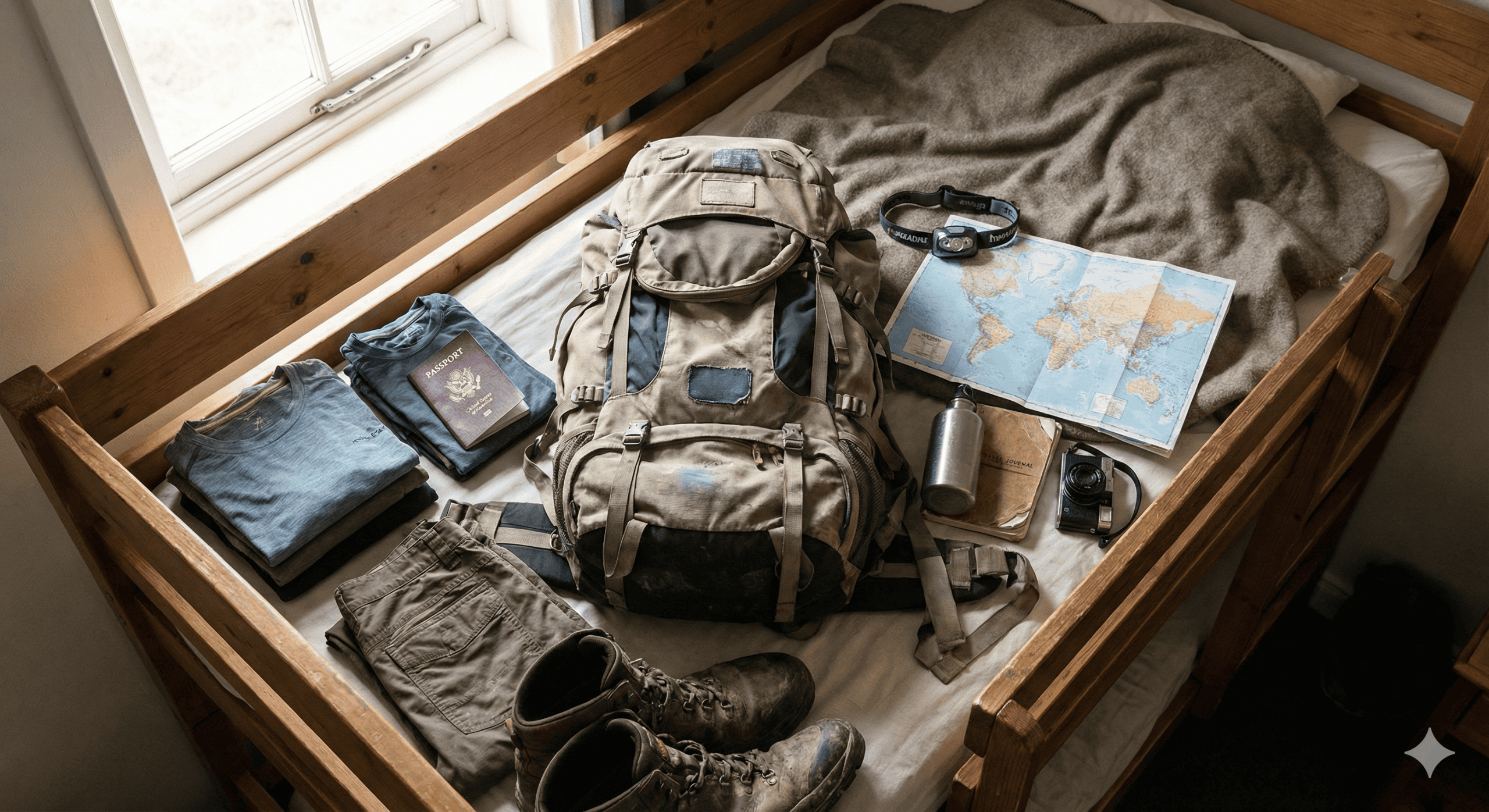
Backpacking is the most immersive, affordable, and social way to explore the world. Whether you are planning your first backpacking trip or your tenth, this guide covers everything from packing to budgeting to making lifelong friends on the road.
What is backpacking?
Backpacking is more than carrying a backpack. It is a travel philosophy. It means prioritizing experiences over luxury, flexibility over rigid itineraries, and connections over comfort. Backpackers move slowly, stay longer, and often live in hostels where meeting people is built into the experience.
The backpacker community spans every age, nationality, and background. What unites them is curiosity, openness, and a willingness to embrace the unexpected.
Why backpacking is the best way to travel
It is affordable
Backpacking stretches your money further than any other travel style. With smart budget strategies, you can travel for months on what others spend in weeks. Hostels cost a fraction of hotels. Street food beats restaurant meals. Slow travel reduces transportation costs.
It is social
Whether you prefer traveling solo or with a group, backpacker infrastructure (hostels, common areas, group tours) is designed for meeting people. You will share dorms with strangers who become friends. You will swap travel tips over communal dinners. You will find travel buddies for the next leg of your journey.
It is flexible
No fixed hotels means no fixed plans. Hear about an amazing place from a fellow traveler? You can go there tomorrow. Fall in love with a city? Stay another week. Backpacking rewards spontaneity.
It is immersive
Budget travel pushes you closer to local life. You eat where locals eat. You take local transport. You stay in neighborhoods, not tourist zones. The result is deeper cultural understanding.
Planning your backpacking trip
Choosing a destination
Southeast Asia is the most popular backpacking region for good reason: low costs, wide variety, established traveler routes (our Southeast Asia route guide breaks down every option), and warm weather year-round. But backpacking works everywhere: South America, Central America, Eastern Europe, China, and beyond.
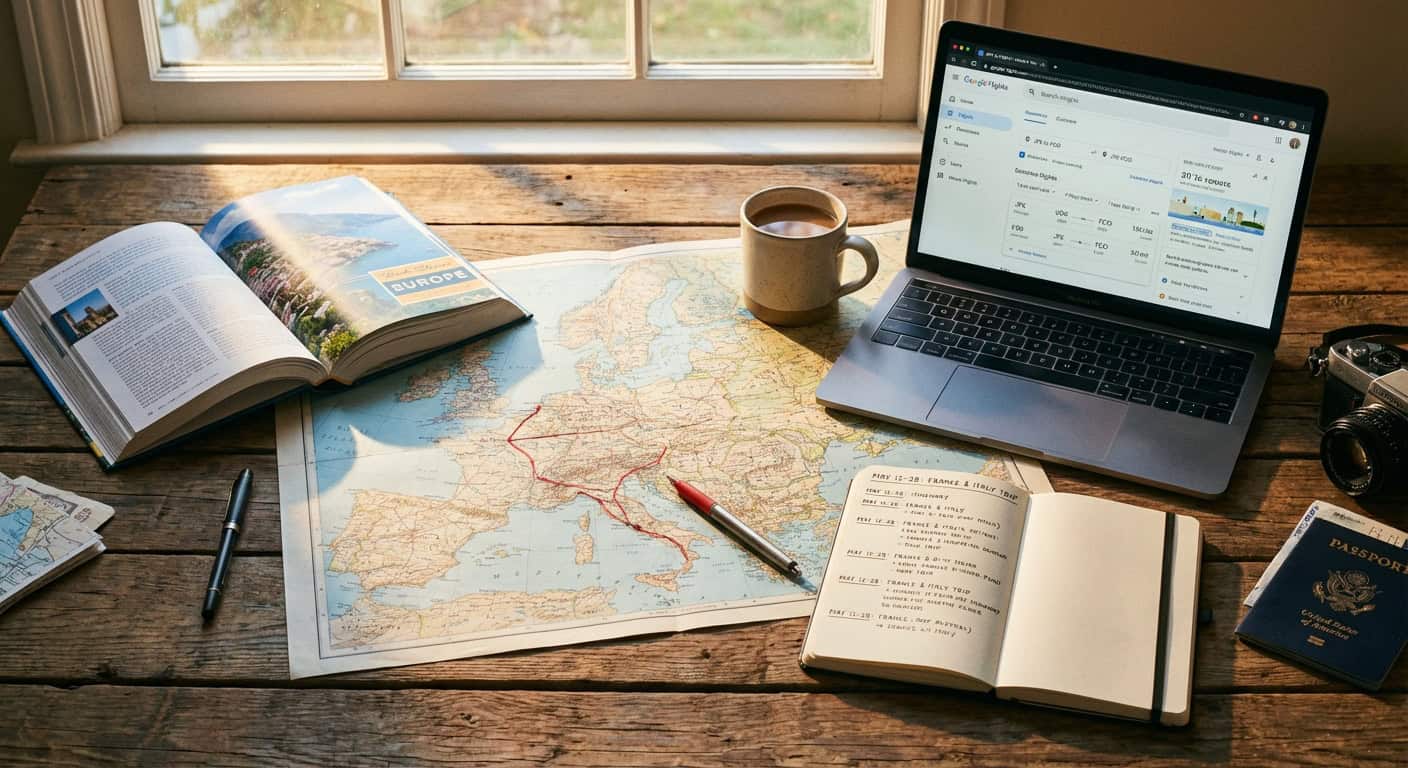
Consider these factors:
- Budget: Southeast Asia and Central America are cheapest
- Season: Avoid monsoons and extreme weather
- Visa requirements: Some regions are easier than others
- Traveler infrastructure: Hostels, transport, safety
Experienced backpackers also recommend the “destination dupe” strategy: instead of Switzerland, go to Slovenia (the Julian Alps are just as impressive and far cheaper). Instead of Italy’s coast, try Albania’s beaches. Guatemala has world-class experiences like Lake Atitlan for a fraction of Costa Rica’s prices.
How long to go
The sweet spot for most backpackers is 2-6 months. Less than a month feels rushed. More than six months can lead to burnout. But there are no rules. Some backpack for years.
Budgeting
Budget varies widely by region:
- Southeast Asia: $30-50/day
- Central America: $40-60/day
- South America: $40-70/day
- Eastern Europe: $50-80/day
- Western Europe: $80-120/day
These include accommodation, food, transport, and activities. Learn more budget travel strategies to stretch your money further.
Seasoned backpackers note that alcohol is often the hidden budget killer, especially in places where a beer costs as much as a meal. Track every expense with an app like TravelSpend to spot patterns and stay on budget.
What to pack
The golden rule: pack light. You will carry everything on your back, often for miles. Most backpackers overpack initially and shed items along the way.
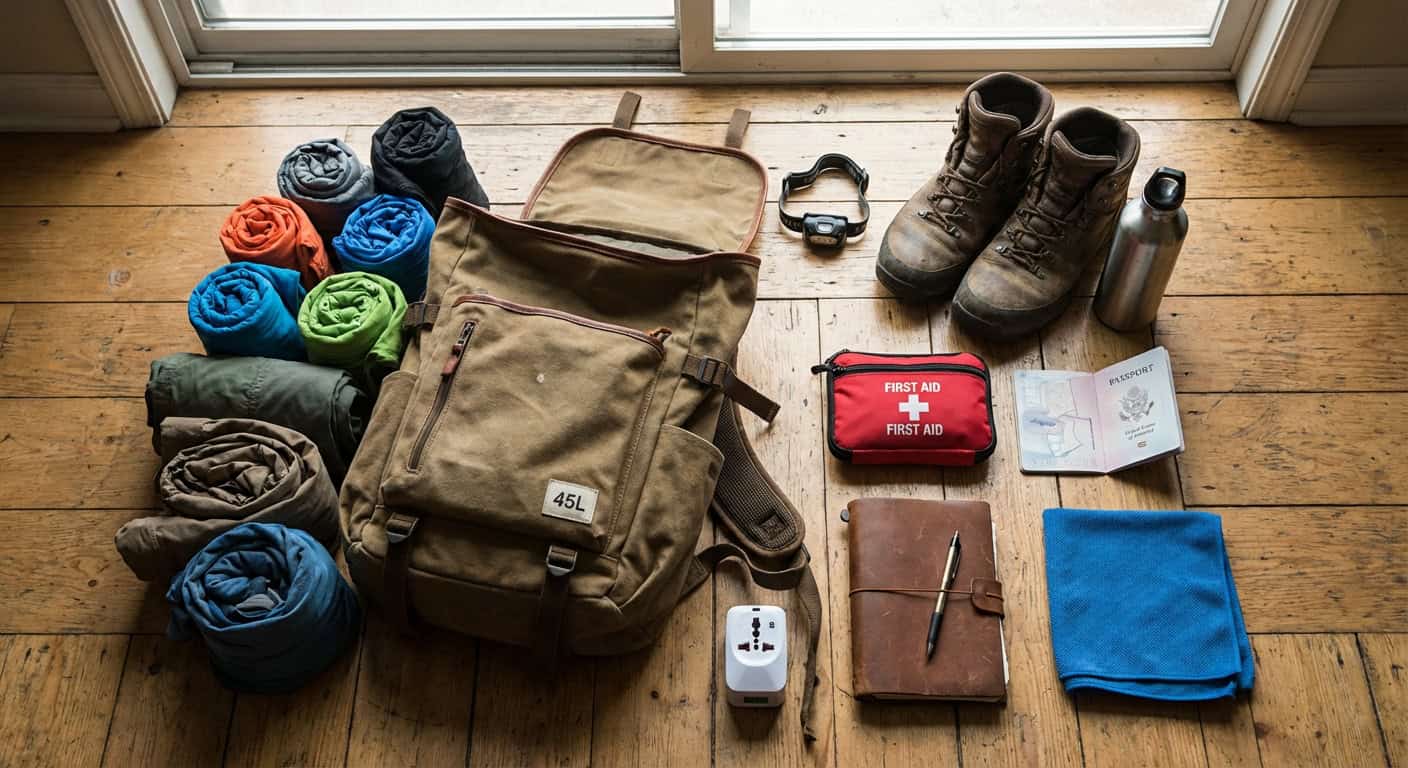
The most common first-timer mistake? “Fear packing,” bringing items for every “what if” scenario. Experienced travelers are unanimous: you need far less than you think. If you forget something, you can buy it anywhere.
Essentials
- Backpack: 35-45L is ideal (carry-on size saves baggage fees)
- Daypack: Small bag for daily use
- Clothes: 4-5 days worth, quick-dry materials (avoid cotton, it stays wet)
- Toiletries: Travel-sized, refillable
- Electronics: Phone, charger, universal adapter
- Documents: Passport, copies, travel insurance
- First aid: Basic medications, bandages
What to leave behind
- Bulky towels (use quick-dry microfiber)
- Multiple pairs of shoes (one pair of comfortable sandals and one pair of light sneakers is enough)
- Formal clothing
- Physical books (use e-reader)
- Expensive jewelry
- Heavy hiking boots (trail runners are lighter, dry faster, and cause fewer blisters)
Budget gear that works
You do not need expensive gear to start backpacking. Experienced travelers recommend Decathlon for affordable tents, jackets, and fleece. Frogg Toggs rain suits cost around $20 and work as well as expensive Gore-Tex. Buy your backpack last, after you know what tent and sleeping bag you have, so you know the volume you actually need.
Where to stay
Hostels are the backbone of backpacker travel. They have cheap beds, social atmospheres, and practical amenities like kitchens and laundry. But other options exist:
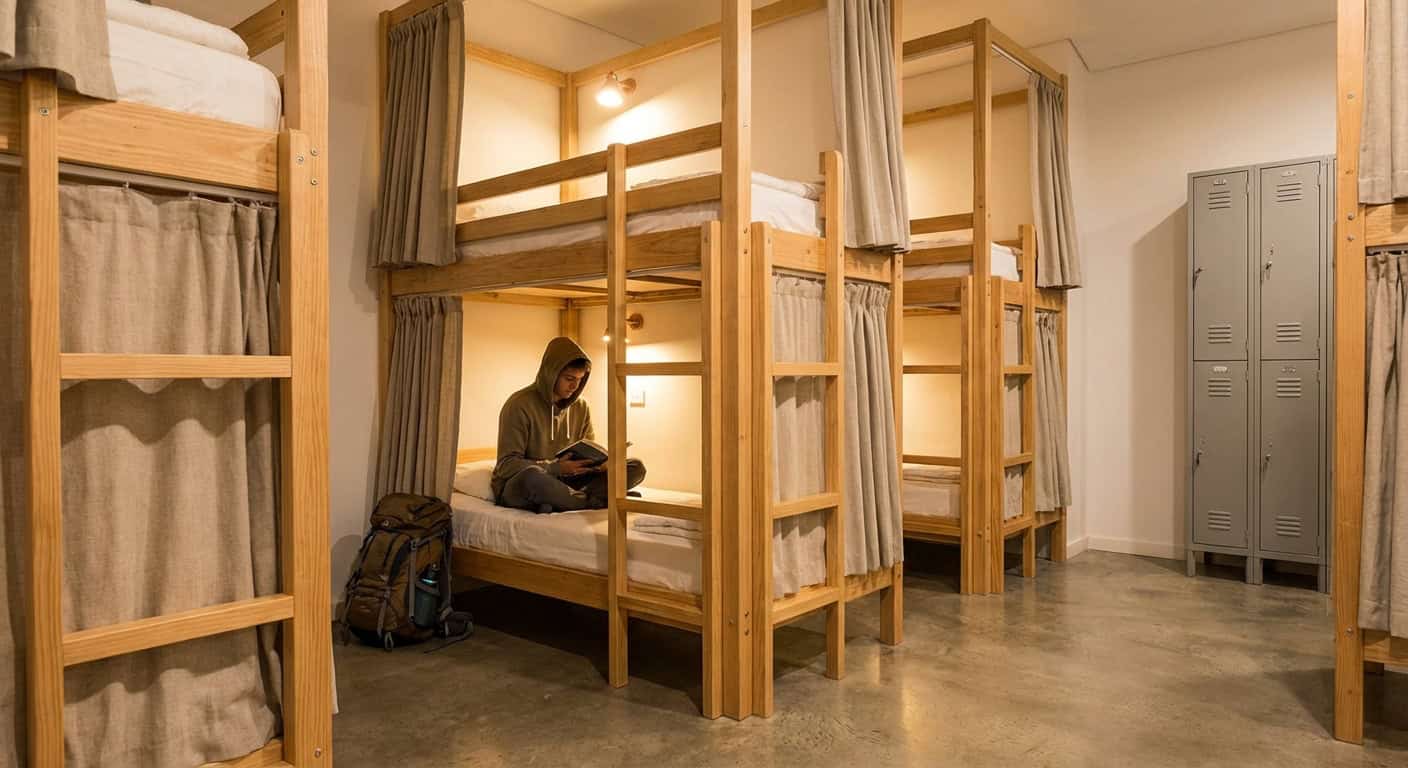
- Hostels: $5-25/night depending on location
- Guesthouses: Budget hotels, less social
- Couchsurfing: Free stays with locals
- House-sitting: Free accommodation for caring for homes
- Work exchange: Free bed for a few hours of work
For hostels, look for ones with kitchens (cook your own meals), free breakfast, and included activities. Book directly with hostels when possible. They often have better rates than booking platforms.
Getting around
Backpackers rely on local transportation:
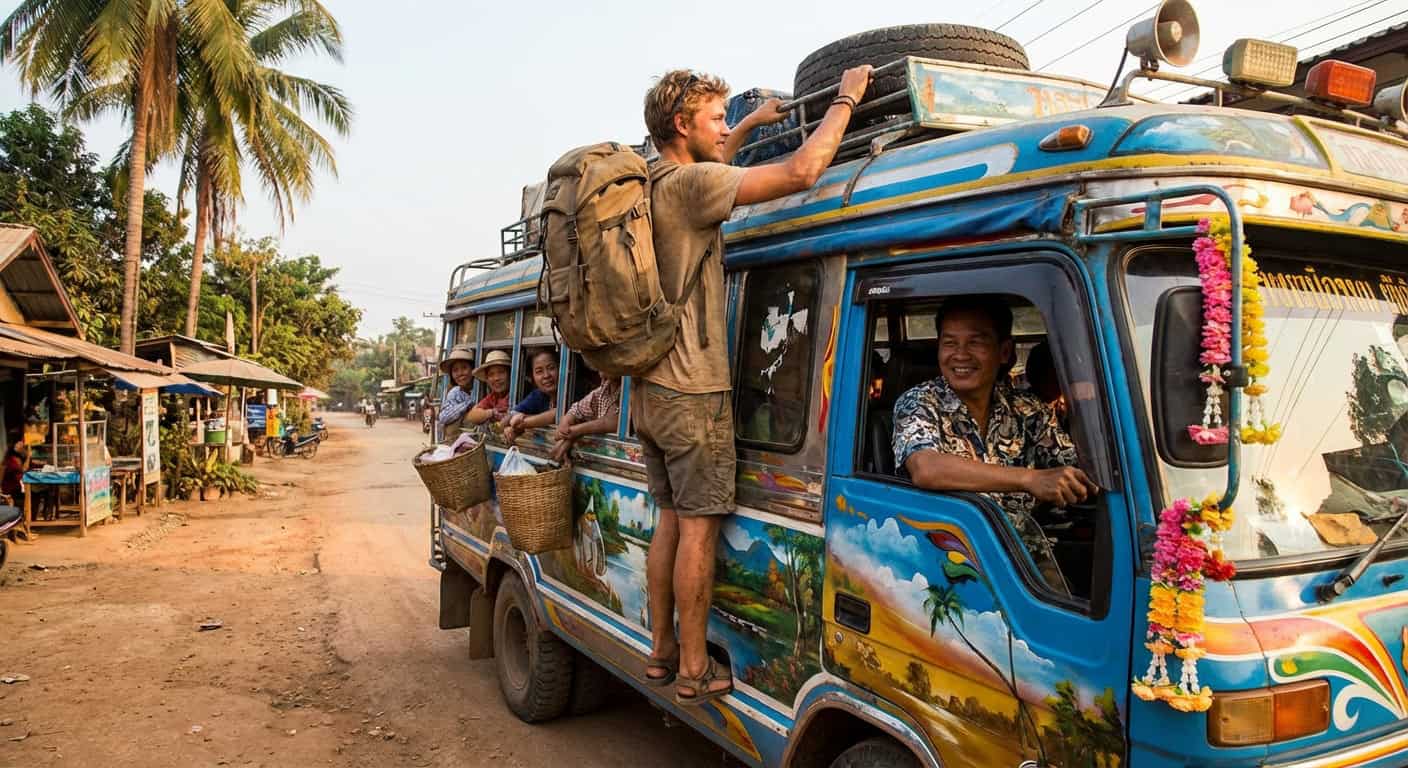
- Buses are the cheapest option, often overnight to save on accommodation
- Trains are comfortable, scenic, and sometimes cheap (book early, prices rise closer to departure)
- Budget airlines work for longer distances (carry-on only to avoid fees)
- Motorbikes are common in Southeast Asia
- Hitchhiking is free but requires caution
Pro tip: Instead of picking a destination and searching for flights, use the “Explore Everywhere” feature on Google Flights or Skyscanner. Let the cheapest flight determine your next destination. This is how experienced backpackers find unexpected adventures.
Meeting people on the road
The social aspect of backpacking is often the highlight. Here is how to maximize connections:
- Stay in dorms. Private rooms isolate you
- Use common areas. Kitchens and lounges are social hubs
- Join hostel activities: pub crawls, tours, dinners
- Use apps: HitchHive connects you with nearby travelers
- Be approachable. Put down your phone, make eye contact, say hello
The shared experiences you create with fellow backpackers often become your most treasured memories.
Common first-timer mistakes to avoid
Learn from those who came before you:
- Overpacking: The number one mistake. Bring half of what you think you need
- New footwear: Never start a trip with brand-new shoes. Break them in first to avoid blisters
- Over-ambitious itineraries: Trying to see too much too fast leads to burnout. Slow down and go deeper
- Skipping travel insurance: Non-negotiable. One medical emergency can wipe out your savings
- Booking everything in advance: Book your first few nights, then go with the flow
Staying safe
Backpacking is generally safe, but smart precautions help. For detailed advice on meeting people safely, read our complete travel safety guide.
Essential safety practices:
- Keep valuables in hostel lockers
- Carry copies of important documents
- Get travel insurance (non-negotiable)
- Trust your instincts about people and places
- Share your itinerary with someone at home
- Research common scams in each destination
Start your adventure
Backpacking will challenge you, change you, and give you experiences no resort vacation can match. Pack light, stay open, and let the journey unfold.
Ready to find your backpacking community? Download this travel app and connect with travelers wherever your adventure takes you.
Continue your journey
These guides will help you take the next step:
- Solo Female Travel Safety — Safety tips and best destinations for women backpacking alone
- Food Experiences to Meet Locals — Use local food culture to create authentic connections on your backpacking journey
- The Digital Nomad Guide — Combine backpacking with remote work for a location-independent lifestyle
- Backpacker’s Guide to Chengdu — Explore western China’s most exciting city on a backpacker budget
Leave a Reply