
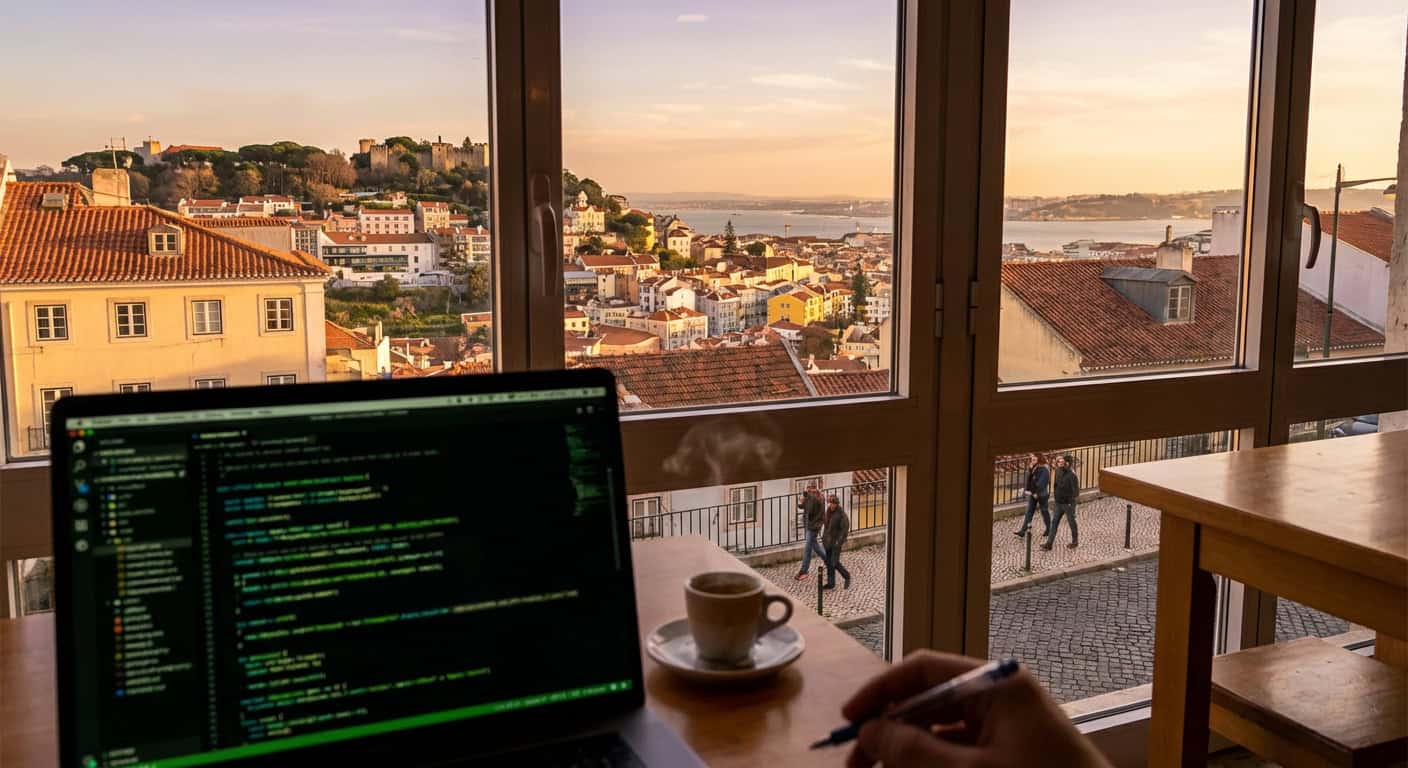
Not all cities are created equal for remote workers. The best digital nomad destinations combine reliable infrastructure, affordable living, active communities, and quality of life. Here are the top cities where location-independent professionals thrive in 2026.
What makes a city great for digital nomads?
Before the list, here is what matters:
- Internet reliability: Fast, stable connections everywhere
- Cost of living: Stretch your income further
- Coworking options: Dedicated workspaces with community
- Productivity environment: See our tips on staying productive while traveling
- Nomad community: Other remote workers to connect with
- Time zone: Reasonable overlap with clients or team
- Visa situation: Easy to stay legally for extended periods
- Quality of life: Food, weather, safety, things to do
Top digital nomad cities
1. Lisbon, Portugal
Lisbon has become Europe’s digital nomad capital. The city has mild weather year-round, beautiful architecture, great food, and a welcoming culture. Portugal’s digital nomad visa makes long stays legal. The startup scene brings young professionals and entrepreneurs.
Cost: $2,000-3,000/month
Best for: European timezone, startup culture, quality of life
Wifi: Excellent throughout the city
2. Bali, Indonesia (Canggu/Ubud)
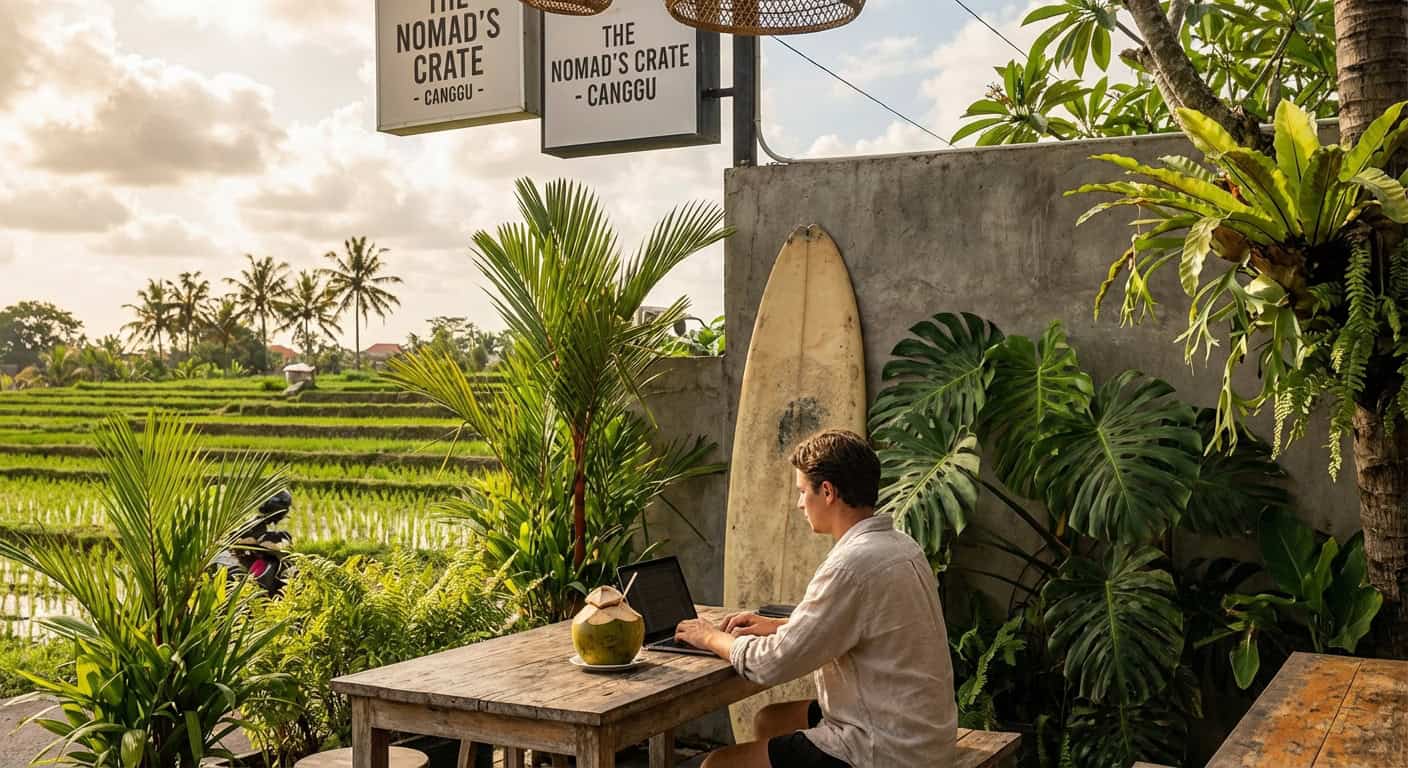
Bali was one of the first major nomad hubs. Canggu has beaches and surfing; Ubud has rice terraces and yoga culture. Both have busy coworking scenes, wellness culture, and established communities. Indonesia now offers a digital nomad visa. For a full breakdown of visa requirements for each country in Southeast Asia, see our dedicated guide.
Cost: $1,500-2,500/month
Best for: Wellness, community, tropical lifestyle
Wifi: Good in coworking spaces, variable in cafes. Always have a backup data plan
3. Chiang Mai, Thailand
The most affordable option with the most established community. Chiang Mai has been a nomad hub for over a decade. The infrastructure is mature: coworking spaces, cafes, and events cater specifically to remote workers. The mountain setting is good for weekend nature escapes.
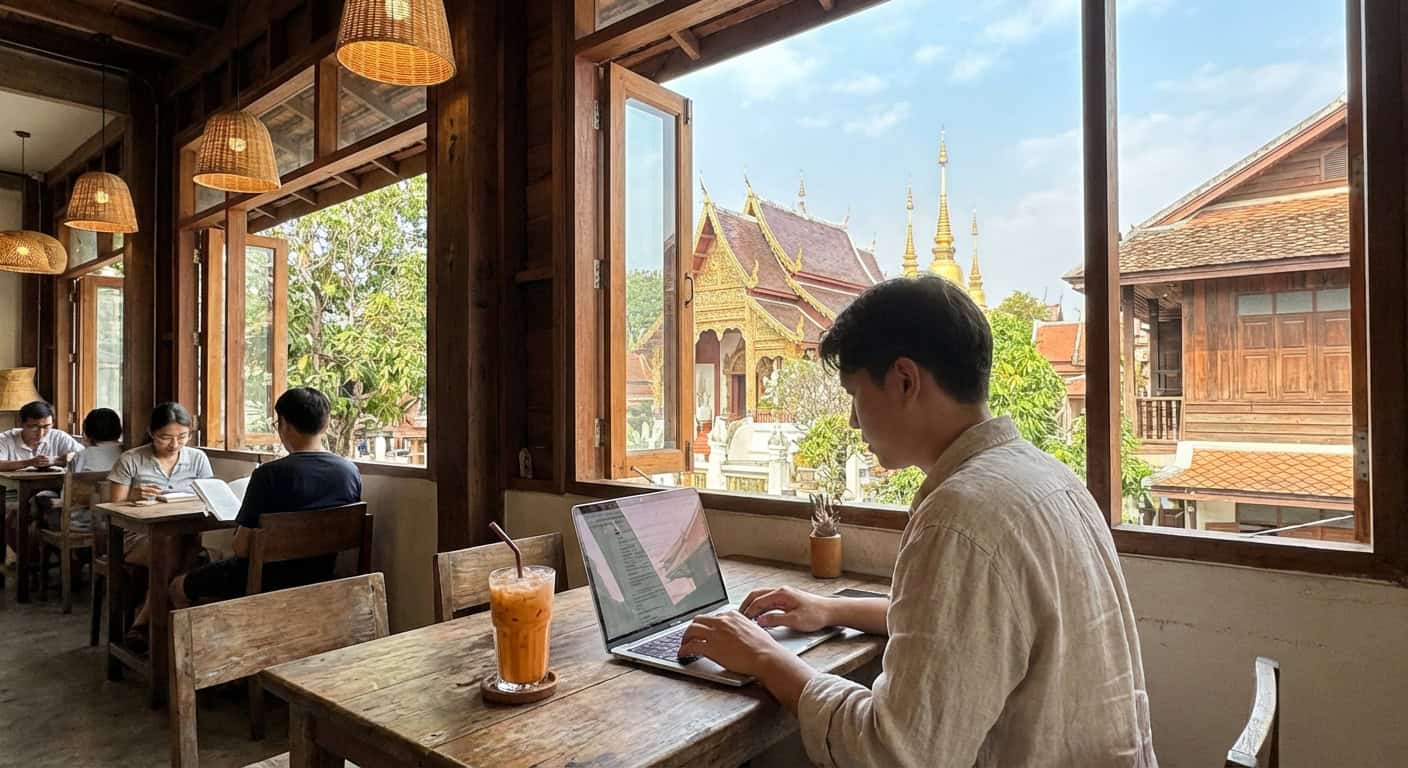
Experienced nomads describe Chiang Mai as the “University of Digital Nomadism” for beginners. The low barrier to entry and high density of other nomads makes it a good place to learn the lifestyle. For more detail, check out our complete guide to Chiang Mai for digital nomads. Consider staying slightly outside the Nimman area to avoid the densest tourist crowds while remaining close to the action.
Cost: $1,000-1,500/month
Best for: Budget nomads, first-timers, established community
Wifi: Excellent in nomad areas
4. Mexico City, Mexico
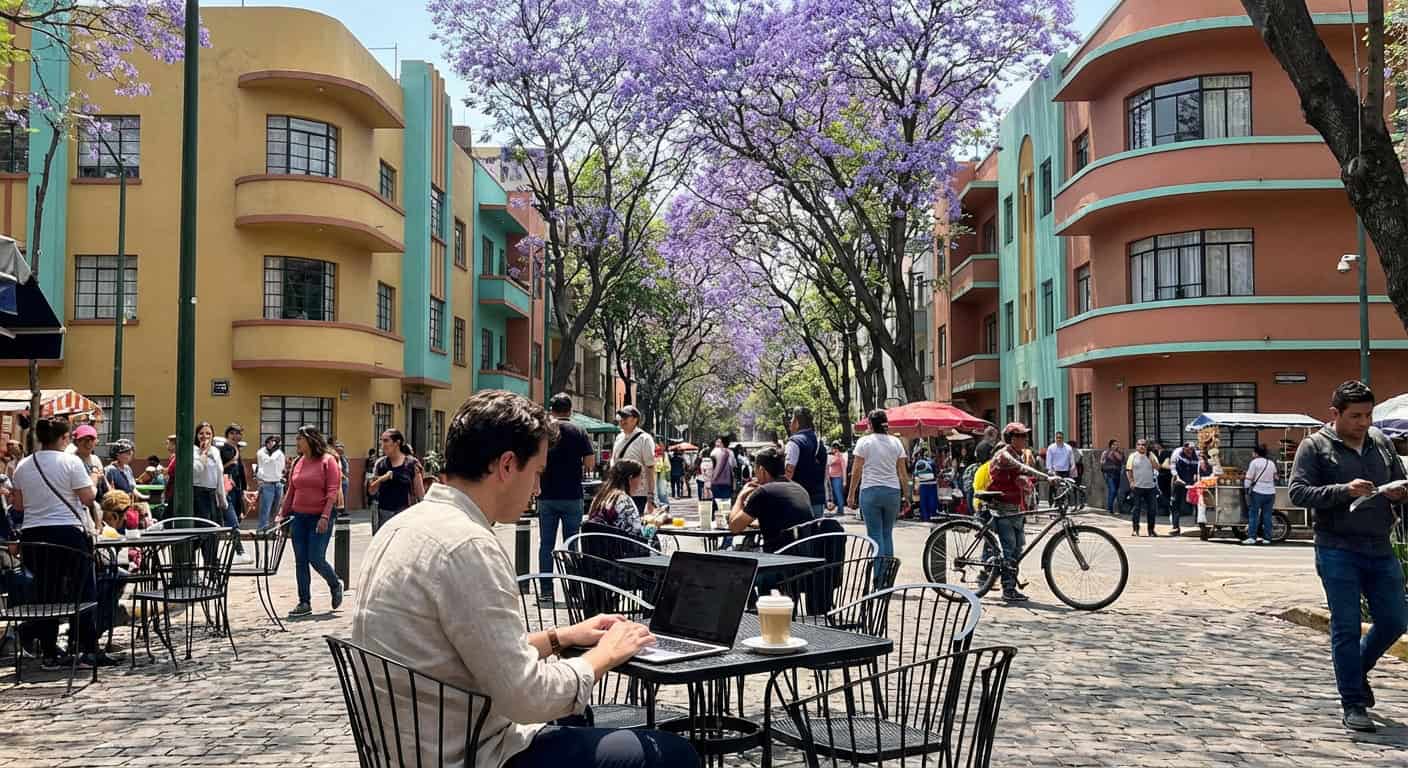
CDMX has exploded among American nomads. The proximity and timezone alignment with US clients is hard to beat. The food is excellent, and Roma and Condesa neighborhoods are full of remote workers. You get a lot for your money here.
Cost: $1,500-2,500/month
Best for: US timezone alignment, food lovers, culture
Wifi: Good in nomad-friendly areas
5. Barcelona, Spain
Beach, culture, and European lifestyle. Barcelona attracts nomads who want it all: Mediterranean weather, great food, busy nightlife, and professional opportunities. Spain’s digital nomad visa opens long-term possibilities.
Cost: $2,500-3,500/month
Best for: Beach lovers, European base, social scene
Wifi: Excellent
6. Medellin, Colombia
Perfect weather year-round (hence “City of Eternal Spring”). Medellin has become a modern, safe city with strong nomad infrastructure. Poblado and Laureles neighborhoods cater to remote workers. Great value for money. Our South America digital nomad guide covers Medellin, Buenos Aires, and more in detail.
Important 2025 note: While many nomads love Medellin, there are growing safety concerns in some areas. Research current conditions carefully and stay aware of your surroundings, particularly in tourist-heavy zones after dark.
Cost: $1,200-2,000/month
Best for: Weather, affordability, Spanish learning
Wifi: Good in developed areas
7. Bangkok, Thailand
Asia’s ultimate megacity. Bangkok has everything: great food, efficient transport, modern malls, and ancient temples. The scale means options for every taste and budget. It is also an easy base for exploring Southeast Asia. For the full breakdown, see our Philippines digital nomad guide.
Cost: $1,200-2,000/month
Best for: City energy, food, regional travel base
Wifi: Excellent in modern areas
8. Berlin, Germany
Europe’s creative and tech hub. Berlin attracts artists, entrepreneurs, and professionals seeking alternative culture. Affordable by Western European standards. Strong coworking scene. Gray winters but a lively indoor culture.
Cost: $2,000-3,000/month
Best for: Tech workers, creative types, nightlife
Wifi: Excellent
9. Buenos Aires, Argentina
European feel at South American prices. Buenos Aires has great food, tango culture, and sophisticated nightlife. Economic fluctuations make it variably affordable, and you need to understand the “blue dollar” exchange rate to make it work. Strong expat and nomad communities in Palermo.
Cost: $1,000-1,800/month (varies with economy)
Best for: Culture, food, Spanish immersion
Wifi: Generally good
10. Dubai, UAE
The newcomer catering aggressively to remote workers. Dubai’s virtual working visa, excellent infrastructure, and zero income tax attract high-earning nomads. Expensive but efficient. Best for those prioritizing comfort and connectivity.
Cost: $3,000-5,000/month
Best for: High earners, luxury, Middle East base
Wifi: Excellent
Up-and-coming destinations for 2025
Beyond the established hubs, experienced nomads are increasingly recommending:
- Oaxaca, Mexico: The “cultural alternative” to Mexico City with great food and strong wifi, but way less chaotic
- Tbilisi, Georgia: Excellent hospitality, very low cost of living, and favorable tax regime for freelancers (often 1% for small businesses)
- Bucharest, Romania: Perhaps the best internet speeds in Europe for the price, and a serious dark horse for developers
- Da Nang, Vietnam: Beach-side alternative to busy Saigon with reliable infrastructure. See our full Da Nang digital nomad guide for more detail.
- Fukuoka, Japan: With the weak Yen, Japan is surprisingly affordable outside Tokyo. Fukuoka is a startup-friendly city getting nomad attention
- Montevideo, Uruguay: Ranks #1 in Latin America for remote work connectivity and has an easy digital nomad permit
Choosing your city
The “best” city depends on your situation:
- US timezone: Mexico City, Medellin, Buenos Aires
- European timezone: Lisbon, Barcelona, Berlin
- Asia timezone: Bali, Chiang Mai, Bangkok
- Tight budget: Chiang Mai, Medellin, Buenos Aires
- First-time nomad: Lisbon, Bali, Chiang Mai (established communities)
- Best internet: Bucharest, Bangkok, major cities generally
Connectivity tips
Experienced nomads share these internet strategies:
- Skip portable wifi routers: They are overpriced and often slower than local networks. Use your smartphone as a hotspot instead.
- Always have backup data: If your Airbnb wifi fails, you need a local SIM with high data cap ready immediately
- Buy local SIM for longer stays: Physical local SIMs (like Viettel in Vietnam or AIS in Thailand) are significantly cheaper than travel eSIMs for stays over a week
- Use Airalo or eSIM for the first hours: Land with connectivity via eSIM, then buy a local SIM once settled
Finding your community
Cities matter, but people matter more. In any of these destinations, proactive networking makes a big difference:

- Join local coworking spaces. The monthly cost pays for itself in community
- Attend nomad events and meetups
- Use a travel app to find other nomads nearby
- Participate in skill shares and workshops
- Say yes to social invitations, especially in your first weeks
The connections you make often become collaborators, friends, and future hosts in other cities.
A note for first-time nomads
If you are considering the nomad lifestyle, experienced travelers strongly advise: do not move abroad without a secured remote job first. “You are not going to find remote work while traveling with no experience” is the hard truth. Build your income stream before booking flights.
If you must go anyway, Chiang Mai and Da Nang are cheap enough ($800-$1,200/month) where you could survive on very little while building a freelance career.
Beyond the list
These ten cities are proven, but nomads work successfully from hundreds of locations. As you gain experience, you will discover your own favorites: smaller cities and unexpected places that match your specific needs.
The digital nomad lifestyle has unlimited options. Start with an established hub, build your routines and network, then explore further.
Your city is out there. Go find it.
Continue your journey
Want to keep reading? These guides cover related topics:
- Top Cities for Culinary Travel — Where great food scenes overlap with nomad-friendly cities
- Solo Female Travel Safety — Safety considerations for women in these digital nomad destinations
- The Complete Backpacking Guide — Combine nomad life with budget travel
Leave a Reply