

Working while traveling sounds glamorous until you try to hit a deadline with inconsistent wifi, timezone chaos, and a beach calling your name. Here are proven strategies for staying productive as a digital nomad.
The productivity challenge
Digital nomads face unique obstacles:

- Inconsistent environments: new workspaces, varying wifi quality
- Constant novelty: temptation to explore instead of work
- Timezone juggling: calls at odd hours disrupt routines
- Social distractions: other travelers with flexible schedules
- Decision fatigue: everything requires choices when nothing is routine
Successful nomads develop systems to overcome these challenges. Here is how.
Environment strategies
Scout workspaces immediately
When you arrive somewhere new, find your workspaces before you need them. Test wifi speeds. Check outlet availability. Note busy hours. Having reliable options reduces daily decision-making.
The coworking vs. home debate
The monthly cost of coworking ($100-300) pays for itself in productivity. Dedicated desks, guaranteed wifi, proper chairs, and a professional atmosphere signal “work mode” to your brain. The best nomad cities have multiple options. Chiang Mai leads the pack with its well-established workspace scene — see our guide to Chiang Mai coworking spaces and cafes. In the Philippines, Manila’s coworking scene is booming with 24/7 options in Makati and BGC. In South America, Medellín’s coworking scene is equally impressive.
That said, some nomads prefer working from their accommodation. The key advice from experienced nomads: if you work from home, you must have a dedicated workspace, not just a kitchen table. One popular compromise is the “hybrid approach”: use a laptop-friendly cafe for 2-3 hours of deep work in the morning to break the monotony, then finish the day at home.
Cities like Da Nang have incredible coworking scenes perfect for remote workers.
Create a mobile office kit
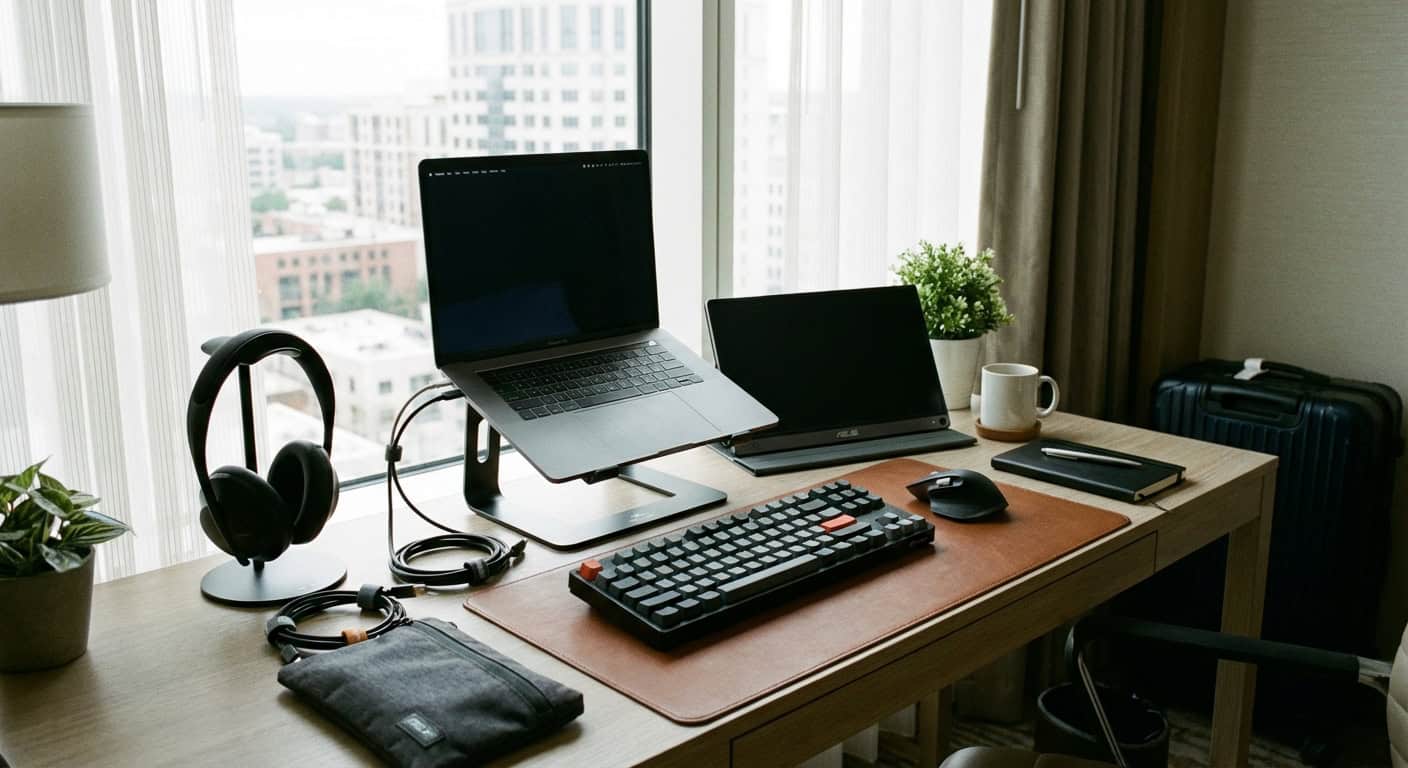
Items that travel with you:
- Noise-canceling headphones (Sony WH-1000XM series or Bose)
- Portable laptop stand (Roost Stand)
- External keyboard and mouse
- Backup wifi (hotspot or local SIM)
- Extension cord with multiple outlets
- Portable monitor (Asus ZenScreen) for a dual-monitor setup anywhere
- Travel router (GL.iNet) for hotel wifi that requires repeated logins
Have backup plans
Wifi will fail. Power will cut. Always have alternatives: mobile hotspot, another cafe, coworking day pass. Never rely on a single point of failure for critical work.
Time management
Protect your peak hours
Identify when you do your best work. For most people, this is morning. Guard these hours fiercely. No meetings, no calls, no email, no exploration. Deep work happens in protected blocks. Experienced nomads recommend doing your most demanding work (coding, writing) immediately upon waking, when willpower is highest.
Batch similar tasks
Group meetings together. Handle email in designated windows. Batch administrative tasks. Context-switching kills productivity, so reduce it by clustering similar work.
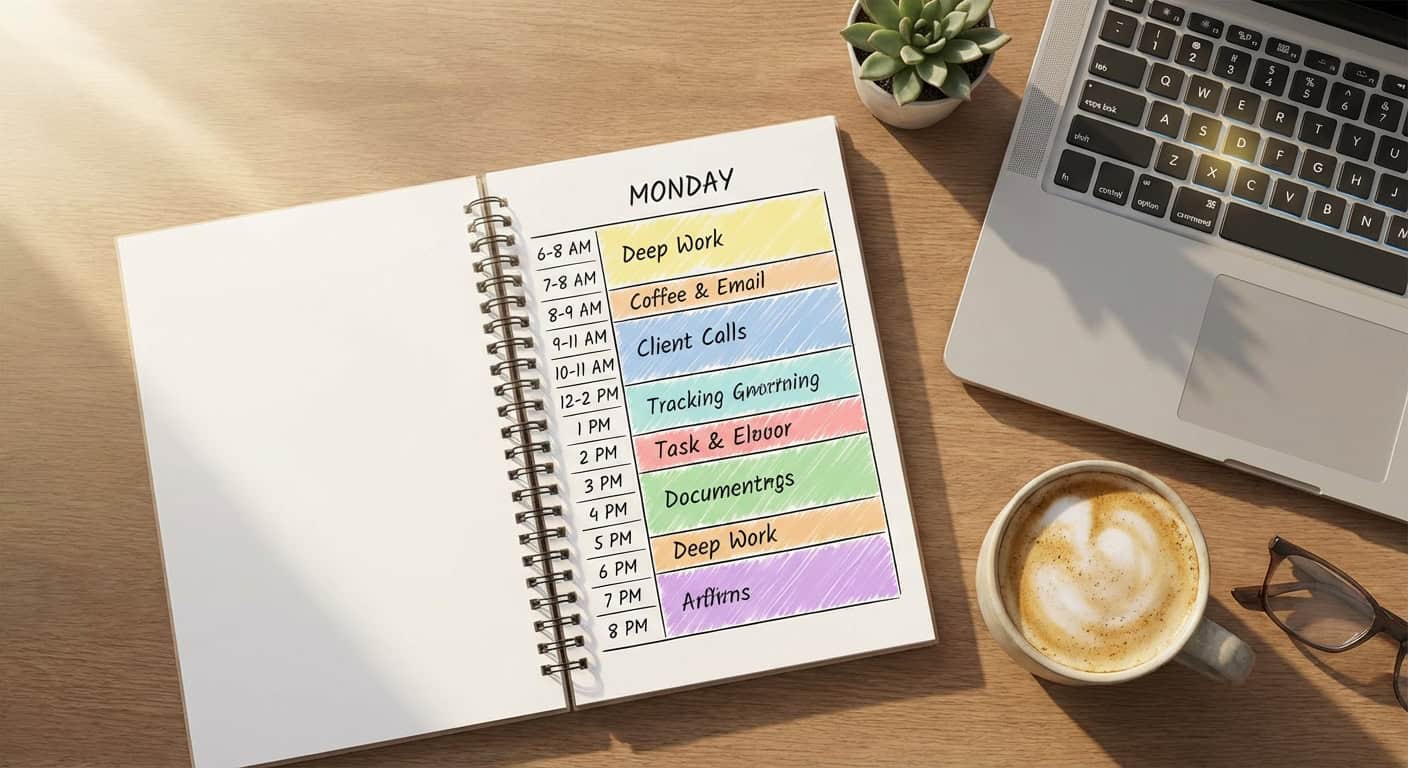
Use time blocking
Schedule your day in blocks:
- 6-7am: Morning routine
- 7-11am: Deep work (no interruptions)
- 11am-12pm: Email and admin
- 12-1pm: Lunch and break
- 1-3pm: Meetings and collaboration
- 3-5pm: Secondary work
- Evening: Life, exploration, rest
The “mullet” schedule
A popular approach among productive nomads: “Business in the front, party in the back.” Work your core hours without exception, then explore in the evenings and on weekends, just like you would living in a normal city. Do not try to sightsee at 10am on a Tuesday.
Handle timezones strategically
If you work with a team in another timezone, negotiate boundaries. Perhaps you take one early or late call daily, not three. Choose locations with reasonable overlap. A 6-hour difference is manageable; 12 hours is brutal. Use World Time Buddy to visualize overlap before choosing destinations.
Routine and discipline
Create location-independent rituals
Routines that work anywhere:

- Same wake time regardless of location
- Morning exercise or meditation
- Starting work at the same hour
- End-of-day shutdown ritual
These anchors provide stability when everything else changes.
Pavlovian triggers
Use sensory cues to tell your brain it is work time. This could be a specific playlist (video game soundtracks are popular because they are designed to keep you focused without being distracting), a specific scent, or even putting on “work shoes” inside your apartment. These triggers help you switch into productive mode regardless of where you are.
Separate work days and adventure days
Do not try to sightsee while working. You will do both poorly. Most nomads work Monday through Friday and explore on weekends: normal schedule, extraordinary locations.
Move slowly
Every move costs productivity. Packing, traveling, finding workspaces, adjusting to new environments, getting your visa logistics sorted out — it all takes time and energy. Successful nomads spend 1-3 months per location minimum. The slow travel approach benefits both experience and output.
The 4-day work week option
Some nomads compress work into longer hours (10 hours/day) for 4 days to create 3-day weekends for trips and exploration. This works well if your job allows schedule flexibility.
Digital tools
Communication
- Slack/Discord: async team communication
- Zoom/Meet: video calls
- Loom: async video messages
- Notion/Coda: documentation and collaboration
- Krisp.ai: cancels background noise (cafes, roosters, traffic) during calls
Focus
- Freedom/Cold Turkey: block distracting sites
- Forest: gamified focus sessions (keeps you off your phone)
- Toggl: time tracking for accountability
Security
- VPN: essential on public wifi
- Password manager: 1Password or similar
- Two-factor authentication: on everything
Energy management
Prioritize sleep
Poor sleep destroys productivity. Maintain sleep hygiene even when traveling: consistent bedtime, dark room, limited screens before bed. It is worth paying more for quiet accommodation.
Exercise regularly
Movement fights the sedentary nature of desk work. Find gyms, run, swim, do hotel room workouts. Regular exercise improves focus, mood, and energy. Finding a local gym immediately upon arrival creates an “anchor habit” that provides stability.
Eat well
Street food is amazing, but constant indulgence affects energy. Balance exploration eating with some healthy, familiar meals. Stay hydrated, especially in tropical climates.
The FOMO problem
Fear of missing out is the biggest enemy of productivity. “Treat travel like living” is the mindset shift that helps most. Accept that some days you will just work, do laundry, and watch Netflix. You are not on vacation. You are living somewhere else. The pressure to “see everything” in a few days is what kills productivity. When you stay 1-3 months in a place, you have weekends to explore without guilt.
Social balance
Loneliness hurts productivity. So does too much socializing. Find balance:
- Schedule social activities for evenings and weekends
- Use coworking for work-appropriate socialization
- Connect with other nomads through a travel app
- Have non-negotiable work hours that friends respect
The shared experiences that make nomad life fulfilling should add to your work, not replace it.
The productivity mindset
Productivity as a nomad comes down to intention. You chose this lifestyle for freedom, but freedom requires discipline. The laptop closes. The beach waits. The calls happen. That is the deal.
Done well, the digital nomad lifestyle offers extraordinary balance: meaningful work and meaningful experiences. But only if you protect both.
Build your systems. Guard your time. Do great work from anywhere in the world.
Continue your journey
Want to keep reading? These guides will help you take the next step:
- Building Community on the Road — Balance productivity with the social connections that make nomad life fulfilling
- Food Experiences to Meet Locals — Schedule culinary adventures during your off-hours for authentic connections
- The Complete Backpacking Guide — Integrate productivity strategies with immersive budget travel
Leave a Reply