
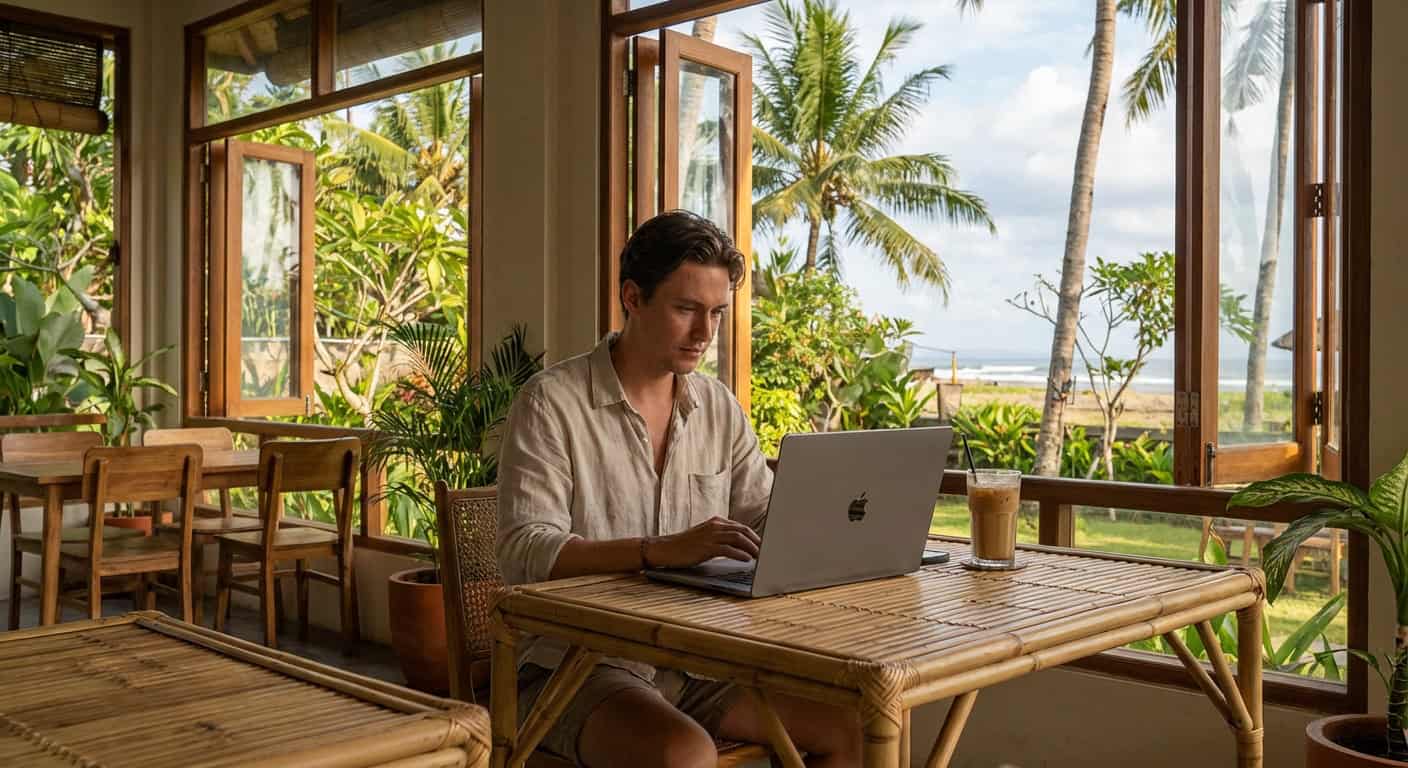
The dream of working from anywhere has become reality for millions. Digital nomadism, working remotely while traveling the world, offers real freedom. This guide covers everything from getting started to thriving as a location-independent professional.
What is a digital nomad?
Digital nomads are remote workers who use technology to work from anywhere with internet access. Instead of commuting to an office, they might work from a cafe in Lisbon, a coworking space in Bali, or a beach in Thailand.
The lifestyle combines professional growth with travel and cultural immersion. Digital nomads are not on vacation. They work full-time jobs or run businesses. But they have chosen to untether their work from a fixed location.
Is digital nomadism right for you?
The lifestyle sounds romantic, but it is not for everyone. Consider these factors:

Pros
- Location freedom: Work from anywhere in the world
- Cost arbitrage: Earn in strong currencies, live in affordable places
- Cultural immersion: Experience places deeply, not as a tourist
- Community: Join a global network of like-minded professionals
- Personal growth: Constant new experiences expand your perspective
Cons
- Loneliness: Leaving friends and routines behind
- Instability: Constant change can be exhausting
- Timezone challenges: Meetings at odd hours
- Administrative complexity: Taxes, visas, banking
- Work-life blur: Hard to separate work from travel
The Instagram vs. reality gap
Experienced nomads warn that the lifestyle is not “laptops on the beach.” The glare makes working on a beach impossible, and sand destroys electronics. The reality? You spend more time looking for reliable wifi, ergonomic chairs, and grocery stores than exploring waterfalls. The “boring” stuff matters most for sustainable nomad life.
Getting started
Secure remote income first
Do not quit your job and hope for the best. Build remote income before leaving:
- Negotiate remote work: Many employers now allow it
- Find remote jobs: Platforms like We Work Remotely, Remote OK
- Freelance: Build clients on Upwork, Fiverr, or directly
- Start a business: Online businesses travel well
Choose your first destination
Start with an established digital nomad hub. These cities have reliable wifi, coworking spaces, nomad communities, and reasonable costs. Bali, Lisbon, Chiang Mai, and Mexico City are popular first choices.
Experienced nomads are currently recommending several underrated destinations for 2025: Da Nang in Vietnam has beach, mountains, cheap food, and fast internet, which makes it good for entry-level nomads. Albania (Tirana and Sarande) is the “next Croatia” with affordability and beaches, plus it is outside the Schengen zone. Taiwan’s Kaohsiung is a cheaper, warmer alternative to Taipei with excellent infrastructure.
For a closer look at one of Asia’s best nomad bases, check out our Da Nang guide, or explore the Philippines digital nomad guide for Southeast Asia’s most English-friendly option.
Set up your tech
Essential gear for nomads:
- Reliable laptop (your most important tool)
- Quality headphones with microphone
- Portable wifi hotspot or local SIM
- Power bank and universal adapter
- VPN service for security and access
Experienced nomads also recommend: a portable monitor (Asus ZenScreen) for productivity, a laptop stand (Roost Stand) to save your neck, and a travel router as backup for unreliable hotel wifi.
Handle logistics
- Banking: Cards with no foreign transaction fees (Wise, Charles Schwab). Set these up before you leave
- Mail: Digital mailbox service for physical mail
- Insurance: International health coverage (SafetyWing, World Nomads)
- Storage: What to do with your stuff back home
The “test before you commit” rule
When booking accommodation, do not pay for a whole month instantly. Book 2-3 days, check the wifi speed and noise levels in person, then extend or find a local rental (which is often 30-50% cheaper than Airbnb monthly rates).
Where to work
Coworking spaces
Purpose-built for remote workers. Reliable wifi, proper desks, meeting rooms, and communities of professionals. Most charge $100-300/month or offer day passes. Great for meeting other nomads.
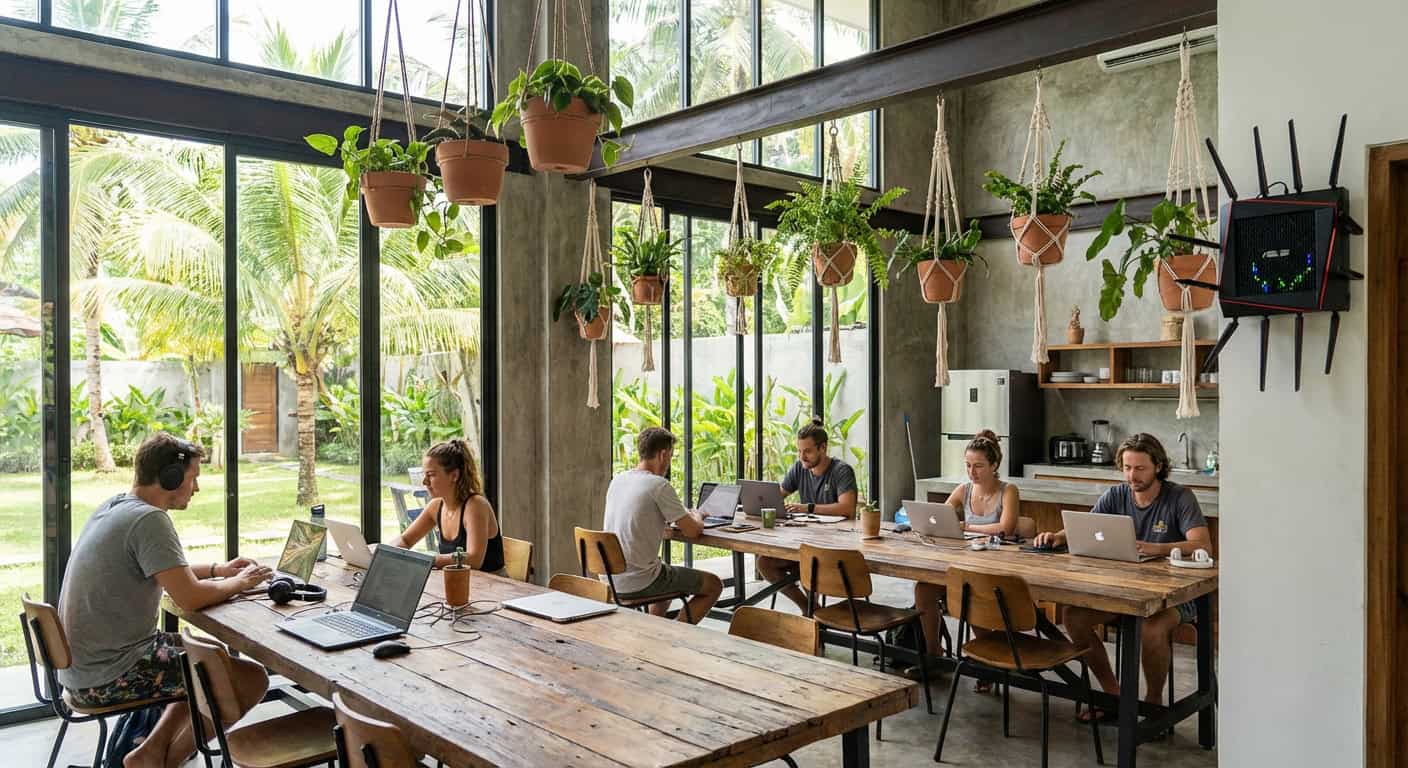
The monthly cost of coworking pays for itself in productivity. Dedicated desks, guaranteed wifi, proper chairs, and a professional atmosphere signal “work mode” to your brain.
Cafes
The classic nomad workspace. Look for places with good wifi, outlets, comfortable seating, and laptop-friendly policies. Buy something regularly. Do not be the person nursing one coffee for eight hours.
Accommodation
Working from your apartment or Airbnb is convenient but can feel isolating. Good for focused work; less good for community. Many nomads alternate between accommodation and coworking. On Airbnb, filter for “Dedicated Workspace” and message hosts to ask for a screenshot of a wifi speed test before booking.
Coliving spaces
Accommodation designed for remote workers. Combines housing with workspace and community. Usually includes events, fast wifi, and other nomads. Good for combating loneliness.
Staying productive
Working while traveling presents unique challenges. For more on this, see our guide on how to stay productive while traveling. Here is how experienced nomads stay productive:

Establish routines
Routines provide stability amid constant change. Wake at the same time. Have morning rituals. Define work hours. Routines reduce decision fatigue and create normalcy. Experienced nomads emphasize: “Routine is the enemy of adventure, but the friend of productivity.”
Protect deep work time
Block uninterrupted hours for focused work. Mornings often work best. Handle meetings and collaboration later. Use apps to block distractions during deep work.
Move slowly (the “slowmad” approach)
Changing cities weekly destroys productivity. Most successful nomads spend 1-3 months per location. This is the “gold standard” for balancing work and exploration. Slower movement means less time wasted on logistics and more time settled into routines. This aligns with the slow travel philosophy that enriches experiences.
Separate work and exploration
Treat weekdays like workdays. Explore on evenings and weekends. Trying to sightsee while working means doing both poorly. As seasoned nomads put it: “You are not on vacation; you are living somewhere else.”
Handle timezones strategically
If your team is in New York and you are in Bali, you will be working 8pm to 4am. This destroys your social life. Choose locations with reasonable overlap. Latin America works well for US-based jobs (see our complete guide to South America for digital nomads), while Europe and Africa align better with UK/EU teams.
Building community
Loneliness is the biggest challenge nomads face. Our guide on building remote work community on the road covers this in depth. Combat it proactively:

- Join coworking spaces: Built-in community of professionals
- Use nomad apps: HitchHive connects you with travelers and nomads nearby
- Attend events: Nomad meetups, skill shares, social events
- Try coliving: Instant community in your living space
- Stay longer: Deeper connections form when you are not leaving in days
The shared experiences with fellow nomads create bonds that span continents.
Digital nomad visas: are they worth it?
Many countries now offer specific “digital nomad visas.” If you are heading to Southeast Asia specifically, our Southeast Asia visa guide breaks down every option in detail. The verdict from experienced nomads on these visas is mixed:
- Often more trouble than worth: They are expensive, require months of paperwork, and often make you a tax resident
- Good for “settlers”: Only recommended if you plan to stay in one country for 1+ years
- The grey area reality: Most nomads work on standard tourist visas. This is technically questionable but rarely enforced if you are not taking local jobs
If you are in Europe, be aware of the “90/180 rule” for Schengen countries. The “Schengen Shuffle” strategy alternates between Schengen and non-Schengen countries (UK, Ireland, Albania, Montenegro, Turkey) to stay legally longer.
Common mistakes to avoid
- Moving too fast: Slow down. Productivity and wellbeing suffer with constant movement.
- Ignoring timezones: Living 12 hours from your team burns you out. Choose locations strategically.
- Skipping health insurance: One medical emergency can be devastating without coverage.
- Neglecting relationships: Maintain connections with friends and family back home.
- All work, no life: You chose this lifestyle for freedom. Use it.
- Not having a home base: Some nomads debate this, but having a safe haven to return to can be essential for long-term sanity.
The future is location-independent
Remote work has gone mainstream. Companies increasingly hire globally. Tools for distributed work keep improving. The digital nomad lifestyle, once fringe, is becoming a legitimate career path.
Whether you work remotely for a year or a decade, the experience changes your perspective. You will develop independence, adaptability, and a global network. You will learn that home is not a place but the life you build wherever you are.
Ready to connect with the nomad community? Download HitchHive and find your people in cities worldwide.
Continue your journey
Want to keep reading? These guides cover related topics:
- Solo Female Travel Safety — Safety considerations for women living the digital nomad lifestyle
- Food Experiences to Meet Locals — Use food as a way to combat nomad loneliness and make authentic connections
- The Complete Backpacking Guide — Combine nomad life with budget backpacking
Leave a Reply