
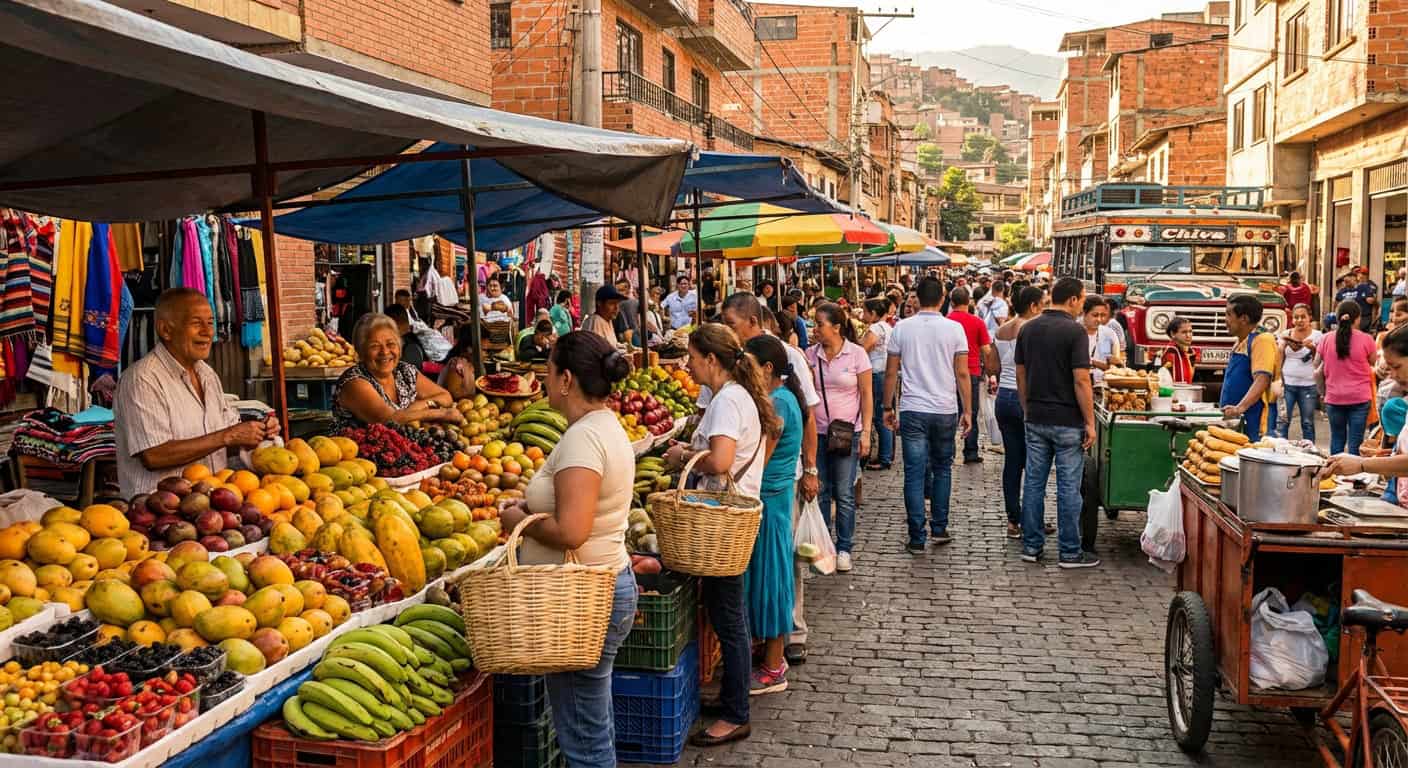
The city of eternal spring has eternal price creep
I need to be honest with you: the days of living like royalty in Medellin on $800 a month are over. Every blog post from 2019 promising you a luxury lifestyle for pocket change is lying to you. But here is the thing: Medellin is still an incredible deal compared to pretty much any city in North America or Europe, and the quality of life you get for your money is hard to beat anywhere on the planet.
I spent months tracking every peso, comparing neighborhoods, and talking to long-term nomads who have watched prices shift in real time. What follows is a no-nonsense breakdown of what it actually costs to live in Medellin as a digital nomad right now, not what it cost three years ago, not what some influencer claims on Instagram, but the real numbers.
Whether you are planning your first month or your first year in the City of Eternal Spring, this guide will help you budget honestly and avoid the most common financial mistakes newcomers make.
Accommodation: the biggest line item
Housing is where your budget lives or dies in Medellin, and it is also where the biggest pricing gaps exist. The difference between what you pay on Airbnb and what you pay on a local lease can be double or even triple.
El Poblado (the gringo bubble)
El Poblado is where most nomads land first. It has the best English-speaking services, the trendiest restaurants, and buildings with 24/7 security (porteria). But you pay for all of that. Furnished studios on Airbnb now average $1,100 to $1,600 per month. If you can use local Facebook groups and rent direct from a landlord, you might find something for $800 to $1,000, but it takes effort and at least basic Spanish. The neighborhood is also extremely hilly, so walking anywhere feels like a leg day workout.
Laureles (the smart choice)
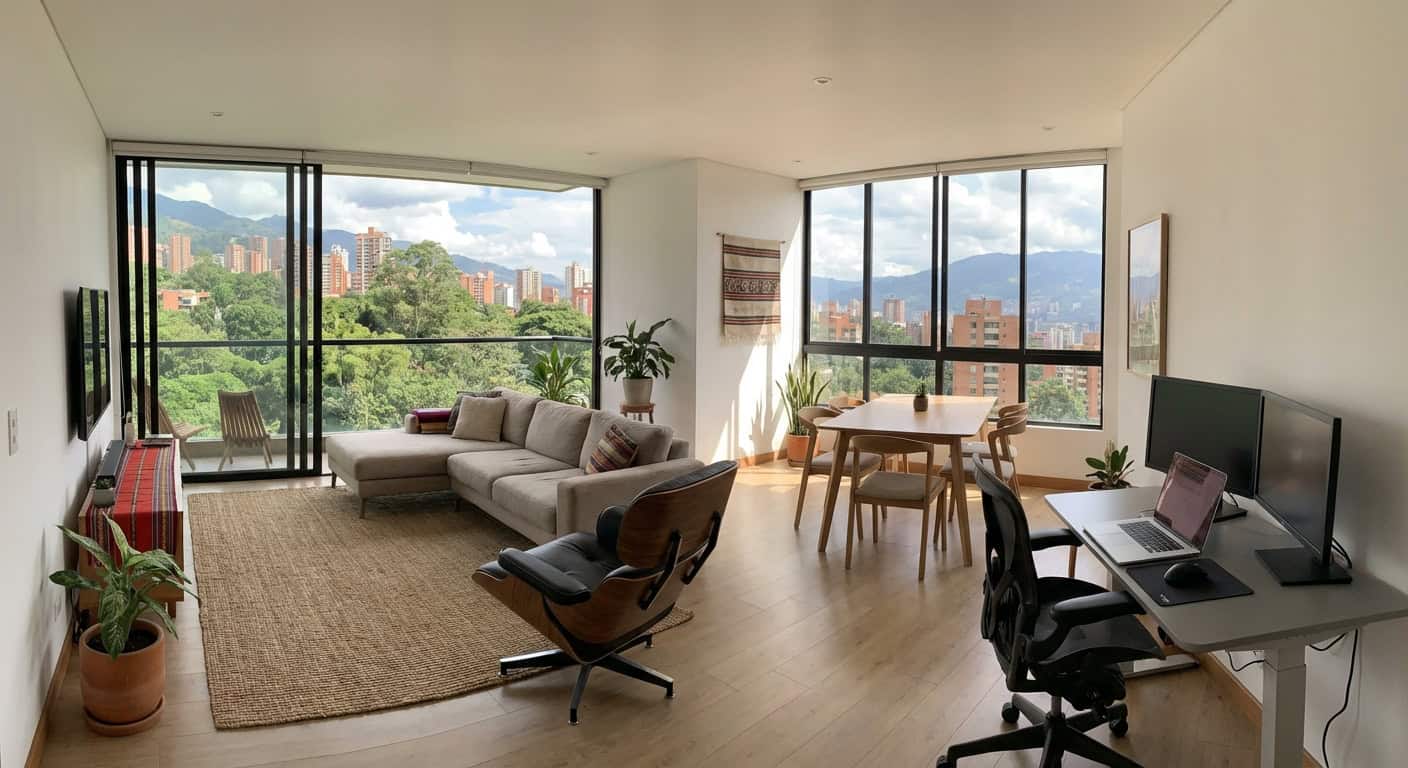
Laureles is where the savvy nomads end up after their first month in Poblado. It is flat, green, walkable, and has a genuine neighborhood feel. Rents run about 20-30% cheaper than Poblado for equivalent quality. Nice one-bedroom apartments go for $600 to $850 on direct leases, and even Airbnb prices are more reasonable at $800 to $1,100. The areas around Primer Parque and Segundo Parque offer the best balance of quiet streets and cafe access. If Poblado is the Miami of Medellin, Laureles is the Brooklyn.
Envigado and Sabaneta (the hidden gems)
Envigado is what I call the “Goldilocks zone.” It is safe, clean, and feels authentically upper-middle-class Colombian. Rents are about 10-15% cheaper than Poblado, but many long-term residents rate the quality of life even higher. Sabaneta, further south on the Metro line, is where the real value lives: modern high-rise apartments with pools and gyms for $500 to $600. The trade-off is the commute. If you need to get to Poblado or Laureles frequently, you are looking at 45-plus minutes in traffic, though the Metro helps significantly.
The rental strategy that saves you hundreds
The single best budget hack for Medellin housing: book an Airbnb for one to two weeks, then physically walk around your target neighborhood looking for “Se Arrienda” (For Rent) signs. Call the numbers on WhatsApp. This boots-on-the-ground approach gets you local prices that are invisible from abroad. If you plan to stay longer than three months, offering to pay three to six months upfront can bypass the fiador (co-signer) requirement that normally blocks foreigners from local leases.
Food and dining: where your money stretches
Food is where Medellin still delivers unbelievable value, if you eat like a local instead of like a tourist.
The menu del dia (your secret weapon)
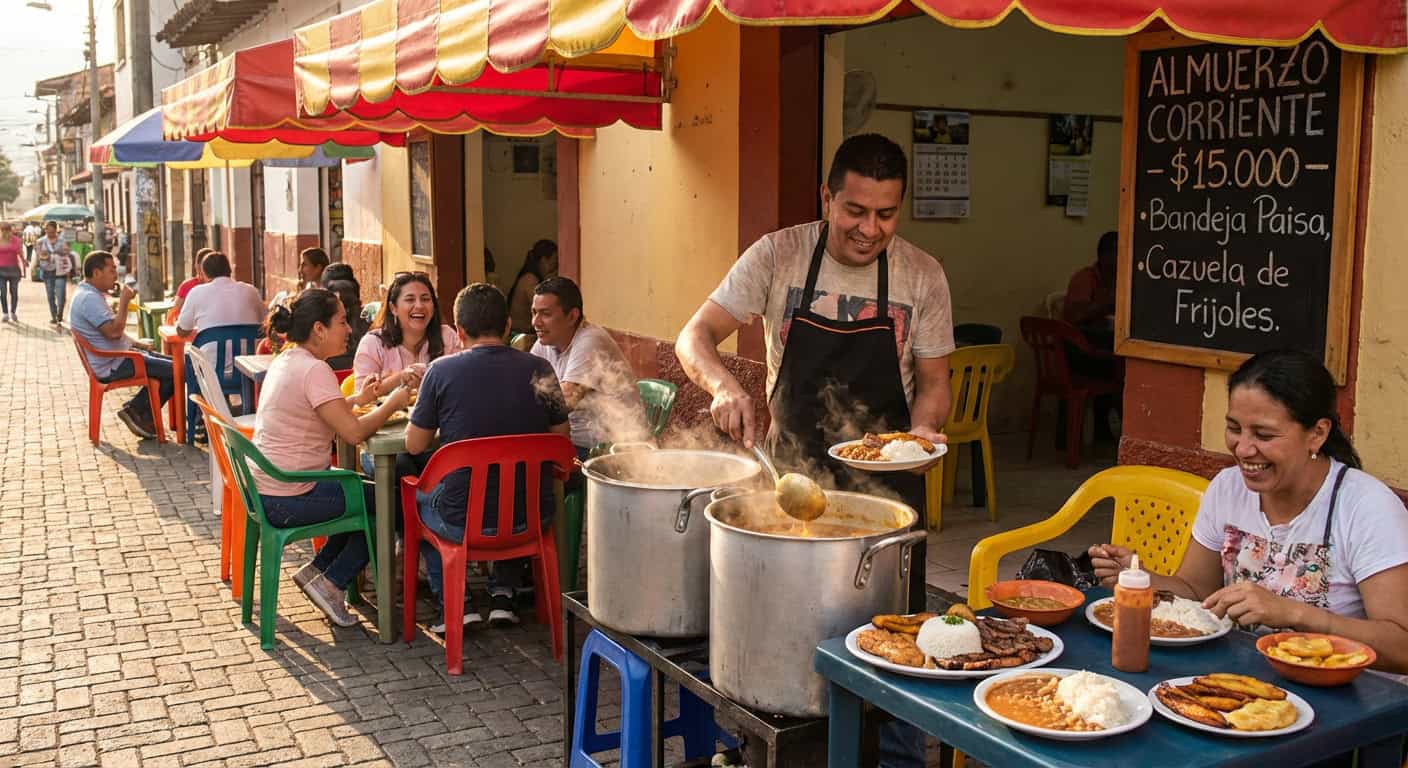
The menu del dia is the backbone of affordable eating in Colombia. For 15,000 to 25,000 COP ($4 to $7), you get a massive lunch: soup, a protein (chicken, beef, or fish), rice, beans, salad, a drink, and often a small dessert. This is not sad budget food. It is a proper Colombian meal that will keep you full until dinner. Eat this for lunch five days a week and you have solved half your food budget.
Groceries and cooking
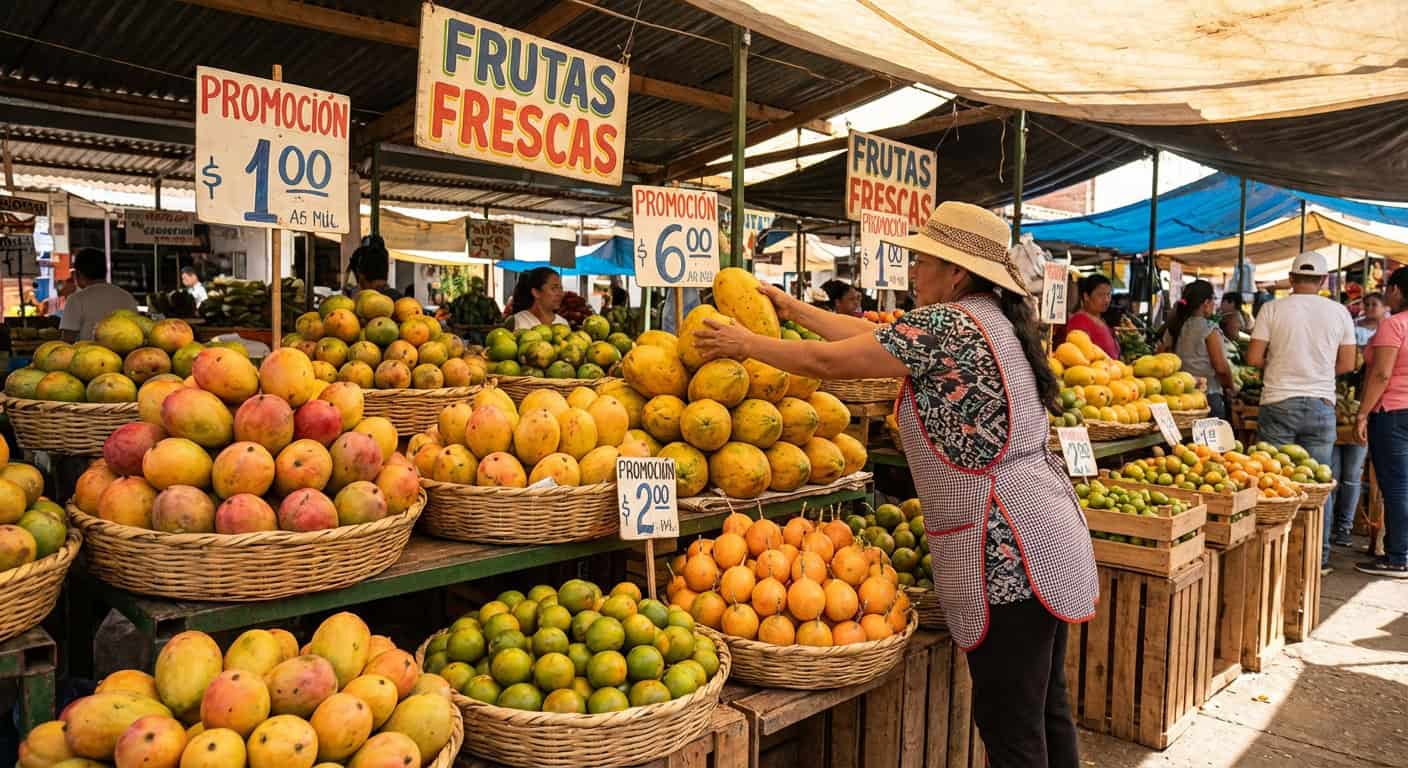
If you have a kitchen, groceries remain very affordable. Shopping at discount chains like D1 and Ara for staples (rice, eggs, cleaning supplies) saves 30-40% compared to premium stores like Carulla or Exito. A single person can eat well on about $200 per month buying groceries. For the freshest and cheapest fruits and vegetables, hit Plaza Minorista or Plaza de la America. The prices will shock you coming from anywhere in North America.
Dining out (the budget killer)
Here is where the math gets tricky. That trendy restaurant in Poblado? Expect $15 to $25 per person for dinner, nearly US prices. The fancy brunch spots that fill up with nomad laptop warriors are not cheap either. If you eat out for every meal in the tourist zones, your food budget alone can hit $600 per month. The move is to cook breakfast, grab a menu del dia for lunch, and save restaurant dinners for weekends. Delivery apps like Rappi are convenient but the fees add up fast. Order directly from restaurants via WhatsApp when you can.
Transportation: pennies to get around
Getting around Medellin is absurdly cheap, and the infrastructure is genuinely impressive for a city this size.
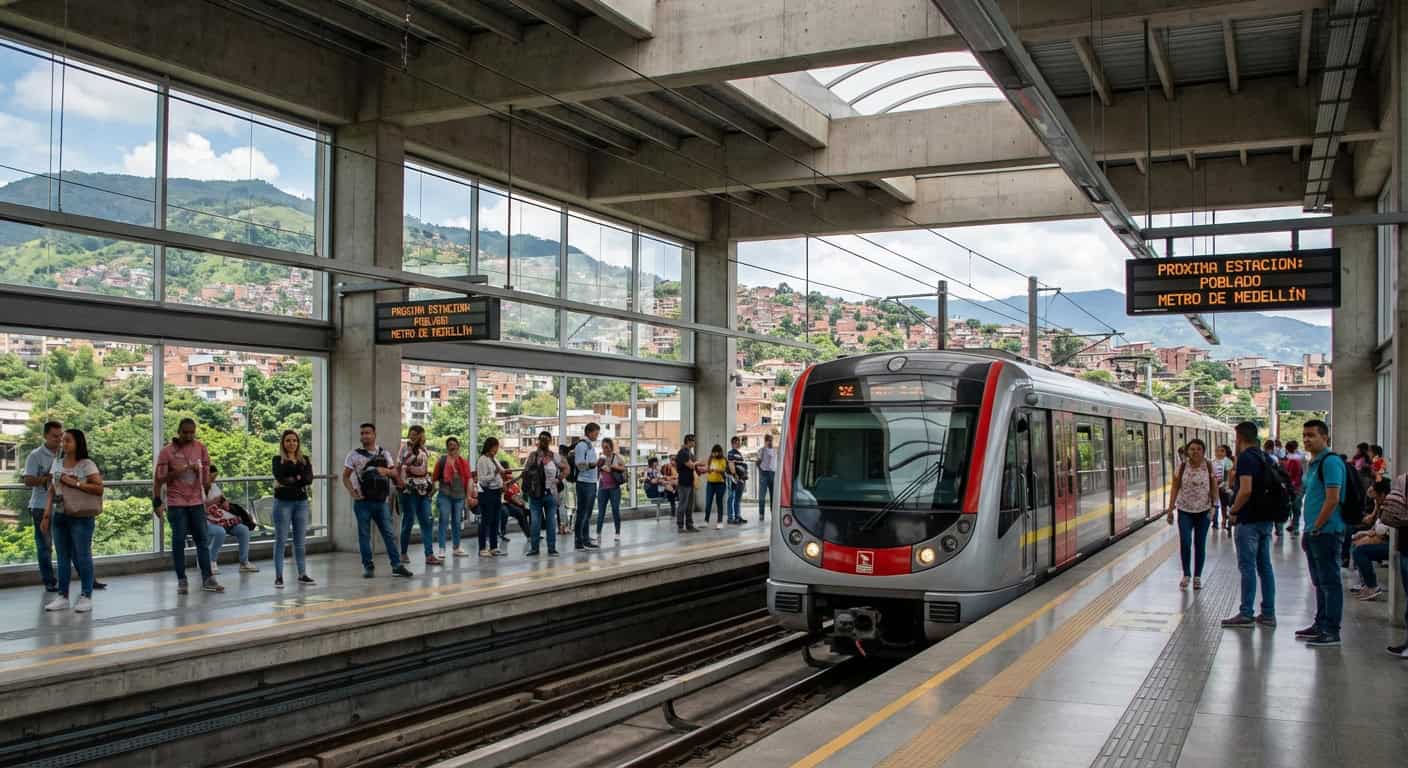
The Metro system
The Medellin Metro is clean, efficient, and safe. A single ride costs about $0.80, and it connects to the Metrocable (aerial gondolas) that take you up into the mountainside neighborhoods with jaw-dropping views. If you live near a Metro station, you can get almost anywhere in the valley for under a dollar. Locals are proud of the system, and if you treat it with respect you will find them incredibly helpful with directions.
Rideshare apps
Uber, DiDi, and InDrive all operate in Medellin. A typical ride across the city costs $3 to $5, which is absurdly cheap by any standard. InDrive lets you bid your own price, which is great for longer trips. One quirk: rideshare operates in a legal grey area here, so drivers sometimes ask you to sit in the front seat. Just go with it. Budget about $100 to $150 per month if you rely on rideshare apps, or as little as $30 if you stick primarily to the Metro.
Coworking and internet
Reliable internet is non-negotiable for remote work, and Medellin delivers. Most furnished apartments come with fiber internet that is more than adequate for video calls. If you want a dedicated workspace, coworking spaces like Selina, and local spots like Semilla or Open Space run about $150 to $200 per month for a hot desk. WeWork has a presence here too if you want something more corporate. Many nomads skip coworking entirely and work from the excellent cafe scene in Laureles. Pergamino and Cafe Zorba are perennial favorites.
Healthcare: excellent and affordable
Colombia’s healthcare system is one of its most underrated advantages. If you are on a tourist visa, international travel insurance is usually sufficient. But if you establish residency, you can access the EPS (public health system) for roughly $50 to $80 per month.
The real move, according to every long-term expat I have spoken with, is Medicina Prepagada (private insurance). It costs $100 to $200 per month depending on your age, but it is a “fast pass” for the healthcare system. You skip the long waits, see specialists within days instead of months, and access Colombia’s genuinely excellent private clinics. Sura and Sanitas are the most recommended providers. Clinica El Rosario and Hospital Pablo Tobon Uribe are frequently cited as top-tier facilities. Pharmacies are everywhere and medications are a fraction of US prices. Many things that require a prescription back home are available over the counter.
Entertainment and social life
Medellin’s social scene is one of the main reasons nomads keep coming back. Gym memberships run $30 to $50 per month for well-equipped facilities. Nightlife in Parque Lleras and Provenza can be as cheap or expensive as you make it. Beers at a local tienda cost under a dollar, while cocktails at rooftop bars run $8 to $12. “Gringo Tuesdays” at Vintrash is a popular weekly language exchange that doubles as a party. Salsa classes are everywhere and usually cost just a few dollars per session. Budget about $100 to $300 per month for entertainment depending on your social appetite.
Monthly budget tiers: what you actually need
After crunching the numbers from dozens of nomad budgets and Reddit threads, here is what Medellin actually costs at three different comfort levels. These are for a single person.
The budget nomad: $1,000 to $1,200 per month
This means living in Laureles or Envigado on a local lease ($500-$700 rent), cooking most meals at home, eating menu del dia for lunch, using the Metro instead of Uber, skipping coworking in favor of cafes, and keeping nightlife to weekends. It is absolutely doable, but it requires discipline and basic Spanish skills. You are living like a comfortable local, not like a tourist.
The comfortable nomad: $1,500 to $1,800 per month
This is the sweet spot for most digital nomads. A nice furnished apartment in Laureles or lower Poblado ($700-$900), a mix of cooking and eating out, Uber when convenient, a coworking membership, gym, and regular social activities. You are not counting pesos, but you are not being reckless either. This is the lifestyle that makes Medellin’s value proposition click.
The luxury nomad: $2,000 to $2,500+ per month
A high-end Poblado apartment with views ($1,200+), eating out whenever you want, Uber everywhere, premium coworking, private health insurance, weekend day trips, and whatever nightlife you desire. By Medellin standards this is living large. By New York or London standards, you are still paying a fraction of what a similar lifestyle would cost back home.
El Poblado vs. Laureles vs. Envigado: the quick comparison
This is the question every nomad agonizes over, so here is the honest breakdown:
El Poblado is for you if you want maximum convenience, English-friendly services, premium nightlife, and you do not mind paying 30-50% more for everything. It is the “safe” default choice but also the most artificial. You might spend months here without experiencing real Colombian culture.
Laureles is the winner for most nomads who stay longer than a month. Flat terrain, real neighborhood feel, excellent cafes and restaurants, and significantly better value. The nomad community here is more established and less transient than Poblado. If I had to pick one neighborhood, this is it.
Envigado is the dark horse. Quieter, safer by many accounts, and slightly cheaper than both. The trade-off is fewer nomad-specific amenities (coworking, English menus) and a bit more distance from the action. Perfect if you want immersion over convenience.
Money tips: pesos, cards, and ATMs
The Colombian peso fluctuates significantly against the dollar, which can work in your favor. Keep an eye on the exchange rate. At times, the peso weakens enough to effectively give you a 10-15% “raise” on your dollar-denominated income.
Cash is still king for small transactions, street food, and local shops. ATMs are everywhere but charge withdrawal fees. Bancolombia tends to have the lowest fees for foreign cards. Many nomads use Wise (formerly TransferWise) to get competitive exchange rates and avoid international transaction fees. Credit cards are accepted at most restaurants and stores in Poblado and Laureles, but always carry some cash for taxis, tiendas, and market shopping.
One important note: Medellin is not as cheap as Buenos Aires, where the unofficial exchange rate creates an even bigger arbitrage opportunity. But Medellin’s infrastructure, weather, and community make it a strong choice even at slightly higher prices. When you factor in the broader South American nomad circuit, Medellin remains one of the best overall values on the continent.
Continue your journey
Now that you know what Medellin costs, dig into the details that make the difference. Check out the best coworking spaces and cafes in Medellin to find your ideal workspace, or explore the best things to do on your days off so you know exactly how to spend those pesos. For the complete picture of setting up your life here, read the full Medellin digital nomad guide.
If you are still weighing your options across the continent, the South America digital nomad guide compares Medellin against other top cities. And for broader nomad strategy, from backpacking logistics to hostel life tips, HitchHive has you covered.
Find your people
Medellin is not just a city you move to. It is a community you join. The nomad scene here is one of the most welcoming in the world, with language exchanges, coworking meetups, hiking groups, and salsa nights happening every week. The hardest part about budgeting for Medellin is not keeping costs down. It is saying no to all the social invitations. Your wallet might be lighter than planned, but your life will be better for it.
Leave a Reply