

The 90-day e-visa changed everything
Before August 2023, being a digital nomad in Vietnam meant living in a constant state of visa anxiety. Thirty-day stamps, sketchy extensions, agents of questionable reliability, and that nagging feeling that immigration might just say no next time. I remember my first trip to Vietnam in the old days: I’d barely unpacked my bag in Da Nang before I was already calculating my exit date.
Then Vietnam rolled out the 90-day multi-entry e-visa, and everything changed. Three solid months. Multiple entries. Twenty-five dollars. It’s not a dedicated digital nomad visa, because Vietnam doesn’t have one. It’s technically a tourist visa. But it’s become the de facto remote worker visa for thousands of us, and the government knows it. They just don’t mind, as long as you’re spending money and not causing problems.
The rhythm takes some learning, though. Vietnam doesn’t offer extensions on the e-visa anymore, which means you need to physically leave the country every 90 days. No exceptions, no workarounds. But once you understand the system, it becomes second nature. This guide is everything I’ve figured out after cycling through multiple 90-day stints, including the mistakes I made so you don’t have to. If you’re building your Southeast Asia visa strategy, Vietnam is one of the most straightforward pieces of the puzzle.
The 90-day e-visa explained
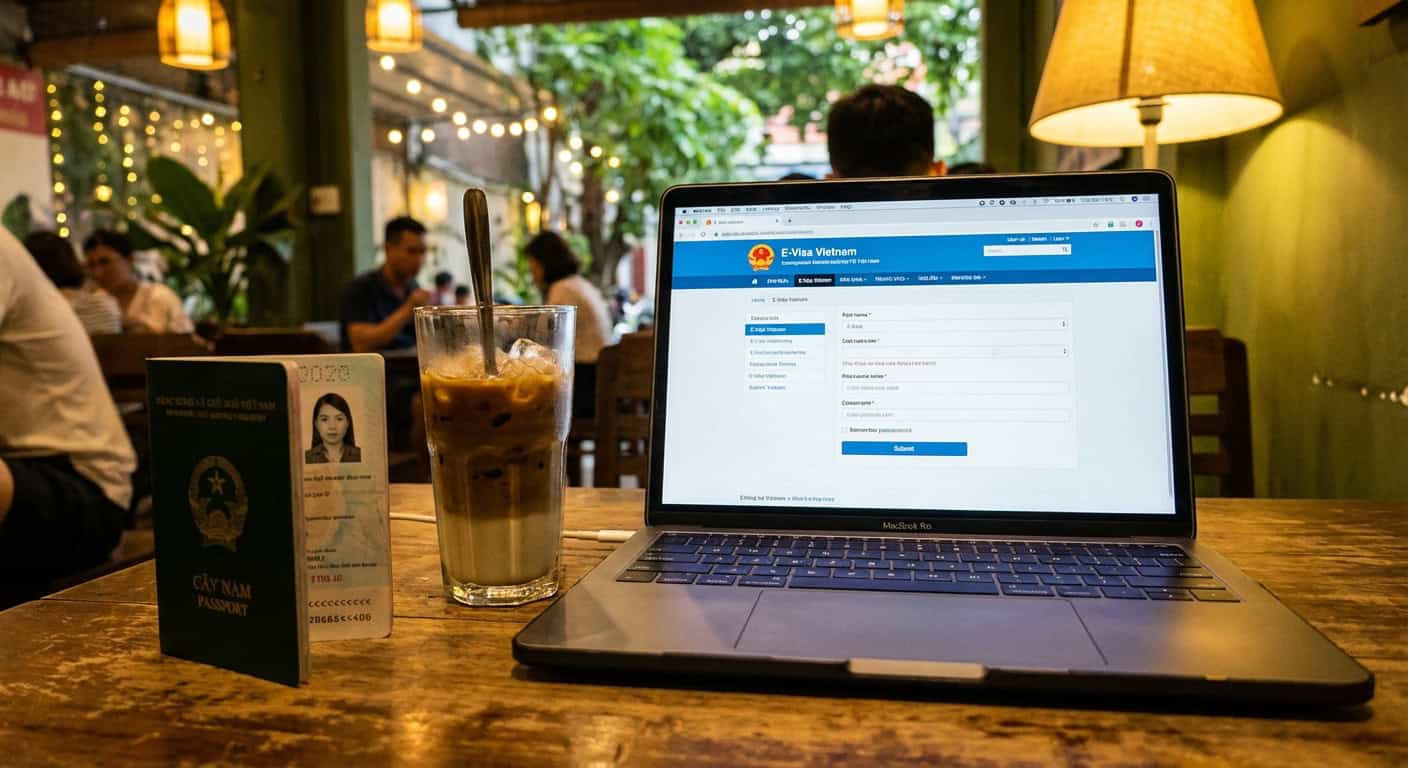
Here’s what you’re working with. The Vietnamese e-visa grants you 90 days in the country, starting from the date you specify on your application. It comes in two flavors: single entry and multiple entry. You want multiple entry. Always. Even if you think you won’t leave during your 90 days, life happens. A weekend in Bangkok, a quick trip to see a friend in Thailand, a spontaneous flight to Kuala Lumpur. Single entry means your visa dies the moment you step out of Vietnam, and you’d need to apply all over again.
The multiple-entry version costs the same $25 USD. There is zero reason to choose single entry unless you are absolutely certain you’ll only cross the Vietnamese border once.
One critical detail that catches people off guard: the 90-day clock starts from the visa start date you select, not the day you physically arrive. If you set your start date to March 1st and don’t fly in until March 10th, you’ve just burned nine days. Set your visa start date two or three days before your planned arrival to give yourself a buffer for flight delays or last-minute changes, but don’t set it too far ahead or you’re wasting valid days.
How to apply: step by step
This is where most people make their first mistake. They Google “Vietnam e-visa” and click on whatever looks professional. The top results are almost always third-party agencies charging $50 to $100 for a service that costs $25 on the official site. Some of these agencies are legitimate middlemen. Others are straight-up scams that take your money and passport photo and give you nothing.
The only site you should use is evisa.xuatnhapcanh.gov.vn. It looks like it was designed in 2003. The layout is clunky, pop-ups might not work right in Safari, and the whole thing feels like it could crash at any moment. That’s how you know you’re in the right place. If the visa application site looks sleek and modern, you’re on a scam site.
Here’s the process. Fill in your personal details exactly as they appear on your passport. And I mean exactly. If your passport reads “John Albert Smith” on the machine-readable line, your application must say “John Albert Smith.” Not “John Smith.” Not “John A. Smith.” Airlines check this before you board, and a name mismatch means you’re not getting on the plane.
Key tips that will save you a rejection: Use the DD/MM/YYYY date format, not the American MM/DD/YYYY. Fill every single field, even optional ones. Put “N/A” or “None” where something doesn’t apply. The system auto-rejects applications with blank fields. Your photo needs a white background, no glasses, neutral expression, and the file must be under 2MB with no special characters in the filename. Select “Multiple Entry” under entry type.
Processing takes three to five business days on average, though the official window is up to eight working days. Apply at least two weeks before your planned arrival to be safe. Once approved, you’ll get a PDF. Print it. Also save it on your phone. Also email it to yourself. You’ll need to show it at immigration, and “my phone died” is not an excuse they’ll entertain.
The 90-day rhythm
Here’s the part that defines the Vietnam nomad experience: the 90-day cycle. There are no extensions. The old system where you could extend a tourist visa from inside the country is effectively dead as of late 2024. Immigration agents who claim they can extend your e-visa are either lying or operating in a grey area that could leave you stranded.
The strategy that the entire nomad community has converged on is simple. Around day 75 to 80 of your current visa, apply for your next 90-day e-visa online. Set the start date for the day you plan to do your border run. Once the new visa is approved, physically leave Vietnam, spend at least a day or two outside the country, and re-enter on your fresh visa. Repeat.
People have been doing this for years now. Back-to-back 90-day stints for 12 to 24 months without a single issue. There’s no official limit on how many times you can re-enter, and immigration hasn’t started flagging perpetual tourists yet. Could that change? Sure. But right now, the system works, and Vietnam seems happy to have remote workers spending money in their economy.
Visa run options from Vietnam
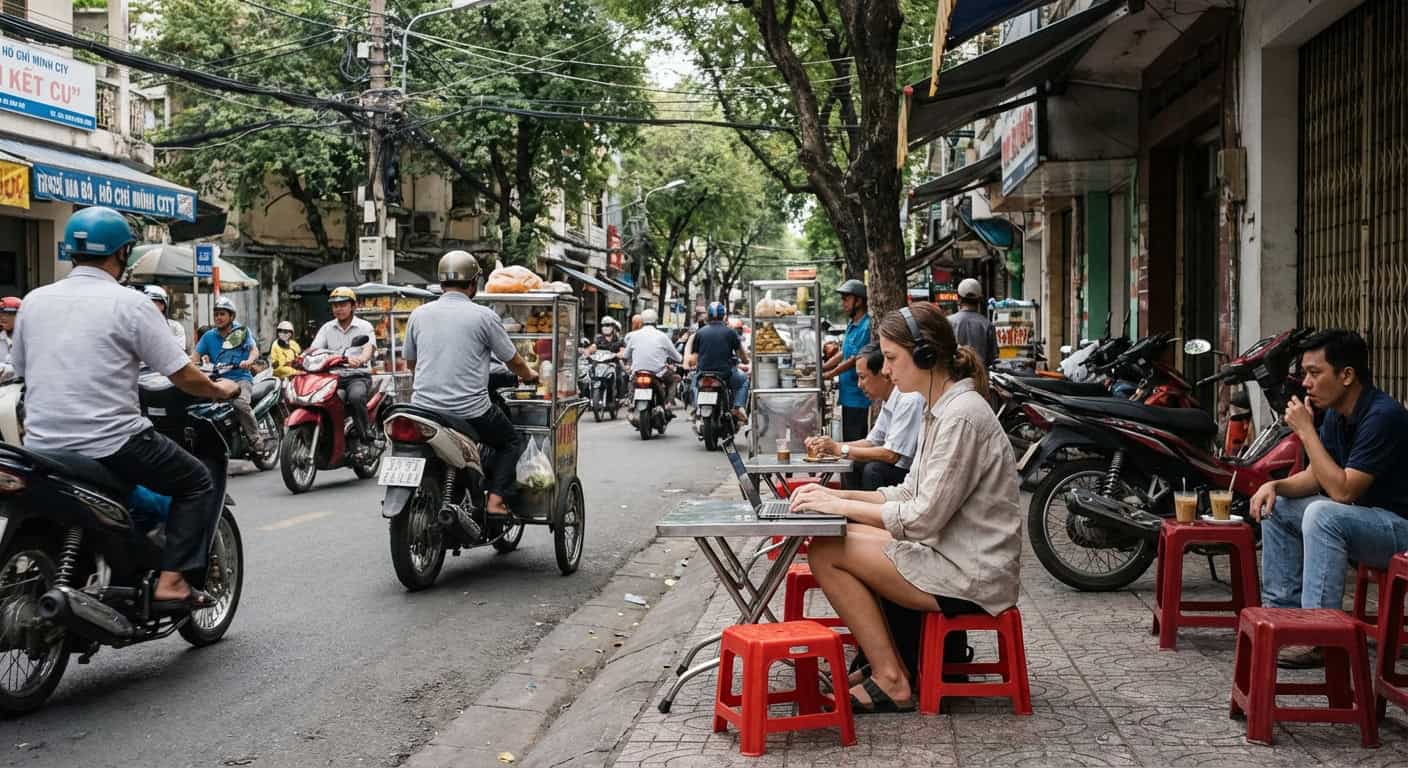
The visa run is an unavoidable part of the Vietnam lifestyle, but it doesn’t have to be a drag. Most nomads actually look forward to them. It’s a forced mini-vacation, a reset button, and a chance to eat Thai food or explore Kuala Lumpur for a few days.
From Ho Chi Minh City: the Moc Bai border run
If you’re based in Saigon, the Moc Bai land crossing into Cambodia is the cheapest and fastest option. Bus 703 costs about 40,000 VND, which is roughly $1.60. There are also limousine vans for $12 to $20 if you want air conditioning and a seat that doesn’t feel like sitting on a wooden plank. The comfort option is Giant Ibis at $18 to $20. They have a steward who handles your passport through the border process, which is worth every penny if you hate paperwork.
Same-day runs are possible with a visa agent. Emily Visa and IzyViet are the two names that come up constantly in the Saigon nomad community. You hand over your passport, sit in a coffee shop on the Cambodian side for two to four hours, and they bring it back stamped. Quick warning: do not stay overnight in Bavet on the Cambodian side. It’s a grim strip of casinos with nothing else going for it.
The border itself can be chaotic. Aggressive touts will try to grab your passport or tell you that you need a “medical check” or some other made-up fee. Ignore all of them. Walk straight to the official immigration window. Bring small USD bills for the Cambodian visa on arrival ($30 plus a $5 to $10 “processing fee” that’s technically optional but practically mandatory).
From Da Nang: the Lao Bao option
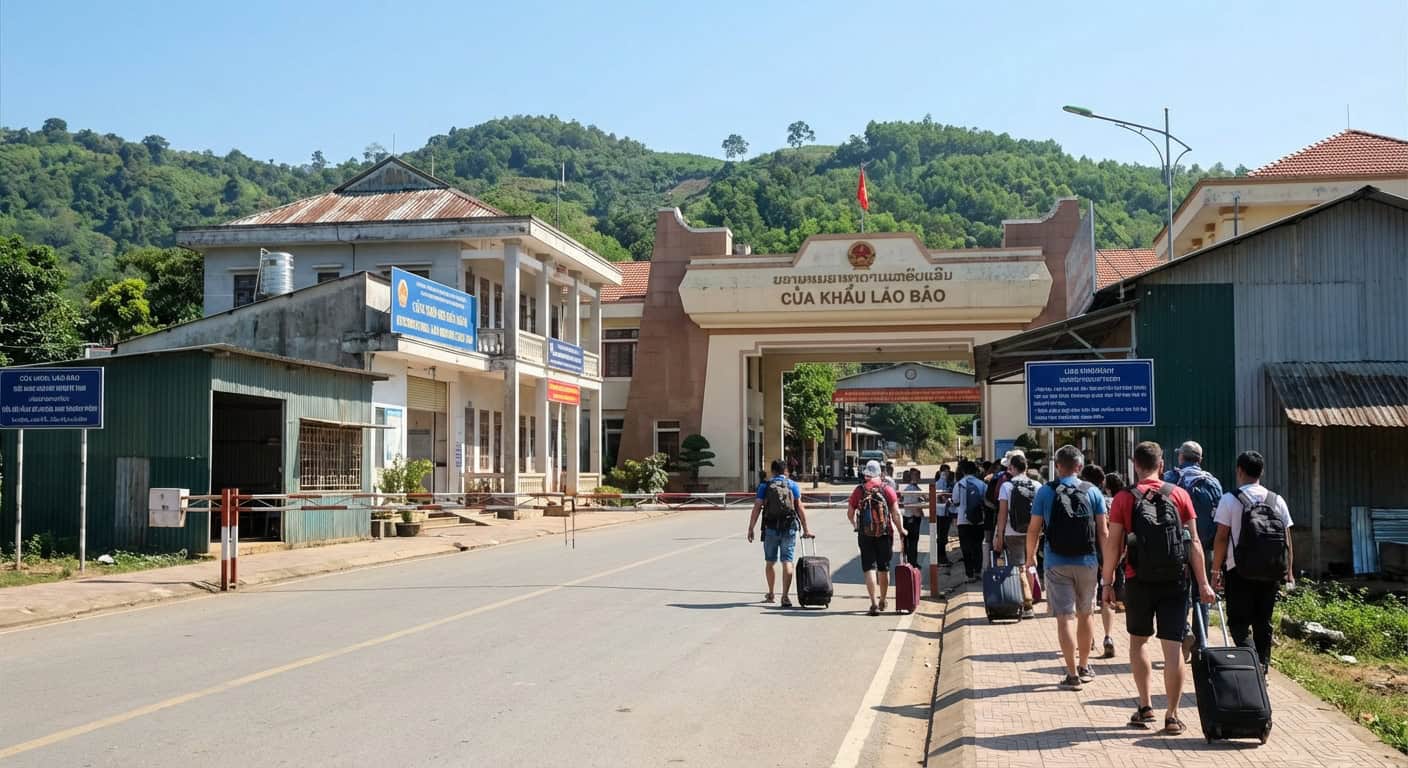
Based in Da Nang? Your closest land border is Lao Bao, the Vietnam-Laos crossing about four to five hours by bus. Lynn Visa is the go-to service in Da Nang’s nomad community for handling the paperwork at the Laos border. Facebook groups like “Visa Run Da Nang” organize shared vans to split costs.
Bring crisp, new US dollars for the Laos visa on arrival ($30 to $45 depending on your nationality). The border guards are picky about bill condition. Creased, torn, or old bills get rejected. Also bring two passport photos.
Honestly, many Da Nang nomads skip the land border entirely and just fly. When you factor in the 10-hour round trip of bus misery, a $50 to $80 flight to Bangkok or Kuala Lumpur often makes more sense. You arrive in two hours, get a mini vacation, and come back refreshed instead of exhausted.
Flight runs from anywhere
Kuala Lumpur is the top recommendation for flight-based visa runs. Cheap flights from both HCMC and Da Nang, Malaysia gives most Western passport holders a free 90-day entry, and the airport is efficient and modern. Bangkok works too, but Thai immigration at Don Mueang can be strict about visa runners. They may ask for proof of funds or an onward flight ticket. Singapore is technically possible but expensive for even a short stay. If you’re planning to combine your visa run with exploring other countries, our guide to visa runs and border crossings across the region covers every route in detail.
Before the e-visa: why you should appreciate what you have
A little context for anyone who didn’t experience the old system. Before August 2023, Vietnam offered 30-day visa exemptions for many nationalities. Thirty days. That’s barely enough time to find a good pho spot, let alone settle into a productive routine. If you wanted to stay longer, you’d either get a visa on arrival through an agency letter (a semi-opaque process with varying reliability), or you’d apply for a three-month business visa through an agent for $300 to $500. The business visa route required a fake sponsorship letter from a Vietnamese company, which became increasingly risky as the government cracked down on the practice.
The 90-day e-visa didn’t just make things easier. It made Vietnam viable as a long-term base in a way it simply wasn’t before. The $25 cost, the online application, the multi-entry flexibility. None of this existed three years ago. If the application site is glitchy and the process feels a bit janky, just remember: it used to be ten times worse.
Where to base yourself
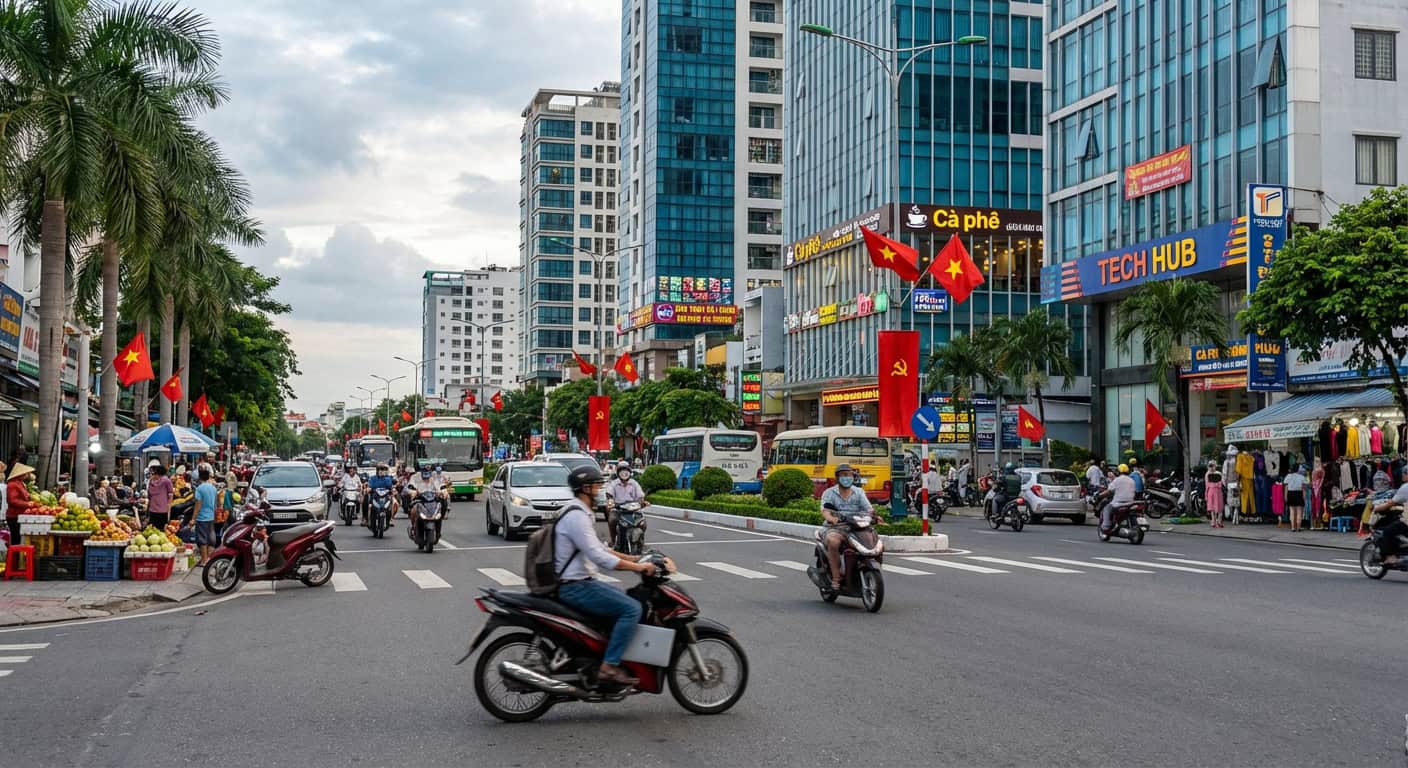
Vietnam gives you three very different flavors of nomad life, and your choice of city will define your experience more than almost any other decision.
Da Nang is what I’d call easy mode. Beach city with excellent infrastructure, a growing nomad community, and a cost of living that’s hard to beat. If you want a six-kilometer stretch of white sand, reliable internet, and a rhythm that balances work and life without effort, Da Nang is your move. I’ve written a full digital nomad guide to Da Nang that covers neighborhoods, coworking spaces and cafes, and everything else. For the numbers, the Da Nang cost of living breakdown shows you can live well on $1,200 to $1,500 a month.
Ho Chi Minh City (Saigon) is the big-city option. It’s chaotic, loud, and the traffic will test your sanity. But it has the best nightlife, the largest professional networking scene, the most diverse food, and a startup energy that Da Nang can’t match. If you’re building a business or need to be around other ambitious people, Saigon is the play. Expect to spend a bit more, around $1,500 to $2,000 a month for a comfortable setup in Districts 1, 2, or 7.
Hanoi is for the culture seekers. The Old Quarter is one of the most atmospheric neighborhoods in all of Southeast Asia. The food is arguably the best in Vietnam (the pho here is different from the south, and don’t let anyone tell you otherwise). The downsides: winter can be genuinely cold and grey, air quality is poor, and the city’s layout is more chaotic than Saigon’s. It’s also the most “Vietnamese” feeling of the three, which is either a selling point or a challenge depending on your comfort level. For broader context on choosing your base, check out our ranking of the best cities for digital nomads worldwide.
Practical tips for living in Vietnam
Internet: Vietnam has some of the best internet in Southeast Asia. Fiber connections in apartments typically run 50 to 100+ Mbps. Viettel is the top mobile carrier for 4G/5G coverage. Always have a SIM card with a data plan as backup for when cafe wifi wobbles. One thing to know: Vietnam’s international internet bandwidth occasionally takes a hit when undersea cables get damaged (the nomad community jokingly blames sharks). When this happens, a VPN routed through a nearby country can help.
Banking: Vietnam is still primarily a cash economy for rent and local purchases, though digital payments are growing fast. Bring a debit card with no foreign transaction fees (Wise or Charles Schwab are the nomad favorites). ATM withdrawals are limited to about 2 to 3 million VND per transaction ($80 to $120), and some banks charge withdrawal fees. Techcombank ATMs tend to offer the best rates and highest limits.
Health insurance: Get travel health insurance before you arrive. SafetyWing and World Nomads are popular in the nomad community. Vietnam has good hospitals, especially Vinmec International, but you don’t want to be negotiating payment when you’re in an emergency. Our travel safety guide covers insurance options in detail.
Police registration: Technically, your hotel or landlord is supposed to register you with the local police within 24 hours of check-in. Hotels do this automatically. If you’re renting an apartment from an individual landlord, make sure they handle this. It’s rarely enforced for short-term stays, but it can become an issue if you ever need to deal with immigration or the police for any reason.
SIM cards: Get a Viettel SIM from an official store, not from the airport kiosk. Bring your passport, as Vietnam requires registration for SIM purchases. A monthly data plan costs $3 to $5 for generous data, which is absurdly cheap. If you’re thinking about budgeting for your entire Southeast Asia trip, our budget travel hacks guide has strategies that work across the region.
Common mistakes to avoid
I’ve watched enough fellow nomads stumble through these that they deserve their own section.
Using a scam visa site. I cannot stress this enough. The official Vietnamese e-visa site looks terrible. That’s the point. If you’re on a site that looks polished and charges $50 or more, you’re in the wrong place. Only use the .gov.vn domain.
Name mismatch on your application. Your full name must match your passport’s machine-readable line exactly. A missing middle name will get you denied at the boarding gate. Airlines are strict about this because they get fined if they let you fly with a mismatched visa.
Wrong date format. Vietnam uses DD/MM/YYYY. If you’re American and you enter 05/02/2026 meaning May 2nd, the system reads it as February 5th. Triple-check your dates.
Applying from inside Vietnam on a Vietnamese IP. The system can flag you as “currently staying in Vietnam” and deny your new application. If you’re applying for your next visa while still in the country, use a VPN set to another country. If you get flagged anyway, email foreigners@xuatnhapcanh.gov.vn with a photo of your exit stamp and wait for them to clear it.
Leaving fields blank on the application. The system rejects applications with empty fields. Put “N/A” in any field that doesn’t apply to you.
Overstaying your visa. Don’t do this. Vietnam’s overstay penalties include fines, potential bans, and a very unpleasant conversation with immigration. Set a calendar reminder for day 85 of your visa to make sure you’ve got your exit plan sorted. If you’re new to managing the logistics of long-term travel, the complete digital nomad guide walks through the fundamentals of moving through Southeast Asia without tripping over bureaucracy.
Continue your journey
Vietnam is one piece of the Southeast Asian nomad puzzle. These guides cover the rest:
- The Complete Southeast Asia Visa Guide for Digital Nomads — the big picture across every country in the region
- Thailand’s Digital Nomad Visa (DTV) — Thailand’s purpose-built visa for remote workers, and how it compares
- Bali Digital Nomad Visa: Indonesia’s B211A and Remote Worker Options — Indonesia’s more complex visa system
- Visa Runs and Border Crossings in Southeast Asia — every route, every border, every trick
- The Complete Digital Nomad Guide to Da Nang — if Vietnam is calling, start here
See you at the border
Vietnam’s 90-day e-visa isn’t perfect. The application site is clunky, the no-extension policy forces you into regular border runs, and the system has quirks that can catch you off guard if you’re not prepared. But compared to the old 30-day regime, it’s a revelation. Twenty-five dollars, a few minutes on a terrible website, and you get three months in one of the most rewarding countries in Southeast Asia for remote work.
The internet is fast, the coffee is the best in the world (fight me), the food will ruin you for anywhere else, and the cost of living means your freelancer income stretches further than you thought possible. Learn the rhythm, respect the rules, and Vietnam will reward you with one of the best chapters of your nomad life.
If you’re heading to Vietnam and want to connect with other nomads who’ve figured out the rhythm, check out HitchHive. Whether you need a visa run buddy, a coworking partner, or just someone who knows which cafe has the best wifi, the right connections make every 90-day cycle better.
Leave a Reply